Tesla Mobile Connector alternatives
If your NACS car did not come with a portable charger, or you want a second one, these are the units that plug straight in without an adapter.

How this page is funded: the buy links below are affiliate links, and Renter Volt earns a commission on qualifying purchases at no cost to you. Nothing here was supplied by a manufacturer, and commission plays no part in the ranking — read the full disclosure. Picks are chosen from published specifications rather than hands-on testing; the method is written down so you can check it. Prices last verified September 22, 2026.
The reason to look past the factory portable charger is almost always the same: you do not have one, or the one you have does not reach. Whatever the cause, the replacement question has a clean answer for a NACS car — buy a unit with a NACS connector molded on, rather than a J1772 unit plus an adapter.
That is not brand loyalty, it is one fewer connection. An adapter adds a second mechanical joint to a circuit that carries current for twelve hours unattended, and it adds a small expensive part that can walk off from a shared parking space. When a native option exists at the same price, take it.
How these were ranked
- A native NACS connector, so nothing sits between the cable and the car.
- Current matched to the circuit you can actually reach. A 40 amp unit is wasted on a household socket, and a 12 amp unit is wasted on a 50 amp receptacle. The ranking covers both cases rather than pretending everyone has the same outlet.
- Cable reach, the specification renters underestimate most — the long-cable roundup explains how little horizontal reach 16 ft actually buys.
- A published safety listing you can look up, not the word 'certified' on its own.
Quick picks
Ranked, with the reasoning underneath. Tap any row to jump to that write-up; tap the price to check it on Amazon. Prices come from the live layer, never from this page.
| # | Product | Best for | Type | Price |
|---|---|---|---|---|
| 1 | 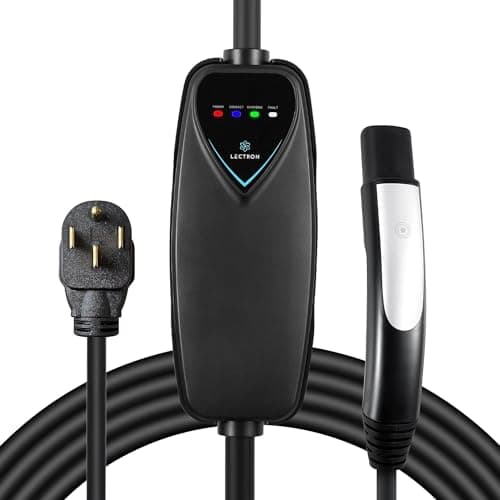 Lectron Portable Level 2 Tesla (NACS) Charger (40A, NEMA 14-50)The same 40 amp plug-in unit with a NACS connector on the end, so a Tesla or a NACS-port car charges without an adapter in the middle. Lectron Portable Level 2 Tesla (NACS) Charger (40A, NEMA 14-50)The same 40 amp plug-in unit with a NACS connector on the end, so a Tesla or a NACS-port car charges without an adapter in the middle. | A Tesla or NACS car | Plug-in Level 2 EVSE | |
| 2 | 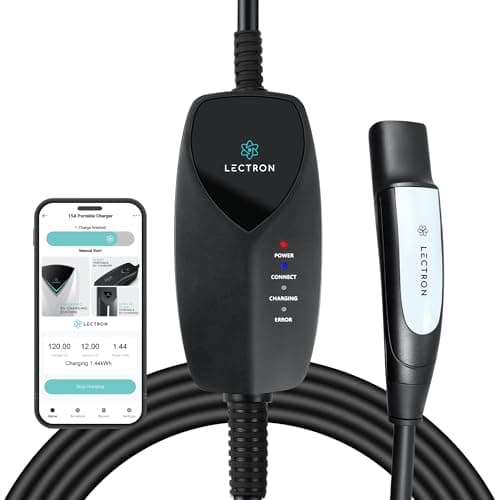 Lectron Portable Level 1 Tesla (NACS) Charger, WiFi (12A, NEMA 5-15)A 12 amp NACS Level 1 charger with app scheduling: the right current for a 15 amp circuit and the right connector for a Tesla, with no adapter in between. Lectron Portable Level 1 Tesla (NACS) Charger, WiFi (12A, NEMA 5-15)A 12 amp NACS Level 1 charger with app scheduling: the right current for a 15 amp circuit and the right connector for a Tesla, with no adapter in between. | A Tesla or NACS car on a household socket | Level 1 smart EVSE | |
| 3 | 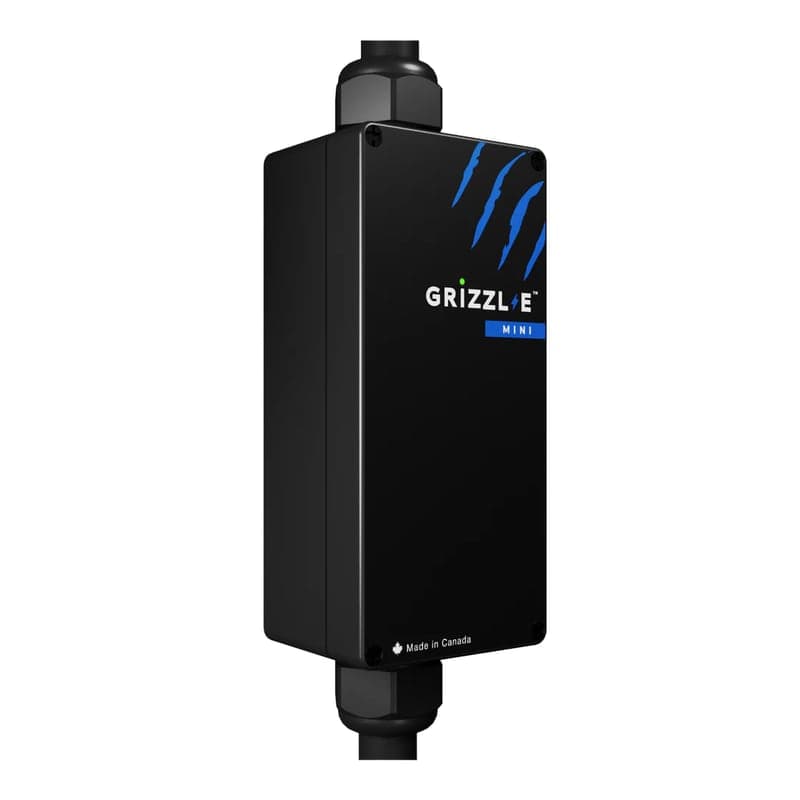 Grizzl-E Mini Connect Portable ChargerAdjustable from 7 to 40 amps and shipped with four plug adapters, which is the closest thing to a unit that fits whatever outlet you turn out to have. Grizzl-E Mini Connect Portable ChargerAdjustable from 7 to 40 amps and shipped with four plug adapters, which is the closest thing to a unit that fits whatever outlet you turn out to have. | Not knowing your outlet yet | Adjustable Level 1 and 2 EVSE | Check price#ad |
#1 · A Tesla or NACS car
Lectron Portable Level 2 Tesla (NACS) Charger (40A, NEMA 14-50)
The same 40 amp plug-in unit with a NACS connector on the end, so a Tesla or a NACS-port car charges without an adapter in the middle.
| Input | 240V, 40A maximumsource |
|---|---|
| Output power | 9.6 kWsource |
| Plug / connector | NEMA 14-50 plug, NACS connectorsource |
| Charging type | AC Level 2 onlysource |
| Certification | UL 2594 / UL 2231 / UL 2251 / UL 817 certifiedsource |
What those numbers mean
Buying the connector your car actually has removes a failure point. An adapter is one more thing to lose, one more thing to have walk off from a shared outlet, and one more contact interface to get warm.
This is an AC Level 2 unit. NACS is also the DC fast-charging connector, and the shared shape leads people to assume one cable does both. It does not.
If your household ever changes to a J1772 car, this becomes the wrong unit and a J1772 model becomes right. That is the argument for the adapter route if you expect to switch.
What it does well
- No adapter in the charging path for a Tesla or NACS-port vehicle
- Carries four UL listings, including UL 2251 for the coupler itself
- Same 40 amp ceiling as the J1772 version, so no speed penalty for the connector choice
What it does not
- Useless with a J1772 car unless you add an adapter, which is the situation you bought it to avoid
- The NEMA 14-50 plug still assumes a 50 amp circuit
Skip this one if: Your household has, or is about to have, a J1772 car as well. Buy the J1772 unit and one NACS adapter instead, and cover both.
#ad · how this is funded · price as of September 22, 2026
#2 · A Tesla or NACS car on a household socket
Lectron Portable Level 1 Tesla (NACS) Charger, WiFi (12A, NEMA 5-15)
A 12 amp NACS Level 1 charger with app scheduling: the right current for a 15 amp circuit and the right connector for a Tesla, with no adapter in between.
| Charging current | 12A, 120Vsource |
|---|---|
| Output power | Up to 1.44 kWsource |
| Cable length | 16 ftsource |
| Plug / connector | NEMA 5-15 plug, NACS (Tesla) connectorsource |
| Certification | UL 2594 / UL 2231 certifiedsource |
| Enclosure | IP67-rated control boxsource |
| App features | Charging schedules, real-time status and a kWh limit per session in the Lectron appsource |
What those numbers mean
The 12 amp rating is what makes this the NACS pick for most renters: it matches the continuous limit of an ordinary 15 amp circuit, where a 15 amp unit would need a 20 amp circuit behind the socket.
A NACS connector means a Tesla, or any other NACS car, plugs in directly. That is one fewer connection carrying current for twelve hours, and one fewer part to leave in a shared parking space.
The app earns its place on a time-of-use electricity rate, where starting the session inside the cheap window is worth money every night. On a flat rate it is mostly a status display.
What it does well
- Sized for a 15 amp household circuit
- Native NACS connector — no adapter needed on a Tesla
- Scheduling and a per-session kWh limit in the app
- UL 2594 / UL 2231 certified, with an IP67 control box
What it does not
- 16 ft cable, and the nearest socket is often further away than that
- The scheduling runs through the app, so it needs a network where you park
- NACS only — a J1772 car would need an adapter
Skip this one if: Your car has a J1772 port, or your electricity costs the same at every hour and there is no Wi-Fi where you park. A plain 12 amp unit does the same electrical job.
#ad · how this is funded · price as of September 22, 2026
#3 · Not knowing your outlet yet
Grizzl-E Mini Connect Portable Charger
Adjustable from 7 to 40 amps and shipped with four plug adapters, which is the closest thing to a unit that fits whatever outlet you turn out to have.
| Adjustable current | 7A to 40A (9.6 kW maximum)source |
|---|---|
| Voltage | Automatically detects 120V (Level 1) or 240V (Level 2)source |
| Cable length | 25 ft (7.6 m)source |
| Plug and adapters | NEMA 14-50 plug plus four included electrical adapterssource |
| Connector | J1772 or Tesla (NACS) versionssource |
| Enclosure | UL Type 4 / IP67 ratedsource |
| Certification | UL tested and certified, Energy Star certifiedsource |
What those numbers mean
The adjustable current is the feature that matters to a renter, and it is not a convenience. A 30 amp dryer circuit legally supports 24 amps of continuous EV load; a unit that can be set to 24 amps can use that circuit, and a fixed 40 amp unit cannot.
25 ft of cable is nine feet more than the common 16 ft, and nine feet is frequently the difference between reaching the car and not.
IP67 and a UL Type 4 enclosure describe the unit's own weather tolerance. They say nothing about the outlet it plugs into, which is usually the part that is not weather-rated.
What it does well
- 7-40A adjustment means one unit fits a 15, 20, 30 or 50 amp circuit
- 25 ft cable is among the longest on a portable unit
- Four plug adapters included, so an outlet change does not mean a new charger
- Available with either a J1772 or a NACS connector
What it does not
- Costs meaningfully more than a fixed-amperage unit that does one job
- The bundled adapters make it easy to plug into a circuit you have not actually checked
Skip this one if: You know exactly which outlet you have, it is not changing, and you would rather put the money into a longer cable than into adjustability you will set once and never touch.
#ad · how this is funded · price as of September 22, 2026
Start with the outlet, not the charger
The three picks split cleanly by what you can plug into, and that is the order to think in. A reachable NEMA 14-50 puts you on the 40 amp unit. An ordinary household socket puts you on the 12 amp one, which is the correct current for a 15 amp circuit. Not knowing yet — because you are moving, or the building has been vague — puts you on the adjustable unit that covers both.
If you have not established which outlet you can reach, do that before spending anything: how to identify your outlet has the photographs, and what amp rating do you need turns the breaker number into a charger spec.
Native NACS or J1772 plus an adapter?
There is one situation where the adapter route is genuinely better: a household with both a NACS car and a J1772 car. One J1772 charger plus a single adapter serves both, and buying two native chargers would be the expensive way to solve it. NACS to J1772 vs J1772 to NACS explains which direction you need, because the naming catches people out constantly.
For a single-NACS-car household, native wins. The adapter costs money, adds a joint, and is one more thing to remember when you unplug in the dark.
What a portable unit will not do
Why people end up buying one of these
The reasons are boringly consistent, and worth stating because they point at different purchases.
- The car did not come with one, or came with one and it went back with the previous owner. The most common case, and the one that wants a straightforward native unit.
- The factory cable does not reach. Reach is a cable specification, so the fix is a longer cable rather than a different amperage.
- You want a second unit for another location — a relative's house, a workplace, a second parking spot — so the first one stays where it lives.
- You want more amps than a 120V cordset gives and you have found a 240V receptacle to use.
- You lost it, or it failed. Replacement rather than upgrade, and the honest question is whether to buy the same thing again or something better suited to the outlet you actually have.
Notice that only one of those is about speed. Most people replacing a portable charger are solving a location or reach problem, which is why the picks above are ordered by the outlet you can reach rather than by power.
The certification to insist on
This category is full of inexpensive units from sellers with no published documentation, and a portable charger is the last thing to economize on that way. It carries the full charging current, unattended, for hours at a time, frequently outdoors, plugged into a receptacle whose condition you did not choose.
What to look for is a named standard rather than the word 'certified' floating on its own. UL 2594 covers electric vehicle supply equipment and UL 2231 covers the personnel-protection side; a listing that names them, or names an independent laboratory that tested to them, is telling you something checkable. A listing that says only 'safety certified' is telling you nothing at all. Every pick above names its standards, and that is not a coincidence — it is the filter.
Keep the old one if you still have it
If you are buying a replacement because the factory cable is too short rather than because it failed, do not sell the original. A second portable charger is genuinely useful to a renter: one lives where you park, the other stays in the trunk for a relative's house, a workplace socket or a holiday.
It also removes the worst failure mode in this category, which is having no way to charge at all because the one cable you own is at the other address. Portable chargers are the rare piece of EV equipment where owning two is not extravagant.
Storage, and the thing that actually breaks
What fails on a portable charger is almost never the electronics in the middle. It is the cable where it enters the connector, and the connector itself, both of which are damaged by the same three things: being driven over, being yanked out by the cable instead of the handle, and being left in standing water.
- Pull the handle, not the cable. The strain relief at the connector is the part that gives out first.
- Keep the control box off the ground while charging, especially in rain — a hook, a bag or a bollard is enough.
- Coil loosely in a bag or case rather than wrapping tightly around the unit, which stresses the same entry point every time.
- Look at the pins occasionally. Discoloration on a contact is the early warning that matters, and a hot plug is the late one.
Amperage: buy for the outlet, not the badge
A 40 amp portable unit is the right purchase only if you have a 50 amp circuit behind a NEMA 14-50. On an ordinary household socket it delivers the same 12 amps a much cheaper unit would, because the circuit sets the ceiling and the continuous-load rule caps it at 80% of the breaker rating.
breaker rating × 0.8 = continuous amps · amps × volts ÷ 1000 = kW
15A household → 12A → 1.44 kW · 50A range outlet → 40A → 9.6 kW
The gap between those two is a factor of six, and it is decided entirely by the outlet rather than by which charger you buy.
So the sequence is: establish the outlet, then buy the charger that matches it. Doing it the other way round is how people end up with a 40 amp unit plugged into a socket that can supply a sixth of that, wondering why it is slow.
Keeping one in the trunk
A portable charger's second job is travel: a relative's house over a holiday, a rental cabin, a friend's driveway. That argues for the adjustable unit with bundled plug adapters over a single-outlet unit, because the outlet you find somewhere else is not the outlet you have at home.
It also argues for taking the enclosure rating seriously, since a travel charger spends time on wet ground rather than hanging on a wall. Can you leave a charger outside? covers the drip loop and the while-in-use cover, both of which cost very little.
What we could not evaluate
How any of these compares to the factory unit in the hand: connector fit and release, cable stiffness in cold weather, and long-term durability. We have not handled the factory charger or these alternatives, and we do not publish specifications for Tesla's own accessory that we have not sourced from Tesla. What is above is each third-party manufacturer's published documentation, cited on every pick, plus the circuit arithmetic. The method sets out what that can and cannot tell you.
Questions people actually ask
What is the best alternative to the Tesla Mobile Connector?
For a reachable NEMA 14-50, a 40 amp portable unit with a native NACS connector. For an ordinary household socket, a 12 amp NACS unit, which is the correct current for a 15 amp circuit. If you do not know your outlet yet, an adjustable unit that ships with plug adapters covers being wrong.
Can I use a J1772 charger on a Tesla?
Yes, with a J1772-to-NACS adapter. It works and it is the right answer if the same charger also serves a J1772 car in the household. For a single NACS car, a native NACS charger removes a connection and a part you can lose.
Will a portable charger work at a Supercharger?
No. Everything in this category is AC only. The NACS shape carries DC fast charging at a Supercharger and AC at home, but a portable charger cannot bridge to DC — that is a different class of equipment entirely.
How fast can a portable NACS charger go?
Up to 40 amps, about 9.6 kW, which is the ceiling a NEMA 14-50 plug on a 50 amp circuit permits continuously. On an ordinary household socket it is about 1.44 kW. Your car's onboard charger may cap it lower still.
Are third-party chargers safe for a Tesla?
A charger built and listed to the standards that govern this equipment — UL 2594 for the supply equipment and UL 2231 for personnel protection — communicates with the car the same way any compliant charger does, and the car controls what it draws. What is worth avoiding is the tier of unbranded units that name no standard at all.
Do I need a NACS charger if my new car has a NACS port?
You need a NACS connector at the car end, which you get either from a native NACS charger or from a J1772 charger plus an adapter. Both charge the car; the native unit just has one fewer joint in the chain.
Sources
Every figure on this page traces to one of these. If a number here disagrees with the manufacturer, the manufacturer is right and we want to know — tell us.
- Lectron — Level 2 EV chargers, published specifications by model
- Lectron — Portable Level 1 Tesla (NACS) EV Charger, WiFi, 120V / 12A / NEMA 5-15 (product page)
- Grizzl-E Mini Connect — published specifications (EVolt Home, authorized dealer listing)
- Tesla — North American Charging Standard (NACS) connector specification
- U.S. DOE Alternative Fuels Data Center — Electric vehicle charging levels and speeds
- NFPA — NFPA 70, National Electrical Code (free public access)
Read next
Best Portable Charger
Best portable EV chargers
The portable charger section: plug-in Level 1 and Level 2 units ranked by the outlet you can actually reach, with every spec cited.
Top pick: Grizzl-E Mini Connect Portable Charger

Best for Tesla & NACS
Best portable chargers for Tesla and NACS cars
NACS-connector portable chargers ranked, plus an honest comparison against the cheaper adapter route.
Top pick: Lectron Portable Level 2 Tesla (NACS) Charger (40A, NEMA 14-50)
Guide
NACS to J1772 vs J1772 to NACS
The direction question answered up front: an adapter is named for the cable it plugs onto first and the car it presents to second.
Top pick: Lectron Tesla (NACS) to J1772 Adapter, 48A

Best Level 1 Charger
The best Level 1 EV chargers
Level 1 chargers ranked for renters: 12 amps against 15 and the breaker that decides it, cable reach, connector and a safety listing you can check.
Top pick: Schumacher Electric SEV1670 Level 1 Portable EV Charger (12A, NEMA 5-15)
Guide
Why your adapter is AC only
AC versus DC charging explained through the connector: why an adapter that fits perfectly can still do nothing at a fast charger.
Top pick: A2Z EV Stellar NACS to J1772 Adapter, 80A
Best Long-Cable Charger
EV chargers with a long cable
Chargers ranked by the cable on the end of them, with the arithmetic for how much horizontal reach 16, 20, 23 and 25 ft actually buys.
Top pick: Emporia Classic Level 2 EV Charger (NEMA 14-50 plug)