EV charging glossary
Plain definitions, including the several terms that mean two different things depending on who is using them.
Nothing to buy on this page: A glossary is reference material. Somebody looking up what a NEMA 14-50 is has not yet reached a buying decision, and the definitions link through to the pages where that decision belongs.
The vocabulary in this subject is unusually bad, because several terms mean different things depending on who is speaking. "Charger" is the worst offender: it is used for the box on the wall, the cable in the trunk, and the component inside the car, and those are three different objects. Where a term is ambiguous, this glossary says so instead of picking one meaning.
The terms that mean two things
- Charger
- Colloquially the equipment you plug into the car. Technically the AC-to-DC converter inside the vehicle. When somebody says their car has a 7.2 kW charger they mean the internal one; when they say they bought a charger they mean the external box. Both usages are everywhere and neither is going away.
- Charging brick
- The EVSE unit in the middle of a portable charging cable — the box between the wall plug and the car connector. Note that the same phrase is used for phone chargers, which is why search volume for it is misleading.
- Fast charging
- Means DC fast charging to most people, but some marketing uses it for Level 2 against Level 1. If a product plugs into a wall outlet, it is not DC fast charging whatever the listing calls it.
- Installation
- A licensed electrician adding a circuit, in the sense that matters to a landlord. Plugging in an appliance is not an installation, and being clear about that distinction is most of what makes a request approvable.
Equipment
- EVSE
- Electric Vehicle Supply Equipment. The formal name for what everybody calls a charger: the box that communicates with the car, limits current and cuts power on a fault. It does not convert anything.
- Onboard charger
- The AC-to-DC converter inside the vehicle. Its rating — commonly 7.2, 9.6 or 11.5 kW — sets the ceiling for AC charging regardless of what you plug in.
- J1772
- The SAE standard AC connector used by most non-Tesla EVs in North America. Larger, with a flat-topped outline and a latch tab on top.
- NACS
- North American Charging Standard, the connector Tesla developed and the industry is adopting. Smaller and round, and unusually it carries both AC and DC through the same shape.
- CCS
- Combined Charging System. A J1772 connector with two additional large DC pins beneath it. The upper section works with any J1772 AC equipment.
- Splitter switch
- A listed device that shares one 240V circuit between two appliances, switching automatically so only one draws at a time. Not the same as a passive Y-adapter, which lets both draw and is the wrong product.
Outlets and circuits
- NEMA
- National Electrical Manufacturers Association, whose numbering describes plug and receptacle configurations. The first number is the configuration, the second is the amperage: NEMA 14-50 is a 50 amp device.
- NEMA 5-15
- The ordinary 120V household socket, on a 15 amp circuit. Supports 12 amps of continuous EV charging.
- NEMA 14-50
- 240V, 50 amp, four-wire. Ranges and RV pads. Supports 40 amps continuous — the fastest plug-in charging a renter can normally reach.
- NEMA 14-30
- 240V, 30 amp, four-wire. The modern dryer outlet. Supports 24 amps continuous.
- NEMA 10-30
- 240V, 30 amp, three-wire, with neutral and ground sharing one conductor. The older dryer outlet, still common in pre-1996 housing.
- Continuous load
- A load running three hours or more. The National Electrical Code limits it to 80% of the circuit rating, which is where every 24-amp and 40-amp figure on this site comes from.
- AWG
- American Wire Gauge. Smaller numbers mean thicker wire: 10 AWG is heavier than 12, which is heavier than 14. Gauge determines how much current a cable carries without overheating.
Speed and energy
- kW
- Kilowatt — a rate of power. Volts × amps ÷ 1000. It is how fast energy moves, not how much of it there is.
- kWh
- Kilowatt-hour — an amount of energy. A 7 kW charger running for two hours delivers 14 kWh. Batteries are measured in kWh and electricity is billed in it.
- Miles per kWh
- Your car's efficiency. Multiply by charging power in kW to get miles of range added per hour. It moves substantially with temperature and driving style.
- Level 1
- 120V AC charging, about 1.4-1.8 kW. An ordinary socket.
- Level 2
- 240V AC charging, roughly 5.8-9.6 kW for a renter depending on the circuit. Needs a 240V outlet but not necessarily an installation.
- Level 3 / DC fast charging
- The station converts AC to DC and feeds the battery directly, at 50-350 kW. A different technology, with no residential equivalent.
Ratings and standards
- UL 2594
- The safety standard for electric vehicle supply equipment. Worth looking for on any charger you buy.
- UL 2251 / UL 2252
- Standards covering charging couplers and adapters. A published certificate number is checkable in a way that the word 'certified' is not.
- IP rating
- Ingress protection, as two digits: dust then water. IP66 is dust-tight and resists water jets; IP67 adds temporary immersion. Manufacturers often publish a higher unmated figure and a lower mated one — the mated figure applies while charging.
- NEMA enclosure type
- A separate rating system from NEMA plug configurations, confusingly using the same body's name. Type 3R covers outdoor rain and sleet; Type 4 adds hose-directed water.
- GFCI
- Ground-fault circuit interrupter. Required on most outdoor receptacles. Occasionally produces nuisance trips with EVSE that has its own ground-fault detection.
Where to use all of this
If you came here from a specific page, go back to it. If you came here first: the pillar guide is the place to start, and level 1 vs level 2 is the single most useful page for deciding what you actually need.
Questions people actually ask
What is an EVSE?
Electric Vehicle Supply Equipment — the formal name for what everybody calls a charger. It communicates with the car, limits current and cuts power on a fault. It does not convert AC to DC; the car does that.
What is a charging brick?
The EVSE unit in the middle of a portable charging cable, between the wall plug and the car connector. The same phrase is also used for phone chargers, which makes search results for it unreliable. The related confusion — whether a "portable EV charger" is a battery you carry — is answered on our page about portable batteries for EVs.
What does NEMA mean on an outlet?
It is the standards body whose numbering describes plug and receptacle configurations. The first number is the configuration and the second is the amperage, so NEMA 14-50 is a 50 amp device.
What is the 80 percent rule?
The continuous-load rule in the National Electrical Code: a load running three hours or more may draw no more than 80% of the circuit rating. It is where the 24 amp and 40 amp figures throughout this site come from.
Sources
Every figure on this page traces to one of these. If a number here disagrees with the manufacturer, the manufacturer is right and we want to know — tell us.
- SAE International — J1772 electric vehicle conductive charge coupler standard
- Tesla — North American Charging Standard (NACS) connector specification
- NFPA — NFPA 70, National Electrical Code (free public access)
- U.S. DOE Alternative Fuels Data Center — Electric vehicle charging levels and speeds
- UL Solutions — UL 2594, standard for electric vehicle supply equipment
Read next
Guide
Learn
Reference and explainers: charging levels, cost per mile, session times, outdoor safety and a glossary written in plain English.
Guide
Level 1 vs Level 2, for someone without a garage
The charging-level comparison rewritten for renters, with a renter-viability column and an honest case for Level 1.
Top pick: Lectron Portable Level 1 J1772 Charger (15A, NEMA 5-15)
Guide
EV charger plug types, explained
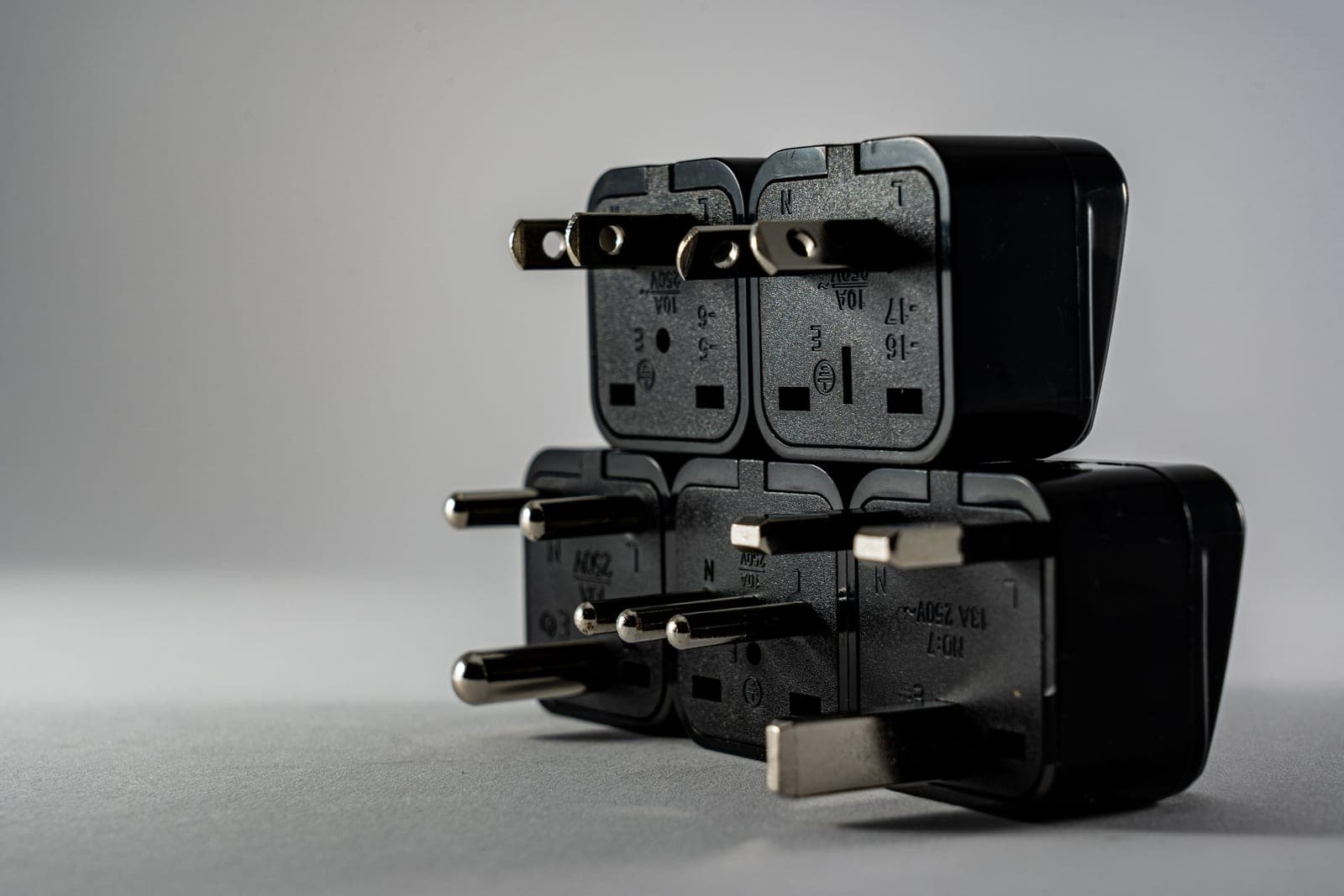
A plain reference for the NEMA plug types that matter to EV charging, what circuit each implies, and which charger to buy for it.
Top pick: Grizzl-E Mini Connect Portable Charger
Guide
Why your adapter is AC only
AC versus DC charging explained through the connector: why an adapter that fits perfectly can still do nothing at a fast charger.
Top pick: A2Z EV Stellar NACS to J1772 Adapter, 80A
Guide
Identify your outlet in about a minute
A visual identification method for the NEMA outlets that matter, plus the two lookalike pairs that cause the wrong purchase.
Top pick: Grizzl-E Mini Connect Portable Charger
Guide
Why your EV is charging slower than expected
A diagnostic for home charging that underperforms the headline number, separating the causes you can fix from the ones you cannot.
Top pick: Grizzl-E Mini Connect Portable Charger