EV chargers with a long cable
Cable length is the specification renters get wrong most often, and the one that decides whether a charger works at all in a carport.
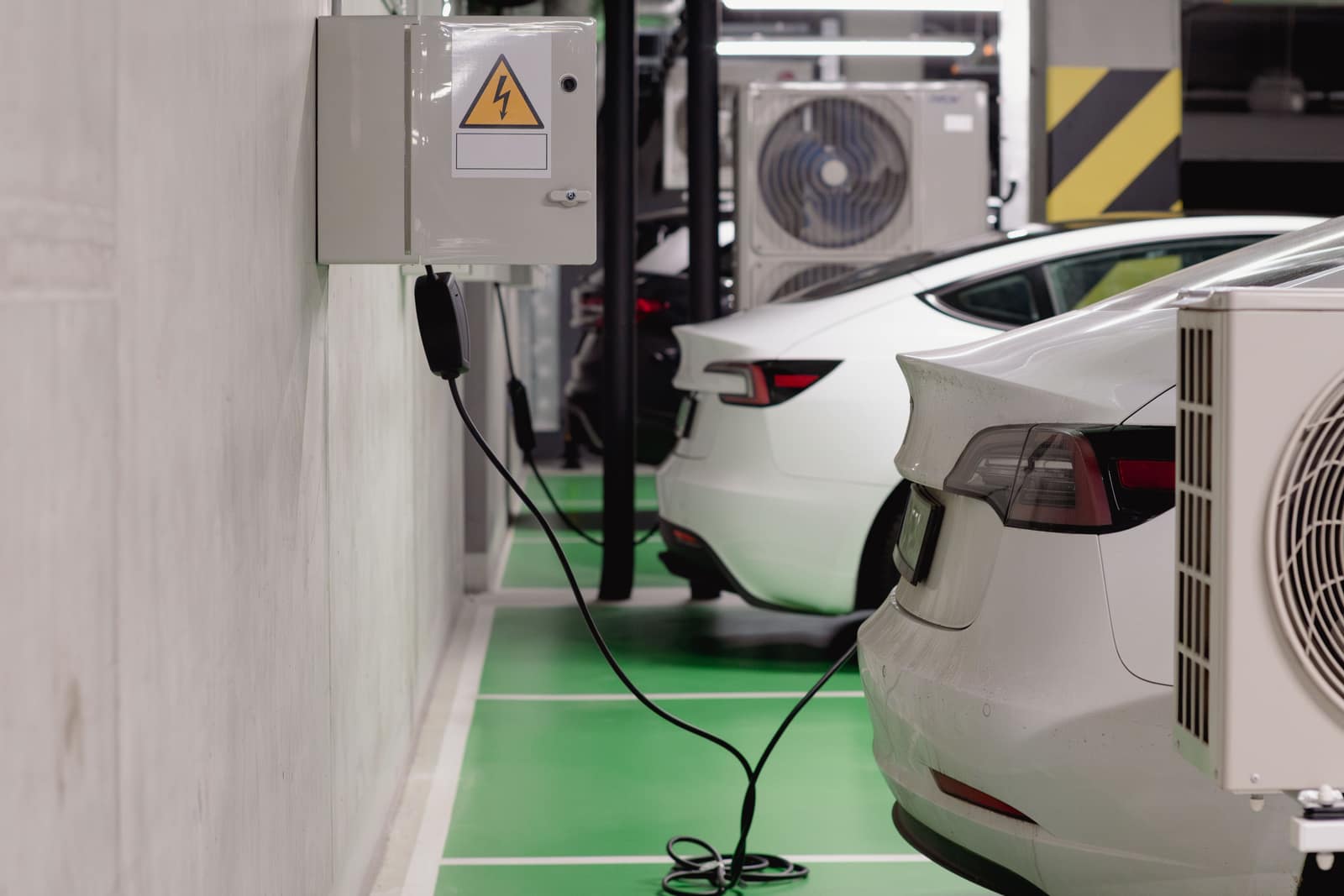
How this page is funded: the buy links below are affiliate links, and Renter Volt earns a commission on qualifying purchases at no cost to you. Nothing here was supplied by a manufacturer, and commission plays no part in the ranking — read the full disclosure. Picks are chosen from published specifications rather than hands-on testing; the method is written down so you can check it. Prices last verified September 22, 2026.
The most common reason a charger does not work in a rental is not amperage. It is that the cable stops four feet short. A 16 ft cable — the default in this category — buys only about 5 to 7 ft of useful horizontal reach once you spend length on outlet height, routing around an obstacle and slack at the plug. That is fine in a garage where the car noses up to the wall, and useless in a carport where the receptacle is by the door and the charge port is on the far rear quarter.
So this page ranks chargers by the one specification the category buries at the bottom of the listing. The honest headline: among brands that publish real specifications, the longest cable you can buy today is 25 ft. Cords of 40 ft exist on Amazon, and the section at the end explains why none of them is a pick here.
Measure before you read the rankings
Do this first, because it turns the whole decision into one number. Park the car exactly where it will actually sit — not where you would like it to sit — and run a tape from the receptacle to the charge port, following the route the cable will really take. Around the post, not through it.
| Segment | Typical | Why it is unavoidable |
|---|---|---|
| Receptacle height to the ground | 3-4 ft | Spent before you have moved an inch horizontally |
| Around a post, wall corner or neighbor's car | 2-6 ft | The route is almost never a straight line |
| Along the car to the charge port | 4-8 ft | Depends on which end and which side the port is |
| Slack for a drip loop and no strain at the plug | 2-3 ft | A taut cable at the plug is a failure waiting to happen |
Add those up against the cable you are considering. A 16 ft unit leaves 5 to 7 ft of real reach; a 25 ft unit leaves roughly 14 to 16 ft. That difference is the whole reason this page exists, and it is worth more to most renters than the difference between a 32 amp and a 40 amp charger.
How these were ranked
- Published cable length, from the manufacturer. Not a marketplace listing, not a seller's bullet point. If the brand does not publish it, it is not on this page.
- A safety listing you can look up. A long cable carries the same current for the same twelve hours as a short one; length is not a reason to relax on certification.
- Whether the length comes with a usable charger. A 40 ft cord attached to a unit you would not otherwise buy is not a win.
- Plug and connector match, because reach is worthless if the plug does not fit the outlet or the connector does not fit the car.
Quick picks
Ranked, with the reasoning underneath. Tap any row to jump to that write-up; tap the price to check it on Amazon. Prices come from the live layer, never from this page.
| # | Product | Best for | Type | Price |
|---|---|---|---|---|
| 1 | 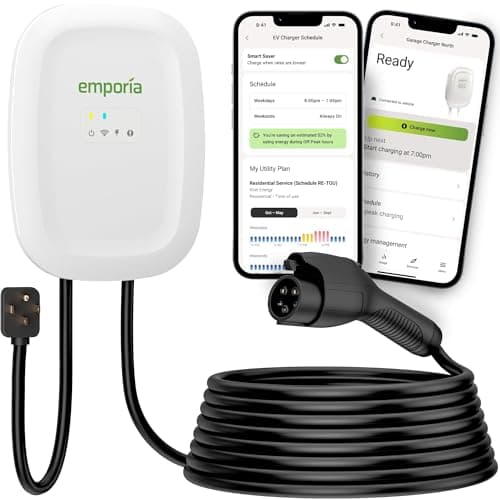 Emporia Classic Level 2 EV Charger (NEMA 14-50 plug)A plug-in smart charger whose scheduling genuinely pays for itself if your utility bills you differently overnight. Emporia Classic Level 2 EV Charger (NEMA 14-50 plug)A plug-in smart charger whose scheduling genuinely pays for itself if your utility bills you differently overnight. | Charging on a schedule | Plug-in smart EVSE | |
| 2 | 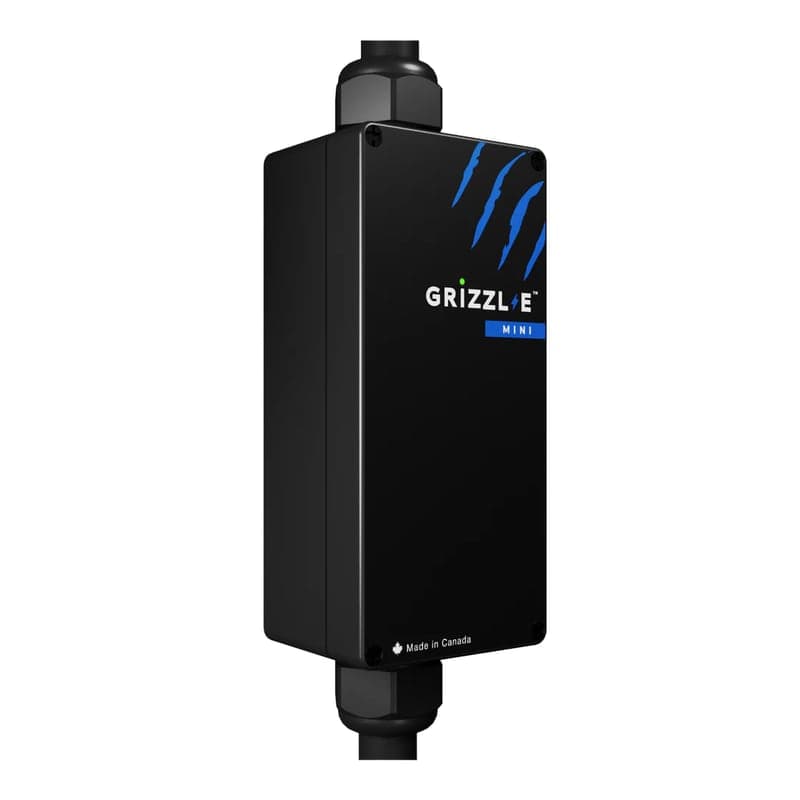 Grizzl-E Mini Connect Portable ChargerAdjustable from 7 to 40 amps and shipped with four plug adapters, which is the closest thing to a unit that fits whatever outlet you turn out to have. Grizzl-E Mini Connect Portable ChargerAdjustable from 7 to 40 amps and shipped with four plug adapters, which is the closest thing to a unit that fits whatever outlet you turn out to have. | Not knowing your outlet yet | Adjustable Level 1 and 2 EVSE | Check price#ad |
| 3 | 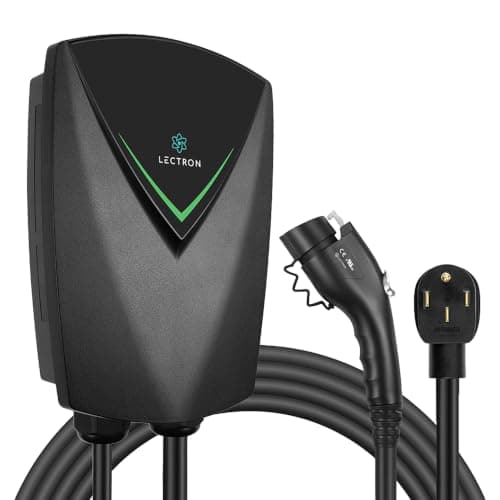 Lectron NEXUS Level 2 Charger (NEMA 14-50 plug)A 23 ft cable on a plug-in 40 amp unit, which is the specification that decides whether a parking space two bays from the outlet works at all. Lectron NEXUS Level 2 Charger (NEMA 14-50 plug)A 23 ft cable on a plug-in 40 amp unit, which is the specification that decides whether a parking space two bays from the outlet works at all. | Long cable reach | Plug-in Level 2 EVSE | |
| 4 | 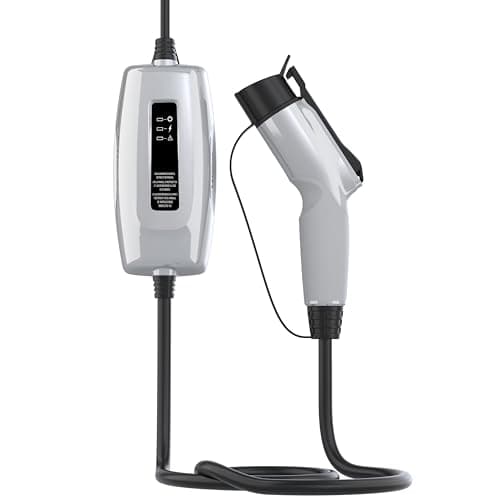 Schumacher Electric SEV1670 Level 1 Portable EV Charger (12A, NEMA 5-15)A 12 amp Level 1 charger sized correctly for an ordinary 15 amp household circuit, with a 20 ft cable that reaches further than most. Schumacher Electric SEV1670 Level 1 Portable EV Charger (12A, NEMA 5-15)A 12 amp Level 1 charger sized correctly for an ordinary 15 amp household circuit, with a 20 ft cable that reaches further than most. | A 15 amp circuit and a longer reach | Level 1 EVSE | |
| 5 | 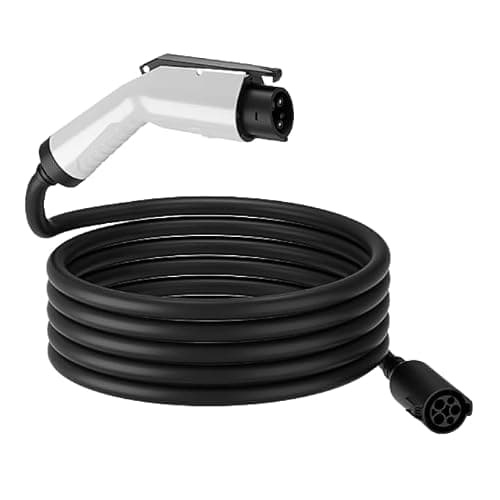 A2Z EV J1772 to J1772 Extension Cord, 16 ftA purpose-built EV extension on the car side of the charger — the correct place to add length — and the only one here whose maker publishes the code caveat that comes with it. A2Z EV J1772 to J1772 Extension Cord, 16 ftA purpose-built EV extension on the car side of the charger — the correct place to add length — and the only one here whose maker publishes the code caveat that comes with it. | A charger that will not reach | J1772 extension cable |
#1 · Charging on a schedule
Emporia Classic Level 2 EV Charger (NEMA 14-50 plug)
A plug-in smart charger whose scheduling genuinely pays for itself if your utility bills you differently overnight.
| Maximum output | 9.6 kW (40A) with a NEMA 14-50 outlet; 11.5 kW (48A) hardwiredsource |
|---|---|
| Connector | J1772 or NACS (Tesla) modelssource |
| Enclosure | Type 4 enclosure, watertight, indoor or outdoorsource |
| Certification | UL certified and GFCI protectedsource |
| Scheduling | Off-peak scheduling and real-time charge-rate monitoring in the Emporia appsource |
What those numbers mean
Note the honest asymmetry in the first row: the 48 amp headline number is the hardwired figure. On a NEMA 14-50 plug — the only version a renter should be looking at — it is a 40 amp charger. That is not a downgrade, it is what the plug is rated for.
The scheduling is the actual reason to pay more here. If you are on a time-of-use rate, charging on a timer is worth real money over the length of a lease.
It is a wall-mount form factor with a plug on it. You can hang it on a hook or leave it in the trunk; nothing about it requires a bracket screwed into the landlord's drywall.
What it does well
- Scheduling and energy monitoring that are useful rather than decorative
- Type 4 watertight enclosure rated for outdoor use
- Sold with either a J1772 or a NACS connector
- The plug-in version needs no electrician and comes off the wall when you move
What it does not
- The advertised 48 amps is hardwired-only; the plug-in version is 40 amps
- Scheduling needs Wi-Fi, which is not a given in a detached carport or a parking structure
Skip this one if: Your electricity costs the same at every hour and there is no Wi-Fi where you park. You would be paying for a feature set you cannot reach or use.
#ad · how this is funded · price as of September 22, 2026
#2 · Not knowing your outlet yet
Grizzl-E Mini Connect Portable Charger
Adjustable from 7 to 40 amps and shipped with four plug adapters, which is the closest thing to a unit that fits whatever outlet you turn out to have.
| Adjustable current | 7A to 40A (9.6 kW maximum)source |
|---|---|
| Voltage | Automatically detects 120V (Level 1) or 240V (Level 2)source |
| Cable length | 25 ft (7.6 m)source |
| Plug and adapters | NEMA 14-50 plug plus four included electrical adapterssource |
| Connector | J1772 or Tesla (NACS) versionssource |
| Enclosure | UL Type 4 / IP67 ratedsource |
| Certification | UL tested and certified, Energy Star certifiedsource |
What those numbers mean
The adjustable current is the feature that matters to a renter, and it is not a convenience. A 30 amp dryer circuit legally supports 24 amps of continuous EV load; a unit that can be set to 24 amps can use that circuit, and a fixed 40 amp unit cannot.
25 ft of cable is nine feet more than the common 16 ft, and nine feet is frequently the difference between reaching the car and not.
IP67 and a UL Type 4 enclosure describe the unit's own weather tolerance. They say nothing about the outlet it plugs into, which is usually the part that is not weather-rated.
What it does well
- 7-40A adjustment means one unit fits a 15, 20, 30 or 50 amp circuit
- 25 ft cable is among the longest on a portable unit
- Four plug adapters included, so an outlet change does not mean a new charger
- Available with either a J1772 or a NACS connector
What it does not
- Costs meaningfully more than a fixed-amperage unit that does one job
- The bundled adapters make it easy to plug into a circuit you have not actually checked
Skip this one if: You know exactly which outlet you have, it is not changing, and you would rather put the money into a longer cable than into adjustability you will set once and never touch.
#ad · how this is funded · price as of September 22, 2026
#3 · Long cable reach
Lectron NEXUS Level 2 Charger (NEMA 14-50 plug)
A 23 ft cable on a plug-in 40 amp unit, which is the specification that decides whether a parking space two bays from the outlet works at all.
| Input | 240V, 40A maximumsource |
|---|---|
| Output power | 9.6 kWsource |
| Cable length | 23 ftsource |
| Plug / connector | NEMA 14-50 plug, J1772 / CCS connectorsource |
| Enclosure | IP66-rated automotive-grade housingsource |
| Certification | UL 2594 / UL 2231 / UL 2251 / UL 817 certifiedsource |
| Manufacturer charge-rate claim | Up to 38 miles of range per hoursource |
What those numbers mean
23 ft against the 16 ft of the cheaper Lectron unit is the whole argument for this one. Cable length is the specification renters underestimate most and the one an extension cable is the worst way to fix.
IP66 means the housing tolerates jets of water. Read that as permission to leave the unit outdoors, not as permission to leave the outlet it plugs into exposed.
The manufacturer's 38 miles per hour figure assumes a car that can accept the full 9.6 kW. Halve your car's onboard charger rating and you halve that number.
What it does well
- 23 ft cable, seven feet more than the common 16 ft portable
- IP66 housing rated for sustained outdoor exposure
- Four UL listings including UL 2251 for the coupler
What it does not
- Physically larger and heavier to move between parking spots than a bare portable
- Fixed 40 amps, so it cannot step down onto a 30 amp dryer circuit
Skip this one if: Your outlet is within a few feet of the charge port. You would be paying for reach you do not need and carrying the extra bulk for nothing.
#ad · how this is funded · price as of September 22, 2026
#4 · A 15 amp circuit and a longer reach
Schumacher Electric SEV1670 Level 1 Portable EV Charger (12A, NEMA 5-15)
A 12 amp Level 1 charger sized correctly for an ordinary 15 amp household circuit, with a 20 ft cable that reaches further than most.
| Charging current | 12A continuous, 120Vsource |
|---|---|
| Output power | 1.44 kWsource |
| Cable length | 20 ftsource |
| Plug / connector | NEMA 5-15 plug, J1772 connectorsource |
| Certification | ETL and Energy Starsource |
| Enclosure | IP66 housingsource |
| Built-in protection | Leakage, undervoltage, overvoltage, overcurrent, over-temperature, ground-fault and relay-fault protectionsource |
What those numbers mean
Twelve amps is not a low number for this category; it is the correct one. A 15 amp circuit supports 12 amps of continuous load, and overnight charging is continuous by any definition, so this unit uses an ordinary household circuit right up to its limit and no further.
The 20 ft cable is four feet longer than the common 16 ft. At a carport or a curbside socket, those four feet are frequently the difference between reaching the charge port and reaching for an extension cord.
Over-temperature protection is on the manufacturer's list, but the published specification does not say where the sensor sits. Treat it as a backstop, and still feel the plug at the wall during the first few long sessions.
What it does well
- Sized for a 15 amp circuit, the most common household circuit there is
- 20 ft cable, longer than the usual 16 ft
- ETL and Energy Star certified, with an IP66 housing
- The manufacturer publishes the full list of built-in protections
What it does not
- J1772 only — a Tesla or other NACS car needs an adapter or a NACS unit
- No app or scheduling, and no current adjustment in the published specification
- 1.44 kW will not recover a long driving day overnight
Skip this one if: Your car has a NACS (Tesla-style) port, or you regularly drive more than about 40 miles a day. The first needs a different connector; the second needs more power than any Level 1 unit can deliver.
#5 · A charger that will not reach
A2Z EV J1772 to J1772 Extension Cord, 16 ft
A purpose-built EV extension on the car side of the charger — the correct place to add length — and the only one here whose maker publishes the code caveat that comes with it.
| Rating | 48A, AC Level 1 and Level 2source |
|---|---|
| Length | 16 ft / 5 msource |
| Compatibility | J1772 EV charging station into a J1772 / CCS1 vehiclesource |
| Component certification | UL-certified cable (E341631), UL 2251 connectors, UL 62 cabling; CE on the connector, FCC (EMI)source |
| Assembled-unit listing | Not UL Listed as an assembled unit — the manufacturer states an end-product category for EV extension cables is still being finalizedsource |
| Manufacturer's recommended use | Portable, occasional or emergency use; NEC Article 625 generally expects the cable to be integral to the station for permanent installationssource |
| Warranty | 12 months against manufacturing defectssource |
What those numbers mean
Extending on the J1772 side is safer than extending on the wall side, because the EVSE is still the thing controlling current and it still sits between the outlet and the extension.
Read the last three specification rows together, because they are the honest part. The components carry UL certification but the assembled cable is not UL Listed, and the manufacturer says so plainly rather than letting the component certifications imply something they do not. It also tells you NEC Article 625 expects a charging cable to be integral to the station for a permanent installation, and that this cord is for portable or occasional use. No other extension we looked at publishes any of that.
48A is well above the 40A ceiling of plug-in Level 2 charging, so the cable is never the constraint. Used at 24 amps on a shared dryer circuit it has a great deal of margin, which is exactly where you want to be.
What it does well
- Built for EV charging rather than a household cord pressed into the job
- 48A rating leaves real margin at any renter-reachable current
- The manufacturer publishes the UL-listing status and the NEC caveat instead of glossing over them
- Designed and tested in North America, with a stated 12-month warranty
What it does not
- Adds two contact interfaces to a circuit that runs for hours at high current
- Not UL Listed as an assembled unit — a real distinction, even though its components are certified
- 16 ft, so it is a shorter reach than some discontinued alternatives offered
- Not a substitute for a charger with a long enough cable in the first place
Skip this one if: You have not yet bought the charger. Buy a unit with a 23 or 25 ft cable and skip the extension entirely — one continuous cable always beats two joined ones.
#ad · how this is funded · price as of September 22, 2026
25 feet is the practical ceiling
Two units on this page publish 25 ft, and they are the longest cables available from brands that document what they sell. If your measurement came in under about 15 ft of horizontal reach, one of them solves your problem outright and nothing else on this page needs to be considered.
Between them the choice is not about cable at all: it comes down to whether you want the adjustable 7 to 40 amp range and the bundled plug adapters, or the scheduling and energy reporting that pay off on a time-of-use electricity rate. The head-to-head works through that question properly.
23 feet, and why it is still a real upgrade
Two feet does not sound like a specification worth caring about. In practice 23 ft against 16 ft is the difference between reaching and not reaching in a large share of carport layouts — it is seven extra feet, which is more than the entire slack-and-drip-loop allowance in the table above.
Both 23 ft units here are plug-in 40 amp chargers for a NEMA 14-50, so they assume you have found a 50 amp receptacle. If you have not, what amp rating do you need sorts out what your circuit can actually supply before you spend anything.
The Level 1 case: 20 feet on an ordinary socket
Reach matters more at 120V than anywhere else, because ordinary sockets are scattered around a building for reasons that have nothing to do with where cars park. A 20 ft Level 1 cable is four feet longer than the common 16 ft, and on a 15 amp household circuit it is the correct current as well — the best Level 1 chargers covers why 12 amps rather than 15 is the right number on most household circuits.
When the answer is an extension, not a longer charger
If you already own a charger you are happy with, replacing it to gain seven feet is an expensive way to buy length. The alternative is a purpose-built J1772 extension on the car side of the charger, which keeps the charging unit between the outlet and the added cable — still measuring, still controlling current, still able to stop.
Does a longer cable need a thicker conductor?
Inside a finished charger, this is the manufacturer's problem rather than yours: a unit sold with 25 ft of cable is engineered for 25 ft at its rated current, and the conductor is sized accordingly. That is precisely why a documented brand's 25 ft cable costs more than an undocumented seller's 40 ft one — the copper is real.
It becomes your problem the moment you add length yourself with a separate cord, because then nobody has engineered the total run. That is the case the gauge and length chart exists for, and the numbers there are worth checking before buying any extension.
Long cables are heavier, and that changes how you live with one
Nobody mentions weight in a specification table, and it is the thing owners of long-cable chargers notice first. A 25 ft charging cable rated for 40 amps is a substantial piece of copper: it coils stiffly, it does not want to hang neatly off a hook, and in cold weather it gets stiffer still. That is the physical cost of reach.
It matters most if you are unplugging and stowing the unit every day, which is the normal pattern for a renter using a shared or borrowed outlet rather than a private wall. If that is you, weigh the extra length against the fact that you will be carrying it. A 16 ft unit with a J1772 extension left permanently in place at the parking spot is sometimes the more livable arrangement than one long cable you wrestle nightly.
Routing the extra length without creating a hazard
Buying reach solves one problem and introduces another: you now have cable lying somewhere. In a private garage that is nobody's business. In a shared lot, a carport or along a sidewalk it is a trip hazard, and it is the single most common reason a building tells somebody to stop charging.
- Run the cable along a wall or a curb, never diagonally across a walking route or a parking bay somebody else uses.
- Keep a drip loop at the outlet so water runs off the cable rather than down into the receptacle.
- Do not coil the excess tightly while it is carrying current. A neat tight coil is a worse thermal situation than a loose figure-of-eight on the ground.
- Never run it under a door, a gate or a car tire. Crushing is what turns a healthy cable into a damaged one, and the damage is usually invisible.
- Pick the cable up when you are done. A cable left lying in a shared lot is the thing neighbors complain about, and complaints are how permission gets withdrawn.
Charging outdoors safely covers the weather side of the same question, and the apartment complex playbook covers the politics of it, which in a shared lot is frequently the harder half.
What each length gives up
| Length | Real horizontal reach | What you give up |
|---|---|---|
| 16 ft | About 5-7 ft | Nothing but reach — it is the cheapest and lightest option |
| 20 ft | About 9-11 ft | It is a Level 1 length in practice; no 240V unit here ships at 20 ft |
| 23 ft | About 12-14 ft | Two feet against the leaders, for a unit that may suit you better in other ways |
| 25 ft | About 14-16 ft | Weight, stiffness and a higher price than the short units |
Read that against the measurement you took at the start. If your route came in at nine feet, a 20 or 23 ft unit is ample and paying for 25 buys nothing. Reach is not a specification where more is automatically better — it is one where enough is the target.
Why no 40 ft cord is a pick here
Search for a 40 ft EV charger and you will find plenty, at prices that undercut everything on this page. We checked them and none is recommended, for a consistent reason: the sellers offering 40 ft cables in this category publish no manufacturer documentation and, in most cases, name no safety certification at all in their listings.
That matters more at length, not less. Voltage drop rises with distance, heat rises with current, and a longer run gives a marginal conductor more opportunity to be marginal. This is the one category where the site's standing rule — a checkable certification on anything carrying full current unattended — costs you a feature you might genuinely want. We would rather say so than pad the list. The gauge and length chart has the arithmetic if you want to evaluate a specific cable yourself.
What we could not evaluate
How each cable coils in the cold, whether the jacket stiffens after a winter outdoors, and how the strain relief at the connector ages over hundreds of plug cycles. That needs hardware and a year. Everything above is each manufacturer's published cable length, the reach arithmetic, and the routing table — the method sets out what that can and cannot tell you.
Questions people actually ask
What is the longest EV charger cable you can buy?
From brands that publish specifications, 25 ft. Longer cords exist on marketplaces — 40 ft is common — but the sellers offering them generally publish no manufacturer documentation and name no safety certification, which is why none is recommended here.
How much reach does a 16 ft charging cable actually give you?
About 5 to 7 ft of useful horizontal reach. Outlet height takes 3 to 4 ft, routing around an obstacle takes 2 to 6 ft, running along the car takes 4 to 8 ft, and you need 2 to 3 ft of slack for a drip loop.
Is it better to buy a longer charger or an extension cable?
A longer charger, if you are buying anyway — one continuous cable adds no connections. If you already own a charger you like, a purpose-built J1772 extension on the car side is the cheaper fix and keeps the charger upstream of the added length.
Does a longer cable charge more slowly?
Not measurably at these lengths and currents. Voltage drop rises with distance, but a properly sized 25 ft charging cable is engineered for its own length. The place length causes real trouble is an undersized household extension cord on the wall side.
Can I just use an extension cord to reach my car?
Only with care, and never between the wall and the charger if you can avoid it. Extend on the car side with a J1772 extension rated for your current, fully uncoiled and outdoor-rated if it lives outside.
Sources
Every figure on this page traces to one of these. If a number here disagrees with the manufacturer, the manufacturer is right and we want to know — tell us.
- Emporia Energy — Classic Level 2 EV Charger specifications
- Grizzl-E Mini Connect — published specifications (EVolt Home, authorized dealer listing)
- Lectron — Level 2 EV chargers, published specifications by model
- Schumacher Electric — SEV1670 Level 1 Portable EV Charger, 120V / 12A (product page and specifications)
- A2Z EV — J1772 to J1772 Extension Cord, AC, 48A / 16 ft (product page)
- NFPA — NFPA 70, National Electrical Code (free public access)
Read next

Best EV Extension
EV extension cords and charging cables
Adding reach safely: EV-specific extensions, the right side of the charger to extend on, and the gauge arithmetic nobody publishes.
Top pick: A2Z EV J1772 to J1772 Extension Cord, 16 ft
Guide
Is an EV extension cord safe?
The extension cord safety question, answered with the actual failure mechanism, the specification that avoids it, and what we will not endorse.
Top pick: A2Z EV J1772 to J1772 Extension Cord, 16 ft
Guide
Gauge and length: the arithmetic
Wire gauge, current and distance, with the voltage-drop formula written out and a reference table built from it.
Top pick: A2Z EV J1772 to J1772 Extension Cord, 16 ft

Best J1772 Extension
The J1772 extension cable, reviewed
A single-product review of the purpose-built J1772 extension: published ratings, the design detail that matters, and when not to buy it.
Top pick: A2Z EV J1772 to J1772 Extension Cord, 16 ft

Best Level 2 Portable
Best portable Level 2 EV chargers
The Level 2 roundup — plug-in 240V chargers compared on amperage range, cable length and published certification.
Top pick: Grizzl-E Mini Connect Portable Charger

Best Level 1 Charger
The best Level 1 EV chargers
Level 1 chargers ranked for renters: 12 amps against 15 and the breaker that decides it, cable reach, connector and a safety listing you can check.
Top pick: Schumacher Electric SEV1670 Level 1 Portable EV Charger (12A, NEMA 5-15)