Autel MaxiCharger vs ChargePoint Home Flex
Two 40 amp plug-in chargers that look interchangeable on paper. The difference is which half of the paperwork each company chose to publish.

How this page is funded: the buy links below are affiliate links, and Renter Volt earns a commission on qualifying purchases at no cost to you. Nothing here was supplied by a manufacturer, and commission plays no part in the ranking — read the full disclosure. Picks are chosen from published specifications rather than hands-on testing; the method is written down so you can check it. Prices last verified November 8, 2026.
For most renters, the Autel — two more feet of cable and a published enclosure rating, for meaningfully less money. Take the ChargePoint if you want the manufacturer to state a UL listing on its own page, because Autel does not, and that is a real difference rather than a tiebreaker.
Both are 40 amp plug-in units on a NEMA 14-50. Both carry a three-year warranty. At the same amperage on the same outlet they will charge your car at the same speed, so the decision is made entirely on reach, price and paperwork. Everything below is from each manufacturer's own published material; Renter Volt has handled neither unit and says so plainly.
Quick picks
Ranked, with the reasoning underneath. Tap any row to jump to that write-up; tap the price to check it on Amazon. Prices come from the live layer, never from this page.
| # | Product | Best for | Type | Price |
|---|---|---|---|---|
| 1 | 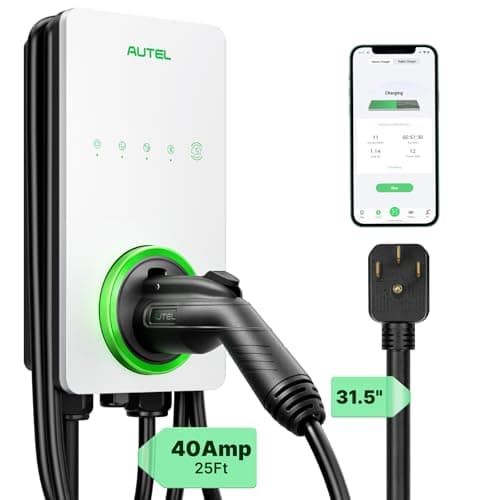 Autel MaxiCharger AC Elite Home (40A, NEMA 14-50 plug)Twenty-five feet of cable and a published NEMA 4 enclosure rating — full 40 amp reach for a bay that is not beside the outlet. | Maximum reach at a fixed 40A | Plug-in Level 2 EVSE | |
| 2 | 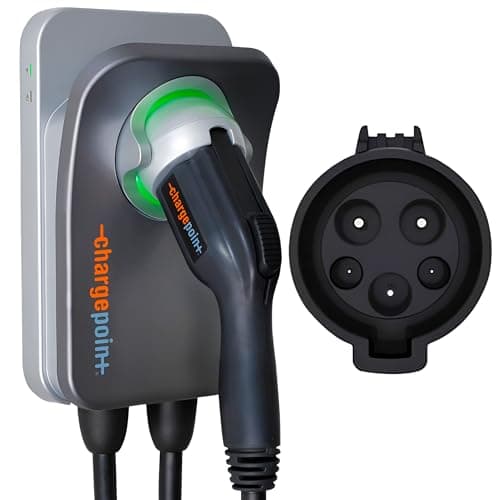 ChargePoint Home Flex Level 2 EV Charger (40A, NEMA 14-50 plug)A plug-in 40 amp smart charger whose app runs both this unit and ChargePoint's public network, which is the one thing here the cheaper units cannot match. | One app for home and public | Plug-in smart EVSE |
#1 · Maximum reach at a fixed 40A
Autel MaxiCharger AC Elite Home (40A, NEMA 14-50 plug)
Twenty-five feet of cable and a published NEMA 4 enclosure rating — full 40 amp reach for a bay that is not beside the outlet.
| Input / output | 240V, 40A maximum, 9.6 kWsource |
|---|---|
| Cable length | 25 ftsource |
| Plug / connector | NEMA 14-50 plug, SAE J1772 connectorsource |
| Enclosure rating | NEMA 4 (published; no IP figure given)source |
| Current adjustment | "Adjustable charging up to 40 Amps" — no lower limit publishedsource |
| Warranty | Three year limited warrantysource |
| Connectivity | Wi-Fi / Bluetooth / Ethernet / CAN / RS485source |
| Efficiency certification | ENERGY STAR certified (AUTEL Maxi US AC W12, EVSE spec v1.2)source |
What those numbers mean
Twenty-five feet ties the longest cable on this site — the Grizzl-E Mini — but the Mini is an adjustable unit built around smaller circuits. This is the 25 ft option that runs the full 40 amps on a NEMA 14-50, and 16 ft is the category norm for that class.
The NEMA 4 enclosure rating is a published figure, which is rarer in this category than it should be. It is not the same as an IP rating and Autel publishes no IP number and no operating temperature range on this page.
Autel's own page says "Recommended hardwire for outdoor installation". A renter cannot hardwire anything, so read that as the manufacturer steering year-round outdoor use away from the plug-in version you can actually use.
What it does well
- 25 ft cable — tied for the longest on this site, and the longest at a full 40 amps
- Publishes a NEMA 4 enclosure rating, which most of this category does not
- Three year limited warranty, published on Autel's own page
- ENERGY STAR certified, verifiable in the EPA's own product database
What it does not
- No operating temperature range published anywhere on the product page
- Autel's page still carries a "*Certification Pending May 2022" note and names no UL standard or certificate number
- The adjustable range is given only as "up to 40 Amps" — the lower limit is not published, so a 30 amp circuit is not a documented use
- Costs meaningfully more than a plain fixed 40 amp unit for the same 9.6 kW
Skip this one if: Sixteen feet already reaches your charge port. The extra cable is what you are paying for here, and if you do not need it a plain 40 amp unit delivers identical power for less.
#ad · how this is funded · price as of November 8, 2026
#2 · One app for home and public
ChargePoint Home Flex Level 2 EV Charger (40A, NEMA 14-50 plug)
A plug-in 40 amp smart charger whose app runs both this unit and ChargePoint's public network, which is the one thing here the cheaper units cannot match.
| Amperage | 16 to 50A flexible amperage across the range; the plug-in version delivers up to 40Asource |
|---|---|
| Circuit required (plug-in) | A circuit rated 40A or 50A. ChargePoint states the hardwired version is required for all other circuit ratingssource |
| Cable length | 23 ftsource |
| Plug / connector | NEMA 14-50 plug (a 6-50 version is also sold), J1772 or NACS connectorsource |
| Certification | UL Listed and ENERGY STAR certifiedsource |
| Warranty | 3 yearssource |
| Outdoor installation | ChargePoint requires hardwiring the station or using a weatherproof receptacle for outdoor installationsource |
What those numbers mean
The 50 amp headline belongs to the hardwired version. On a plug it delivers up to 40 amps, which is the ceiling a 50 amp circuit permits continuously and the same ceiling every plug-in charger shares.
The circuit requirement is stricter than it first looks. ChargePoint states the plug-in version needs a circuit rated 40 or 50 amps and that the hardwired version is required for anything else, so a smaller circuit is not something you can simply dial down to.
The app is the real differentiator. It handles this charger and ChargePoint's public stations from one place, which is worth more to somebody who charges partly away from home than to somebody with a driveway and a fixed routine.
What it does well
- One app for this charger and ChargePoint's public network
- Amperage is selected in the app to match the breaker feeding the outlet
- UL Listed and ENERGY STAR certified, with a three-year warranty
- Sold with a J1772 or a NACS connector, and a NACS cable conversion kit exists for units already owned
What it does not
- The plug-in version needs a circuit rated 40 or 50 amps; ChargePoint requires hardwiring for anything smaller
- 23 ft of cable, shorter than some rivals at this price
- Outdoors, ChargePoint asks for hardwiring or a weatherproof receptacle rather than a bare plug
- It sits at the top of the plug-in price bracket
Skip this one if: Your 240V outlet is on a circuit smaller than 40 amps, or you never use public charging and only want an overnight timer. In both cases you would be paying for the part of this charger you cannot use.
The thing that makes this comparison worth having
Each company publishes precisely what the other leaves out. That is not a figure of speech — it is what the two product pages actually do, and it is why you cannot line these two up on a single row by reading their listings.
| Autel MaxiCharger AC Elite Home | ChargePoint Home Flex | |
|---|---|---|
| Named UL standard | No — no standard named | States "UL Listed for safety" (no standard number) |
| Enclosure / ingress rating | NEMA 4, published | Not published at all |
| Cable length on the product page | 25 ft, published | Not published — the 23 ft figure comes from its FAQ |
| ENERGY STAR | Certified, and verifiable in the EPA database as AUTEL Maxi US AC W12 | States "ENERGY STAR certified for efficiency" |
| Certificate number | No | No |
| Warranty | Three year limited warranty | "3-year warranty for peace of mind" |
| Plug-in amperage | Up to 40A on a NEMA 14-50 | "Delivers up to 40A" on the plug-in model |
| Hardwired option | Yes, a separate 50A model | Yes, "up to 50A" — not a renter option either way |
So the honest summary is that neither page is complete, and they are incomplete in opposite directions. Autel tells you how sealed the box is and not which safety standard it was built to; ChargePoint tells you it is listed and not how sealed it is. Neither gives you a certificate number, which is the thing that would let you check either claim — a gap the cross-brand audit found right across this category.
Both are 40 amp chargers, and neither raises that ceiling
ChargePoint advertises the Home Flex at up to 50 amps. Read which configuration that describes: 50 amps is the hardwired figure. On a plug it delivers up to 40, because a NEMA 14-50 sits on a 50 amp circuit and the continuous-load rule caps that at 40.
breaker rating × 0.8 = continuous current permitted
50A circuit × 0.8 = 40A → the ceiling for ANY plug-in Level 2 charger · ChargePoint hardwired on a 60A+ circuit → up to 50A, but that needs an electrician · A car with a 7.2 kW onboard charger → about 30A whatever either unit offers
The hardwired advantage is real and it is not available to a tenant — hardwired against plug-in sets out why that line is absolute here. On a plug these two are the same 40 amp charger, and what amp rating you need checks it against your own car.
This matters for the comparison because it removes speed from the decision entirely. Anyone choosing between these two on charging rate is choosing between two identical numbers.
Reach: 25 ft against 23 ft
The Autel publishes 25 ft, which ties the longest cable on this site. ChargePoint's is 23 ft — and note where that figure lives: not on the product page, which publishes no cable length at all, but in its installation FAQ. Two feet is a small difference and occasionally the whole decision, because cable length is the specification renters get wrong most often. EV chargers with a long cable ranks the full field on it.
Measure before you choose between them: from the receptacle to where your charge port sits with the car parked as it will actually be parked. If both reach comfortably, this row is worth nothing and you should decide on the next one. If 23 ft is marginal, it has decided the purchase for you.
The outdoor question, where both of them hedge
This is the row where a renter should read carefully, because both manufacturers point outdoor installation at hardwiring — the configuration a tenant cannot use.
- Autel publishes a NEMA 4 enclosure rating and describes the unit as "Specially designed for Indoor or Outdoor use" — then adds, in the same block, "*Recommended hardwire for outdoor installation".
- ChargePoint publishes no enclosure rating at all and describes its hardwired model as the "Best choice for outdoor installation".
So on the one question where a published rating would settle it, Autel gives you a figure and a caveat, and ChargePoint gives you a steer and no figure. Under cover — a garage bay, a sheltered carport — neither caveat applies and the NEMA 4 rating is a genuine point for the Autel. Fully exposed year-round, the honest answer is that neither company is recommending the version you can actually use. Leaving a portable charger outside covers the join between charger and outlet, which is where the trouble starts regardless of which box you buy.
What ChargePoint gives you that Autel does not
- A stated UL listing. "UL Listed for safety", in the manufacturer's own words. No standard number and no certificate number, but it is a safety claim where Autel makes none.
- A NACS connector option. ChargePoint sells the Home Flex with either a J1772 or a NACS connector, so a Tesla-port car can skip the adapter entirely — which direction your car needs is the rule if you are unsure.
- A NEMA 6-50 plug option, which matters if the 240V receptacle you can reach is a welder-style outlet rather than a range outlet.
- The larger network and app. Is a smart charger worth it? is the honest version of whether that is worth paying for, and ChargePoint against Emporia compares it with the other networked option here.
What Autel gives you that ChargePoint does not
- A published enclosure rating. NEMA 4 is a defined standard rather than an adjective, and ChargePoint publishes nothing in this column.
- Two more feet of cable, published on the product page rather than buried in a FAQ.
- A third-party certification record you can look up yourself — the EPA's ENERGY STAR database lists it as AUTEL Maxi US AC W12. That is an efficiency certification, not a safety one, but it is checkable without taking anyone's word for it.
- A meaningfully lower price. The gap has narrowed since we first reviewed the Autel — it has risen while the ChargePoint has held — so check both live prices above rather than trusting any remembered number.
How this was judged
- Can a tenant put it into service unaided? Both, in their plug-in configurations. Both also sell hardwired models, and neither hardwired model belongs on this site. This is the only criterion treated as absolute here.
- Delivered current on a circuit a renter can reach. Identical: 40 amps on a NEMA 14-50. Nothing is credited for a hardwired figure a tenant cannot use.
- Reach. 25 ft against 23 ft, to the Autel — and ChargePoint does not publish the figure on its product page at all.
- Is a safety standard named, and is it checkable? To ChargePoint, which at least states a listing. Neither publishes a certificate number, so neither scores full marks.
- Are the specifications governing outdoor life published? To the Autel, which publishes NEMA 4 where ChargePoint publishes nothing — with the caveat that Autel still steers outdoor installs to hardwiring.
- Warranty. A tie at three years, which is this category's standard — see how long a portable charger lasts for why that number is doing more work than it should.
- Price. To the Autel, though by less than it used to be.
Which to buy
- Take the Autel if price and reach are deciding it, your charger will live under cover, and a published enclosure rating matters more to you than a stated UL listing. For most renters on a reachable NEMA 14-50, that is the description.
- Take the ChargePoint if you want the manufacturer to state a safety listing before you buy. That is a legitimate thing to insist on, and it is the one column where the cheaper unit is simply silent.
- Take the ChargePoint if your car has a NACS port and you would rather not run an adapter, or if the outlet you can reach is a NEMA 6-50. Autel's plug-in unit does not answer either case.
- Take neither if the only 240V you can reach is a 30 amp dryer circuit. Both are 40 amp units on a 14-50 plug and neither fits that receptacle — the dryer-outlet route and an adjustable charger are the right answers there.
- Think twice about both if the charger must live fully exposed through a winter. Each manufacturer points outdoor installation at a hardwired unit you cannot install, and the outdoor and winter roundup ranks on figures that neither of these publishes in full.
What this page cannot tell you
Neither unit has been through our hands; the methodology is explicit that nothing on this site has been tested. Every figure above is the manufacturer's own published page as of this page's date, plus the EPA's ENERGY STAR record and the continuous-load rule from the National Electrical Code. What that leaves out is everything a bench would tell you: how either app behaves over three years, how either housing survives a winter, and whether either company answers a warranty claim in month fourteen. Where a company has published nothing, this page reports the absence rather than filling it in from a retailer listing.
Questions people actually ask
Autel MaxiCharger or ChargePoint Home Flex — which should I buy?
For most renters the Autel: two more feet of cable and a published NEMA 4 enclosure rating for less money. Choose the ChargePoint if you want the manufacturer to state a UL listing, if your car has a NACS port and you would rather skip the adapter, or if the outlet you can reach is a NEMA 6-50. On charging speed they are identical — both deliver up to 40 amps on a plug.
Is one of them faster than the other?
No. Both are 40 amp units on a NEMA 14-50, and a 50 amp circuit permits 40 amps continuously, so they land on the same figure. ChargePoint's advertised 50 amps applies to its hardwired model, which needs an electrician and is not a renter option.
Is the Autel MaxiCharger UL listed?
Its product page names no UL standard and publishes no certificate number; it carries a note reading "Certification Pending May 2022". It is separately ENERGY STAR certified, which is verifiable in the EPA's product database but is an efficiency certification rather than a safety one. ChargePoint, by contrast, states "UL Listed for safety" — also without a standard or certificate number.
Which one is better for outdoor charging?
Neither manufacturer recommends the plug-in version for permanent outdoor installation. Autel publishes a NEMA 4 enclosure rating but adds that it recommends hardwiring outdoors; ChargePoint publishes no enclosure rating and calls its hardwired model the best choice for outdoor installation. Under cover, the Autel is the one with a published figure.
How long are the cables?
The Autel publishes 25 ft on its product page. ChargePoint's is 23 ft, a figure that appears in its installation FAQ rather than on the product page, which publishes no cable length at all. Measure from the receptacle to your charge port before deciding whether two feet matters.
Do both come with a warranty?
Yes, three years each. That is the standard across the brands on this site, so it does not separate them.
Can either one charge a Tesla?
Both can, but only ChargePoint sells a factory NACS connector option. With the Autel, a NACS car needs a J1772-to-NACS adapter. Getting the adapter direction right matters more than the brand does.
Will either work on a dryer outlet?
No. Both end in a NEMA 14-50 plug, which will not fit a 14-30 or 10-30 dryer receptacle, and both are fixed 40 amp units where a 30 amp circuit permits 24. That situation needs an adjustable charger with plug adapters, or a splitter on the dryer circuit.
Sources
Every figure on this page traces to one of these. If a number here disagrees with the manufacturer, the manufacturer is right and we want to know — tell us.
- Autel Energy (US store) — MaxiCharger AC Elite Home 40A, NEMA 14-50 plug-in (published specifications)
- ENERGY STAR (U.S. EPA) — certified EV charger record, AUTEL Maxi US AC W12, EVSE specification v1.2
- ChargePoint — Home Flex home charger: configurations, amperage and certifications
- ChargePoint — Home Flex installation and amperage selection FAQ (circuit ratings, cable length, outdoor installation)
- UL Solutions — UL 2594, standard for electric vehicle supply equipment
- SAE International — J1772 electric vehicle conductive charge coupler standard
- NFPA — NFPA 70, National Electrical Code (free public access)
- U.S. DOE Alternative Fuels Data Center — Electric vehicle charging levels and speeds
Read next
Best Portable Charger
Best portable EV chargers
The portable charger section: plug-in Level 1 and Level 2 units ranked by the outlet you can actually reach, with every spec cited.
Top pick: Grizzl-E Mini Connect Portable Charger
Guide
Autel MaxiCharger AC Elite Home, reviewed
A close read of the plug-in 40A MaxiCharger: the 25 ft cable, the published NEMA 4 enclosure, the certification line still marked pending since 2022, and the outdoor advice Autel gives that a tenant cannot follow.
Top pick: Autel MaxiCharger AC Elite Home (40A, NEMA 14-50 plug)
Best Networked Charger
ChargePoint Home Flex, reviewed
A close read of the Home Flex: the 50 amp asterisk, the 40-or-50 amp circuit rule, the outdoor caveat, and the app that no rival can match.
Top pick: ChargePoint Home Flex Level 2 EV Charger (40A, NEMA 14-50 plug)

Best Level 2 Portable
Best portable Level 2 EV chargers
The Level 2 roundup — plug-in 240V chargers compared on amperage range, cable length and published certification.
Top pick: Grizzl-E Mini Connect Portable Charger

Guide
What to look for in a portable EV charger
A criteria-first guide to choosing a plug-in charger: the six specifications that matter in order, and a cross-brand table of which makers publish each one and which stay silent.
Top pick: Grizzl-E Mini Connect Portable Charger

Best Plug-In Level 2
Hardwired vs plug-in EV charger
What hardwiring actually buys you, what it costs you, and why a renter's answer to this question is decided before the comparison starts.
Top pick: Grizzl-E Mini Connect Portable Charger