The best home charger for a Chevy Bolt
Chevrolet includes a Dual Level Charger with the car. That single fact makes most of the shopping advice written about this model wrong.
How this page is funded: the buy links below are affiliate links, and Renter Volt earns a commission on qualifying purchases at no cost to you. Nothing here was supplied by a manufacturer, and commission plays no part in the ranking — read the full disclosure. Picks are chosen from published specifications rather than hands-on testing; the method is written down so you can check it. Prices last verified September 27, 2026.
Chevrolet states the Bolt charges through a standard NACS charge port using the included Dual Level Charger. Read that twice before you spend anything, because it makes most of the internet's Bolt charging advice irrelevant: the car comes with a charger, and the thing most owners actually need to buy is a much cheaper part.
That part is an adapter. The Bolt's port is NACS; a very large share of apartment buildings, workplaces and parking structures installed J1772 pedestals. The gap between those two is about the price of a tank of gas.
Start by finding what came with the car
Look under the cargo floor and in the delivery paperwork. A dual-level cord will charge from an ordinary 120V socket and, with the right receptacle, at 240V as well — which covers a lot of renters completely.
If it is there and it reaches where you park, you are finished and this page has saved you money. The rest of it is for the cases where it is not enough.
The four reasons to buy anything at all
- Your building's chargers are J1772 and your car is NACS. An adapter, not a charger. This is the most common case and the cheapest fix on the page.
- The included cord does not reach. A reach problem is a cable problem — the long-cable roundup covers what a longer unit actually buys you.
- You want a second charger for another location, so the first one stays where you park.
- You want public DC fast charging on CCS stations, which needs a CCS1-to-NACS adapter rather than anything AC.
Notice that only one of those four is a charger. That is unusual for a car this popular, and it is entirely down to Chevrolet including the cord.
How these were ranked
- Cheapest thing that solves the actual problem first. For most Bolt owners that is an adapter, so an adapter leads.
- Connector match. The Bolt's port is NACS, which rules out a J1772-terminated charger unless you add an adapter to the chain.
- Current matched to the circuit you can reach, not to the car.
- A published safety listing, the same bar applied everywhere on this site.
Quick picks
Ranked, with the reasoning underneath. Tap any row to jump to that write-up; tap the price to check it on Amazon. Prices come from the live layer, never from this page.
| # | Product | Best for | Type | Price |
|---|---|---|---|---|
| 1 | 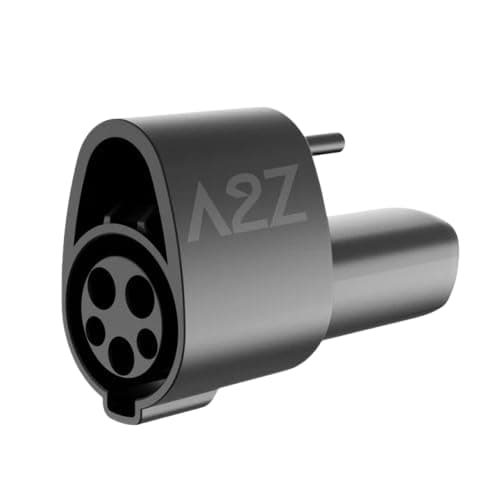 A2Z EV J1772 to NACS Adapter, 80ASame direction as the Lectron, with an integrated locking pin — the answer if your charging happens somewhere other people walk past. A2Z EV J1772 to NACS Adapter, 80ASame direction as the Lectron, with an integrated locking pin — the answer if your charging happens somewhere other people walk past. | Cables that get knocked | AC charging adapter | |
| 2 | 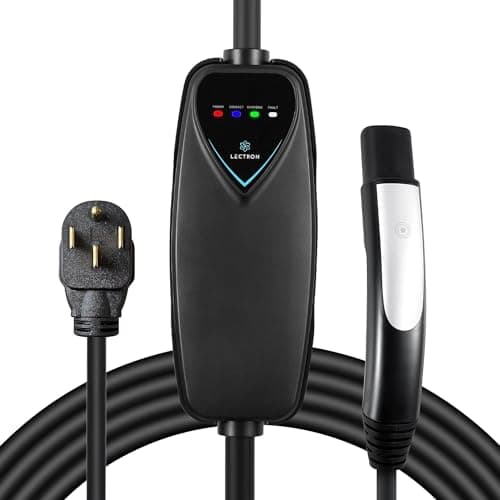 Lectron Portable Level 2 Tesla (NACS) Charger (40A, NEMA 14-50)The same 40 amp plug-in unit with a NACS connector on the end, so a Tesla or a NACS-port car charges without an adapter in the middle. Lectron Portable Level 2 Tesla (NACS) Charger (40A, NEMA 14-50)The same 40 amp plug-in unit with a NACS connector on the end, so a Tesla or a NACS-port car charges without an adapter in the middle. | A Tesla or NACS car | Plug-in Level 2 EVSE | |
| 3 | 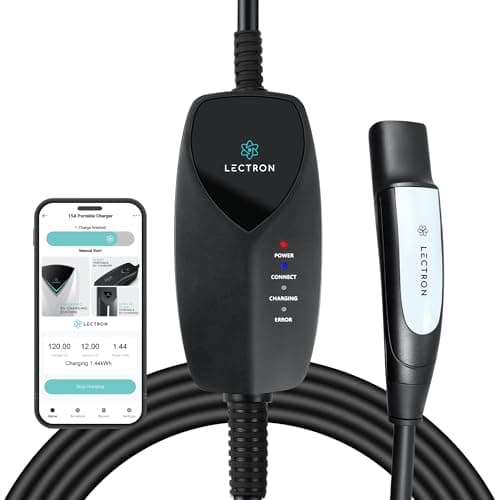 Lectron Portable Level 1 Tesla (NACS) Charger, WiFi (12A, NEMA 5-15)A 12 amp NACS Level 1 charger with app scheduling: the right current for a 15 amp circuit and the right connector for a Tesla, with no adapter in between. Lectron Portable Level 1 Tesla (NACS) Charger, WiFi (12A, NEMA 5-15)A 12 amp NACS Level 1 charger with app scheduling: the right current for a 15 amp circuit and the right connector for a Tesla, with no adapter in between. | A Tesla or NACS car on a household socket | Level 1 smart EVSE | |
| 4 |  LENZ CCS1 to NACS AdapterThe budget route into CCS fast charging for a NACS car, with a lower voltage rating than the A2Z and a safety listing to a different standard. LENZ CCS1 to NACS AdapterThe budget route into CCS fast charging for a NACS car, with a lower voltage rating than the A2Z and a safety listing to a different standard. | The cheapest CCS access | DC fast-charging adapter |
#1 · Cables that get knocked
A2Z EV J1772 to NACS Adapter, 80A
Same direction as the Lectron, with an integrated locking pin — the answer if your charging happens somewhere other people walk past.
| Rated current | 80A maximum at 240VACsource |
|---|---|
| Maximum power | 19.2 kWsource |
| Direction | SAE J1772 charger into a NACS vehicle portsource |
| Charging type | AC only (Level 1 and Level 2)source |
| Certification | UL 2252 / CSA-C22.2 certified, certificate number 80259177source |
| Ingress rating | IP54, Type 3R enclosuresource |
| Operating temperature | -22°F to 122°F (-30°C to 50°C)source |
| Retention | Integrated locking pin prevents accidental disconnectionsource |
What those numbers mean
The locking pin is the differentiator and it addresses a real failure: an adapter that separates when someone brushes the cable ends the charging session, and you find out in the morning.
Type 3R is an enclosure classification for outdoor use against falling rain. Together with IP54 it describes an adapter meant to stay connected outside, not one meant to be sheltered.
19.2 kW is the theoretical AC ceiling of the standard, not a speed you will see. No residential circuit a renter can reach produces it.
What it does well
- Integrated locking pin against accidental disconnection
- UL 2252 and CSA certified with the certificate number published
- Type 3R and IP54 rated, with a stated temperature range
What it does not
- More expensive than adapters that do the same electrical job
- The locking pin is one more thing to operate in the cold with gloves on
Skip this one if: You charge in a private, sheltered spot nobody walks past. The retention feature you are paying for solves a problem you do not have.
#ad · how this is funded · price as of September 27, 2026
#2 · A Tesla or NACS car
Lectron Portable Level 2 Tesla (NACS) Charger (40A, NEMA 14-50)
The same 40 amp plug-in unit with a NACS connector on the end, so a Tesla or a NACS-port car charges without an adapter in the middle.
| Input | 240V, 40A maximumsource |
|---|---|
| Output power | 9.6 kWsource |
| Plug / connector | NEMA 14-50 plug, NACS connectorsource |
| Charging type | AC Level 2 onlysource |
| Certification | UL 2594 / UL 2231 / UL 2251 / UL 817 certifiedsource |
What those numbers mean
Buying the connector your car actually has removes a failure point. An adapter is one more thing to lose, one more thing to have walk off from a shared outlet, and one more contact interface to get warm.
This is an AC Level 2 unit. NACS is also the DC fast-charging connector, and the shared shape leads people to assume one cable does both. It does not.
If your household ever changes to a J1772 car, this becomes the wrong unit and a J1772 model becomes right. That is the argument for the adapter route if you expect to switch.
What it does well
- No adapter in the charging path for a Tesla or NACS-port vehicle
- Carries four UL listings, including UL 2251 for the coupler itself
- Same 40 amp ceiling as the J1772 version, so no speed penalty for the connector choice
What it does not
- Useless with a J1772 car unless you add an adapter, which is the situation you bought it to avoid
- The NEMA 14-50 plug still assumes a 50 amp circuit
Skip this one if: Your household has, or is about to have, a J1772 car as well. Buy the J1772 unit and one NACS adapter instead, and cover both.
#ad · how this is funded · price as of September 27, 2026
#3 · A Tesla or NACS car on a household socket
Lectron Portable Level 1 Tesla (NACS) Charger, WiFi (12A, NEMA 5-15)
A 12 amp NACS Level 1 charger with app scheduling: the right current for a 15 amp circuit and the right connector for a Tesla, with no adapter in between.
| Charging current | 12A, 120Vsource |
|---|---|
| Output power | Up to 1.44 kWsource |
| Cable length | 16 ftsource |
| Plug / connector | NEMA 5-15 plug, NACS (Tesla) connectorsource |
| Certification | UL 2594 / UL 2231 certifiedsource |
| Enclosure | IP67-rated control boxsource |
| App features | Charging schedules, real-time status and a kWh limit per session in the Lectron appsource |
What those numbers mean
The 12 amp rating is what makes this the NACS pick for most renters: it matches the continuous limit of an ordinary 15 amp circuit, where a 15 amp unit would need a 20 amp circuit behind the socket.
A NACS connector means a Tesla, or any other NACS car, plugs in directly. That is one fewer connection carrying current for twelve hours, and one fewer part to leave in a shared parking space.
The app earns its place on a time-of-use electricity rate, where starting the session inside the cheap window is worth money every night. On a flat rate it is mostly a status display.
What it does well
- Sized for a 15 amp household circuit
- Native NACS connector — no adapter needed on a Tesla
- Scheduling and a per-session kWh limit in the app
- UL 2594 / UL 2231 certified, with an IP67 control box
What it does not
- 16 ft cable, and the nearest socket is often further away than that
- The scheduling runs through the app, so it needs a network where you park
- NACS only — a J1772 car would need an adapter
Skip this one if: Your car has a J1772 port, or your electricity costs the same at every hour and there is no Wi-Fi where you park. A plain 12 amp unit does the same electrical job.
#ad · how this is funded · price as of September 27, 2026
#4 · The cheapest CCS access
LENZ CCS1 to NACS Adapter
The budget route into CCS fast charging for a NACS car, with a lower voltage rating than the A2Z and a safety listing to a different standard.
| Direction | CCS1 station cable into a NACS vehicle portsource |
|---|---|
| Rating | Supports up to 500V DCsource |
| Certification | SGS listed to comply with UL 2251 and CSA C22.2source |
| Operating temperature | -22°F to 122°F operating, -40°F to 185°F storagesource |
| Tesla requirement | The car must be CCS enabled — LENZ points to Controls, Software, Additional Vehicle Information, CCS Adapter Supportsource |
| Warranty | 2 yearssource |
What those numbers mean
The cheapest way to reach CCS stations with a NACS car, and the specification to read closely is the voltage: LENZ publishes up to 500V, where the A2Z alternative publishes 1000V. On an 800V car that difference is the whole decision.
Note the standard as well. LENZ lists this one to UL 2251, the coupler standard, while the adapters above cite UL 2252, which covers EV adapters specifically. Both are real listings; they are not the same claim.
The storage range is unusually wide, which matters for a part that lives in a trunk through a summer and a winter.
What it does well
- The least expensive adapter on this page
- SGS listed to UL 2251 and CSA C22.2
- Wide published storage and operating temperature ranges
- Two-year warranty with US-based support
What it does not
- 500V rating, against 1000V on the A2Z adapter in the same direction — the limiting figure on an 800V car
- Listed to UL 2251 rather than the EV-adapter standard UL 2252
- No interlock pin published
Skip this one if: Your car runs an 800V architecture or you want the strongest published certification in this direction. The A2Z adapter is rated to 1000V and certified to UL2252.
#ad · how this is funded · price as of September 27, 2026
What "dual level" means on the included cord
A dual-level charging cord is one that works at both household 120V and 240V, rather than being locked to one or the other. That is why it covers so many renters on its own: the same cord that trickles overnight from a socket by the carport door will also do Level 2 work if you can reach a suitable 240V receptacle.
It is also the reason the advice on this page is unusual. On most cars the first purchase is a charger. On this one the car already answered that question, so the money is better spent on reach or on the adapter that unlocks the chargers your building already installed. Dual Level 1 and Level 2 chargers covers what that class of unit does and who it suits.
If you are shopping a used Bolt EUV instead
Worth knowing before you buy either the car or the gear, because the charging story is not the same. Chevrolet describes the current Bolt's DC fast charging as more than 2.5 times faster than the Bolt EUV, and attributes that to the new battery and the standard NACS DC port.
For home charging the practical difference is the connector. An older Bolt or Bolt EUV with a J1772 inlet plugs straight into the J1772 pedestals most apartment buildings installed, and needs no adapter at all — the exact opposite of the newer car's situation. Check the inlet on the specific car rather than assuming from the badge.
Sharing a circuit, and being easy to live with
The Bolt is the car a lot of people buy precisely because they are watching money, which frequently means an apartment, a shared lot and an outlet that belongs to somebody else. Two habits make that arrangement durable.
- Charge at the lowest rate that finishes the job. A slower session is a cooler session, it is gentler on a receptacle you did not install, and overnight you will not notice the difference.
- Unplug and tidy up when it is done. A cord left across a shared lot is the thing that gets charging banned for everyone — the same etiquette the shared laundry room page sets out.
Superchargers, and the app check
Chevrolet says the Bolt can use select Tesla Superchargers thanks to the standard NACS port, and directs owners to the MyChevrolet app to confirm whether an individual station is compatible. That is a meaningful practical difference from the older Bolt EUV, which needed an adapter for the same trick.
For a renter with no home charging at all, network access is not a convenience — it is the arrangement. Home vs public charging prices what relying on it actually costs per mile.
The CCS side still needs a part
A NACS port opens Superchargers but it closes nothing else — except that CCS1 stations, which are most of the non-Tesla fast-charging network, no longer plug straight in. A CCS1-to-NACS adapter bridges that, and it is the one genuinely optional purchase here.
Check the voltage rating before you buy: these are sold in 500V and 1000V versions that look alike. The DC adapter guide explains which is which, and A2Z's lineup covers both directions from one brand.
Reach is the problem the included cord does not solve
A cord that came with the car was sized for a garage, not for a carport where the receptacle is by the door and the car parks nose-out. Before deciding the included charger is enough, measure the route the cable will actually take — around the post rather than through it, with slack at the plug.
If it comes up short, the fix is length rather than power: a longer charger, or a J1772 extension on the car side of whatever charger you use. What it is not is a household extension cord between the wall and the charger, which is the arrangement the extension cord page exists to talk people out of.
What it costs to run
The Bolt is bought by people counting money, so it is worth doing the arithmetic rather than accepting a national average that will not match your bill.
your electricity rate ($/kWh) ÷ your car's miles per kWh = cost per mile
At 17¢/kWh and 3.5 miles/kWh that is about 4.9¢ per mile
Use the all-in rate from your bill rather than the headline energy charge, and add roughly 10-15% for charging losses. What it costs to charge works the whole calculation through.
That figure is also the one to hold up against a campground night or a session on a public fast charger, both of which cost multiples of it. For a renter with no home outlet at all, the gap between those numbers is the strongest argument there is for asking the landlord rather than living on the public network.
What a Bolt owner should not buy
- A second Level 2 charger, before checking the included one. The most common overspend available to this car.
- A 40 amp charger for a dryer circuit. A 30 amp circuit supports 24 amps continuously — 24A vs 32A vs 40A covers why the smaller number is not a compromise.
- A J1772 charger without an adapter. It will not fit the car's NACS port.
- Anything hardwired. Not a tenant's purchase, and it does not come with you.
How this differs from the Ioniq 5
Worth reading together if you are cross-shopping, because the conclusions are genuinely different. Hyundai does not include a Level 2 charger with the Ioniq 5, so that owner is buying one; Chevrolet includes a dual-level cord with the Bolt, so that owner frequently is not. The Ioniq 5 page works through the other side of it, including the 800V detail that changes which DC adapter suits that car.
What we could not evaluate
The car, and the cord that ships with it. Everything above about the Bolt comes from Chevrolet's own published material rather than from driving one, and the charger and adapter specifications come from each manufacturer's documentation, cited on every pick. There is no test bench behind this site. The method sets out the limits.
Questions people actually ask
Does the Chevy Bolt come with a charger?
Chevrolet states the Bolt charges through its standard NACS charge port using the included Dual Level Charger. Check under the cargo floor before buying anything — for a lot of renters the included cord is the whole solution.
What charger does a Chevy Bolt need?
Usually none, because one is included. What most owners need instead is a J1772-to-NACS adapter, so the car can use the J1772 pedestals that apartment buildings and workplaces installed.
Can a Chevy Bolt use a Tesla Supercharger?
Chevrolet says the Bolt can use select Tesla Superchargers thanks to its standard NACS charge port, and points owners to the MyChevrolet app to check whether a specific station is compatible. The word doing the work there is select — check the individual station in the app rather than assuming every Supercharger location will start a session for your car.
Do I need an adapter to charge a Bolt at my apartment?
If the building's chargers end in J1772 and your Bolt has the NACS port, yes — a J1772-to-NACS adapter. It costs a small fraction of a charger and it is the single most useful purchase for this car.
Can I charge a Chevy Bolt on a normal household outlet?
Yes. The included dual-level cord covers 120V charging, which on a standard 15 amp circuit delivers about 1.44 kW — enough overnight for a typical daily commute.
Can the included Bolt cord charge at 240V?
Chevrolet describes it as a Dual Level Charger, which is the term for a cord that works at both household 120V and 240V rather than being locked to one. That is why so many Bolt owners need no separate charger — only a receptacle they can reach.
Should I buy a Level 2 charger for my Chevy Bolt?
Check what came with the car first. With a dual-level cord included, the usual reasons to buy anyway are reach, a second location, or an adapter for J1772 pedestals — not raw speed. Buying a second charger before checking is the most common overspend on this car.
Which CCS adapter should a Bolt owner buy?
A CCS1-to-NACS adapter, so a CCS1 station cable presents NACS to the car. They are sold in 500V and 1000V versions that look identical in a listing, so check the voltage rating against your car before ordering.
Sources
Every figure on this page traces to one of these. If a number here disagrees with the manufacturer, the manufacturer is right and we want to know — tell us.
- Chevrolet — Bolt EV charging: standard NACS charge port, included Dual Level Charger, Supercharger access
- A2Z EV — J1772 Charger to NACS Vehicle adapter, UL 2252 / CSA-C22.2 certified (product page)
- Lectron — Level 2 EV chargers, published specifications by model
- Lectron — Portable Level 1 Tesla (NACS) EV Charger, WiFi, 120V / 12A / NEMA 5-15 (product page)
- LENZ — CCS1 to NACS Port (Tesla) Charging Adapter (product page)
- NFPA — NFPA 70, National Electrical Code (free public access)
- U.S. DOE Alternative Fuels Data Center — Electric vehicle charging levels and speeds
Read next
Best Portable Charger
Best portable EV chargers
The portable charger section: plug-in Level 1 and Level 2 units ranked by the outlet you can actually reach, with every spec cited.
Top pick: Grizzl-E Mini Connect Portable Charger
Best Ioniq 5 Setup
The best home charger for a Hyundai Ioniq 5
Ioniq 5 home charging without a garage: what the car actually accepts, which connector your model year has, and the gear that matches.
Top pick: Lectron Portable Level 2 Tesla (NACS) Charger (40A, NEMA 14-50)
Best NACS Adapter
Best NACS adapters
Both directions ranked together, because the wrong-direction purchase is the real risk. Certification numbers, IP ratings and temperature ranges compared.
Top pick: A2Z EV Stellar NACS to J1772 Adapter, 80A
Best Supercharger Adapter
Supercharger adapters for non-Tesla EVs
NACS-to-CCS1 and CCS1-to-NACS adapters compared on published certification, voltage rating and locking, with the automaker caveat spelled out.
Top pick: LENZ NACS to CCS1 Adapter (Supercharger access)
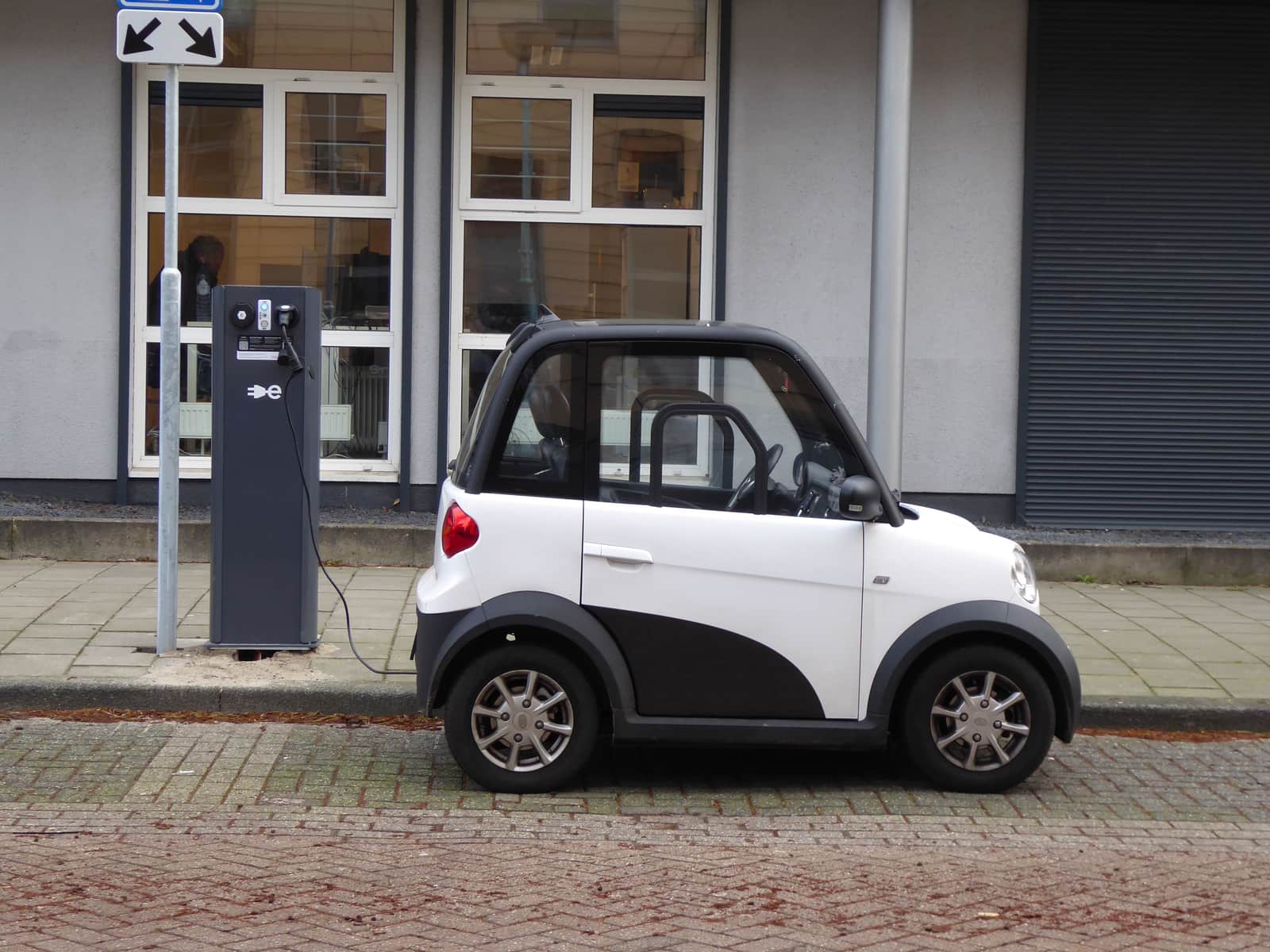
Guide
Home vs public charging
The home-versus-public cost comparison for renters, plus a workable routine for anyone with no home charging at all.
Top pick: Lectron Portable Level 1 J1772 Charger (15A, NEMA 5-15)
Guide
24A vs 32A vs 40A: which amperage do you need?
24, 32 or 40 amps — what each needs from the circuit, what each returns overnight, and why the difference matters less than it looks.
Top pick: Grizzl-E Mini Connect Portable Charger