The best chargers for a plug-in hybrid
A plug-in hybrid asks less of a charger than a full EV does. That changes the answer, and usually it changes it downward.

How this page is funded: the buy links below are affiliate links, and Renter Volt earns a commission on qualifying purchases at no cost to you. Nothing here was supplied by a manufacturer, and commission plays no part in the ranking — read the full disclosure. Picks are chosen from published specifications rather than hands-on testing; the method is written down so you can check it. Prices last verified September 22, 2026.
Most charger guides are written for a full battery-electric car and then sold to plug-in hybrid owners unchanged. That is how PHEV drivers end up buying a 40 amp charger their car cannot use. A plug-in hybrid carries a much smaller battery than a BEV and, in most cases, a smaller onboard charger to fill it — and the onboard charger is the ceiling no equipment on this page can raise.
The Department of Energy puts it plainly: most drivers of electric vehicles, which includes plug-in hybrids, charge overnight at home on Level 1 or Level 2 equipment. For a PHEV specifically, the interesting half of that sentence is Level 1 — an ordinary socket, no permission needed, and frequently a full battery by morning.
Do the arithmetic before you shop
Two numbers from your owner's manual decide this entirely: the usable battery capacity in kWh, and the onboard charger's maximum AC rating in kW. Everything else is noise.
battery kWh ÷ charging kW = hours (add roughly 10-15% for charging losses)
A 12 kWh pack at 1.44 kW (Level 1, 12A) ≈ 8.3 hours before losses
Substitute your own car's figures. If the answer is under the number of hours the car sits parked overnight, Level 1 finishes the job and a Level 2 charger buys you nothing.
That is the whole decision. A pack small enough to refill overnight at 1.44 kW does not need a faster charger, and the second number — the onboard charger rating — caps what a faster charger could deliver anyway. How long charging takes works the same arithmetic through for larger batteries.
How these were ranked
- Correct current for an ordinary circuit first. A 15 amp household circuit supports 12 amps of continuous load. Most PHEV owners are plugging into exactly that, so a 12 amp unit leads.
- Reach, because a PHEV owner is usually charging at the same awkward carport socket as everyone else on this site.
- A published safety listing, same standard as every other page here.
- Whether it survives your next car. If a BEV is in your future, an adjustable unit that also does Level 2 is worth the premium now. If it is not, paying for headroom is paying for nothing.
Quick picks
Ranked, with the reasoning underneath. Tap any row to jump to that write-up; tap the price to check it on Amazon. Prices come from the live layer, never from this page.
| # | Product | Best for | Type | Price |
|---|---|---|---|---|
| 1 | 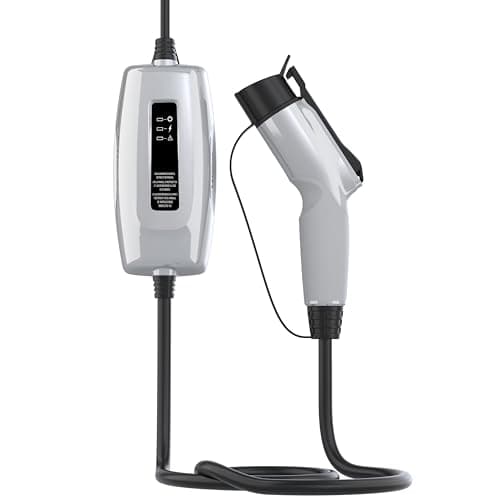 Schumacher Electric SEV1670 Level 1 Portable EV Charger (12A, NEMA 5-15)A 12 amp Level 1 charger sized correctly for an ordinary 15 amp household circuit, with a 20 ft cable that reaches further than most. Schumacher Electric SEV1670 Level 1 Portable EV Charger (12A, NEMA 5-15)A 12 amp Level 1 charger sized correctly for an ordinary 15 amp household circuit, with a 20 ft cable that reaches further than most. | A 15 amp circuit and a longer reach | Level 1 EVSE | |
| 2 | 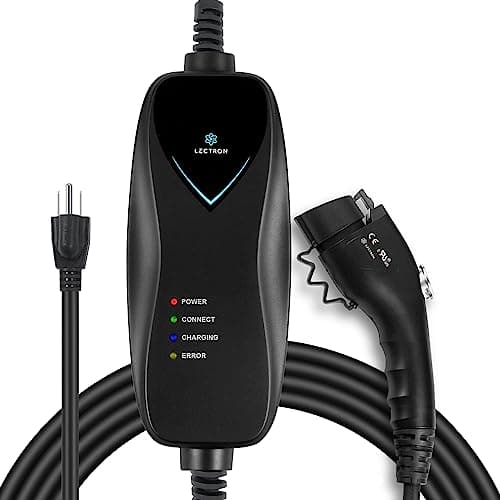 Lectron Portable Level 1 J1772 Charger (15A, NEMA 5-15)The unglamorous answer that covers most commutes: an ordinary 120V socket, overnight, and no conversation with anybody about electrical work. Lectron Portable Level 1 J1772 Charger (15A, NEMA 5-15)The unglamorous answer that covers most commutes: an ordinary 120V socket, overnight, and no conversation with anybody about electrical work. | An ordinary wall socket | Level 1 EVSE | |
| 3 | 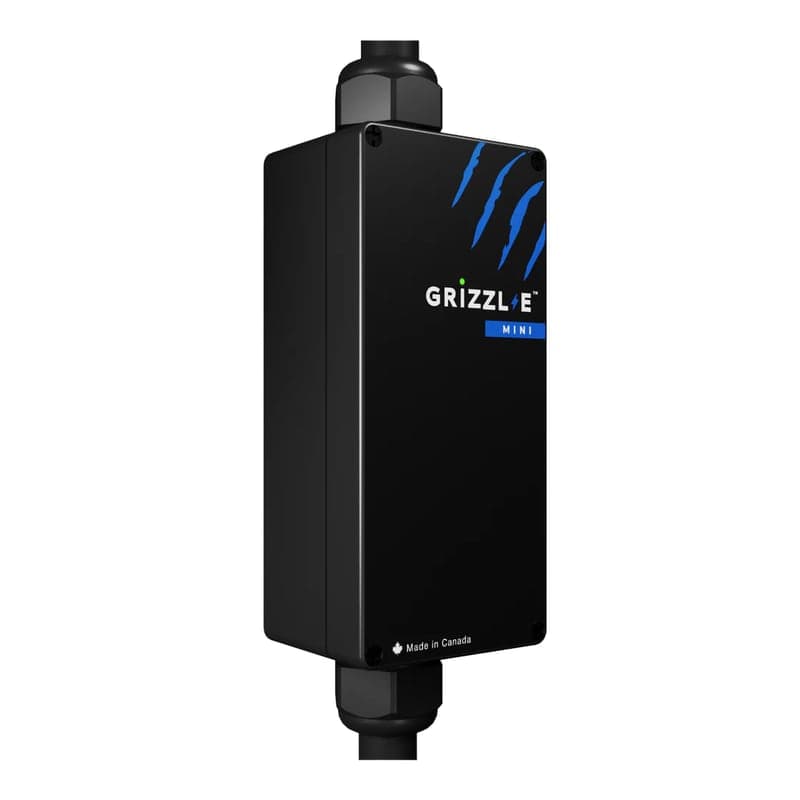 Grizzl-E Mini Connect Portable ChargerAdjustable from 7 to 40 amps and shipped with four plug adapters, which is the closest thing to a unit that fits whatever outlet you turn out to have. Grizzl-E Mini Connect Portable ChargerAdjustable from 7 to 40 amps and shipped with four plug adapters, which is the closest thing to a unit that fits whatever outlet you turn out to have. | Not knowing your outlet yet | Adjustable Level 1 and 2 EVSE | Check price#ad |
#1 · A 15 amp circuit and a longer reach
Schumacher Electric SEV1670 Level 1 Portable EV Charger (12A, NEMA 5-15)
A 12 amp Level 1 charger sized correctly for an ordinary 15 amp household circuit, with a 20 ft cable that reaches further than most.
| Charging current | 12A continuous, 120Vsource |
|---|---|
| Output power | 1.44 kWsource |
| Cable length | 20 ftsource |
| Plug / connector | NEMA 5-15 plug, J1772 connectorsource |
| Certification | ETL and Energy Starsource |
| Enclosure | IP66 housingsource |
| Built-in protection | Leakage, undervoltage, overvoltage, overcurrent, over-temperature, ground-fault and relay-fault protectionsource |
What those numbers mean
Twelve amps is not a low number for this category; it is the correct one. A 15 amp circuit supports 12 amps of continuous load, and overnight charging is continuous by any definition, so this unit uses an ordinary household circuit right up to its limit and no further.
The 20 ft cable is four feet longer than the common 16 ft. At a carport or a curbside socket, those four feet are frequently the difference between reaching the charge port and reaching for an extension cord.
Over-temperature protection is on the manufacturer's list, but the published specification does not say where the sensor sits. Treat it as a backstop, and still feel the plug at the wall during the first few long sessions.
What it does well
- Sized for a 15 amp circuit, the most common household circuit there is
- 20 ft cable, longer than the usual 16 ft
- ETL and Energy Star certified, with an IP66 housing
- The manufacturer publishes the full list of built-in protections
What it does not
- J1772 only — a Tesla or other NACS car needs an adapter or a NACS unit
- No app or scheduling, and no current adjustment in the published specification
- 1.44 kW will not recover a long driving day overnight
Skip this one if: Your car has a NACS (Tesla-style) port, or you regularly drive more than about 40 miles a day. The first needs a different connector; the second needs more power than any Level 1 unit can deliver.
#2 · An ordinary wall socket
Lectron Portable Level 1 J1772 Charger (15A, NEMA 5-15)
The unglamorous answer that covers most commutes: an ordinary 120V socket, overnight, and no conversation with anybody about electrical work.
| Input | 120V, 15A maximumsource |
|---|---|
| Output power | 1.8 kWsource |
| Cable length | 16 ftsource |
| Plug / connector | NEMA 5-15 plug, J1772 connectorsource |
| Certification | UL 2594 / UL 2231 certifiedsource |
| Manufacturer charge-rate claim | 45+ miles of range overnightsource |
What those numbers mean
1.8 kW sounds trivial next to 9.6 kW, and for a road trip it is. For a commute it usually is not: the average US driver covers well under 45 miles a day, and this replaces that overnight while the car sits anyway.
The honest ceiling is the circuit behind the socket, not the cable. This unit draws 15 amps for hours, which a 20 amp circuit supports continuously and a 15 amp circuit does not — so check the breaker before the first overnight session, and on a 15 amp circuit choose a 12 amp unit instead.
This is the only category of EV charging that is genuinely invisible to a landlord. It draws less than a hair dryer and plugs into a receptacle that already exists.
What it does well
- Works with a socket that already exists, everywhere, with no permission needed
- UL 2594 and UL 2231 certified rather than a generic cordset
- Cheapest possible entry into home charging, by a wide margin
What it does not
- 1.8 kW will not recover a long driving day overnight
- 16 ft cable, and the nearest 120V socket is often not the nearest thing to the car
- Its 15 amp draw needs a 20 amp circuit behind the socket; an ordinary 15 amp circuit supports 12 amps continuously
Skip this one if: You regularly drive more than about 45 miles a day. Level 1 will fall a little further behind every night and you will spend the difference at public chargers.
#ad · how this is funded · price as of September 22, 2026
#3 · Not knowing your outlet yet
Grizzl-E Mini Connect Portable Charger
Adjustable from 7 to 40 amps and shipped with four plug adapters, which is the closest thing to a unit that fits whatever outlet you turn out to have.
| Adjustable current | 7A to 40A (9.6 kW maximum)source |
|---|---|
| Voltage | Automatically detects 120V (Level 1) or 240V (Level 2)source |
| Cable length | 25 ft (7.6 m)source |
| Plug and adapters | NEMA 14-50 plug plus four included electrical adapterssource |
| Connector | J1772 or Tesla (NACS) versionssource |
| Enclosure | UL Type 4 / IP67 ratedsource |
| Certification | UL tested and certified, Energy Star certifiedsource |
What those numbers mean
The adjustable current is the feature that matters to a renter, and it is not a convenience. A 30 amp dryer circuit legally supports 24 amps of continuous EV load; a unit that can be set to 24 amps can use that circuit, and a fixed 40 amp unit cannot.
25 ft of cable is nine feet more than the common 16 ft, and nine feet is frequently the difference between reaching the car and not.
IP67 and a UL Type 4 enclosure describe the unit's own weather tolerance. They say nothing about the outlet it plugs into, which is usually the part that is not weather-rated.
What it does well
- 7-40A adjustment means one unit fits a 15, 20, 30 or 50 amp circuit
- 25 ft cable is among the longest on a portable unit
- Four plug adapters included, so an outlet change does not mean a new charger
- Available with either a J1772 or a NACS connector
What it does not
- Costs meaningfully more than a fixed-amperage unit that does one job
- The bundled adapters make it easy to plug into a circuit you have not actually checked
Skip this one if: You know exactly which outlet you have, it is not changing, and you would rather put the money into a longer cable than into adjustability you will set once and never touch.
#ad · how this is funded · price as of September 22, 2026
Why the Level 1 units lead
Because for a plug-in hybrid they usually finish. A BEV owner running 40 miles a day is chasing kilowatts; a PHEV owner is refilling a pack sized for a commute, on a car that has a gasoline engine for everything else. The failure mode that worries a BEV driver — waking up short — is a much smaller problem when the backup is a full tank.
There is also nothing to install, nothing to ask a landlord about and nothing to leave behind at the end of a lease. That is the entire premise of this site, and PHEVs fit it better than any other kind of electric car.
When a PHEV owner genuinely should buy Level 2
- You charge twice a day. A commute in and a commute back with a midday top-up means the car is not parked for eight hours at a stretch, and the arithmetic above stops working.
- Your onboard charger is well above 1.44 kW and your electricity is cheaper at night. A shorter session that fits entirely inside an off-peak window can be worth real money — what it costs to charge has the formula for your own rate.
- A full EV is coming. Buy the adjustable unit now and it covers both cars. This is the strongest argument on the page for spending more.
- Your only reachable socket is shared and you want the car finished and unplugged sooner, out of courtesy as much as anything.
Think in weeks, not sessions
A PHEV owner's real question is not how fast one session runs — it is whether the car starts most days on electricity. That is a weekly arithmetic problem, and it is more forgiving than the single-session view suggests.
nightly hours plugged in × 1.44 kW = kWh per night · compare against your electric-only daily driving
10 hours × 1.44 kW ≈ 14.4 kWh per night before losses
If that exceeds what you use on a typical day, you start every morning full and the gasoline engine stays a backup rather than a habit.
The failure case is not a slow charger, it is a car that is not plugged in. A PHEV parked for ten hours on an ordinary socket recovers more than most plug-in hybrid drivers use in a day, so the equipment question is usually smaller than the habit question.
Match the connector before the amperage
Plug-in hybrids sold in the United States use one of the two AC connector standards, and which one your car has decides the shape on the end of the cable before any other specification matters. Check the port rather than assuming — which adapter does my car need walks through identifying it, and the same logic applies to choosing a charger.
Get this wrong and no amount of amperage helps: a connector that does not fit the car is simply the wrong purchase. Get it right and the rest of the decision is the circuit arithmetic above.
If the only socket is shared
A plug-in hybrid draws less than a full EV and finishes sooner, which makes it a much easier neighbor on a shared circuit. It is still worth handling deliberately: a car drawing 12 amps for eight hours from a socket in a communal area is a visible thing, and visibility is what turns into a conversation with a building manager.
The low draw is genuinely an argument in your favor. Twelve amps at 120V is comparable to a portable heater, and unlike a 40 amp Level 2 installation it asks nothing of the building's electrical capacity. The landlord request letter has language for putting that plainly, and charging from a shared laundry room covers the etiquette when the outlet belongs to everybody.
Where a PHEV owner should not spend
- A 40 amp charger for a car that accepts a fraction of it. The most common overspend in this category, and the one the specification sheets actively encourage.
- Hardwiring anything. It is an alteration to somebody else's building, and a PHEV is the vehicle least likely to justify it — hardwired vs plug-in covers why.
- A second charger for the office before you have checked whether you need one. Most PHEV drivers do not, because the battery refills overnight anyway.
- A smart charger on a flat electricity rate. Scheduling only pays when electricity costs less at some hours than others — is a smart charger worth it has the arithmetic.
The PHEV advantage renters should actually use
A plug-in hybrid is the easiest electric car to own without a garage, and it is worth saying plainly because the rest of the internet treats it as a compromise. The battery is small enough that an ordinary socket refills it, the gasoline engine removes the consequence of a missed session entirely, and nothing about the setup requires a landlord's permission or an electrician's visit.
That means the anxiety this whole site is written around — what happens when the outlet is unavailable for a week — largely does not apply to you. If the laundry room is being repainted, you drive on gasoline and plug in again when it reopens. Should you buy an EV without a garage? works through that calculation for full battery-electric cars, where the stakes are considerably higher.
The mistake to avoid
The same trap catches BEV owners, which is why the amperage guide exists. It just bites harder on a PHEV, because the gap between what the charger offers and what the car accepts is usually much wider.
What about the cable that came with the car?
If your PHEV was delivered with a 120V cordset, try it for a week before buying anything. It may well be the whole answer. The reasons to replace it are the ordinary ones: it is too short for where you park, it is the wrong current for your circuit, or you want a second one to leave at a relative's house. The starter kit covers what a first-time setup actually needs.
What we could not evaluate
Any specific plug-in hybrid. Onboard charger ratings and battery sizes vary by model and model year, and we do not publish figures for cars we have not sourced from the manufacturer — which is why this page gives you the formula instead of a table of cars. The charger specifications above come from each manufacturer's own documentation, cited on every pick. The method is written down.
Questions people actually ask
Do plug-in hybrids need a Level 2 charger?
Usually not. Divide your battery's kWh by 1.44 kW to see how long a Level 1 session takes; if that fits the hours the car sits parked, Level 1 finishes the job. Level 2 earns its place if you charge twice a day, want to fit an off-peak window, or a full EV is coming.
What size charger does a plug-in hybrid need?
Whatever your circuit supports, up to your car's onboard charger rating. On an ordinary 15 amp household circuit that is 12 amps, about 1.44 kW. Buying above your car's onboard rating changes nothing at all.
Can I use a regular outlet to charge a plug-in hybrid?
Yes, and for many PHEVs it is the whole solution. An ordinary 120V socket on a dedicated circuit, overnight, with a 12 amp charger sized correctly for a 15 amp breaker.
How long does it take to charge a plug-in hybrid on a normal outlet?
Battery kWh divided by 1.44 kW, plus about 10-15% for losses. A 12 kWh pack works out around eight to nine hours, which is less than most cars sit parked overnight.
Does a plug-in hybrid need its own dedicated circuit?
Ideally yes, for the same reason any EV does: overnight charging is a continuous load, and a circuit shared with a refrigerator or a space heater can trip when both draw at once. A PHEV's lower current makes sharing less likely to fail than a full EV's would, but a dedicated socket is still the arrangement that works reliably.
Is a faster charger bad for a plug-in hybrid battery?
That is not the concern here — the car controls what it draws and will simply take less than the charger offers. The real issue is spending money on capability the onboard charger cannot use.
Sources
Every figure on this page traces to one of these. If a number here disagrees with the manufacturer, the manufacturer is right and we want to know — tell us.
- U.S. DOE Alternative Fuels Data Center — Electric vehicle charging levels and speeds
- U.S. Department of Energy — Electric vehicle charging at home
- Schumacher Electric — SEV1670 Level 1 Portable EV Charger, 120V / 12A (product page and specifications)
- Lectron — Portable Level 1 J1772 EV Charger, 120V / 15A / NEMA 5-15 (product page)
- Grizzl-E Mini Connect — published specifications (EVolt Home, authorized dealer listing)
- NFPA — NFPA 70, National Electrical Code (free public access)
Read next
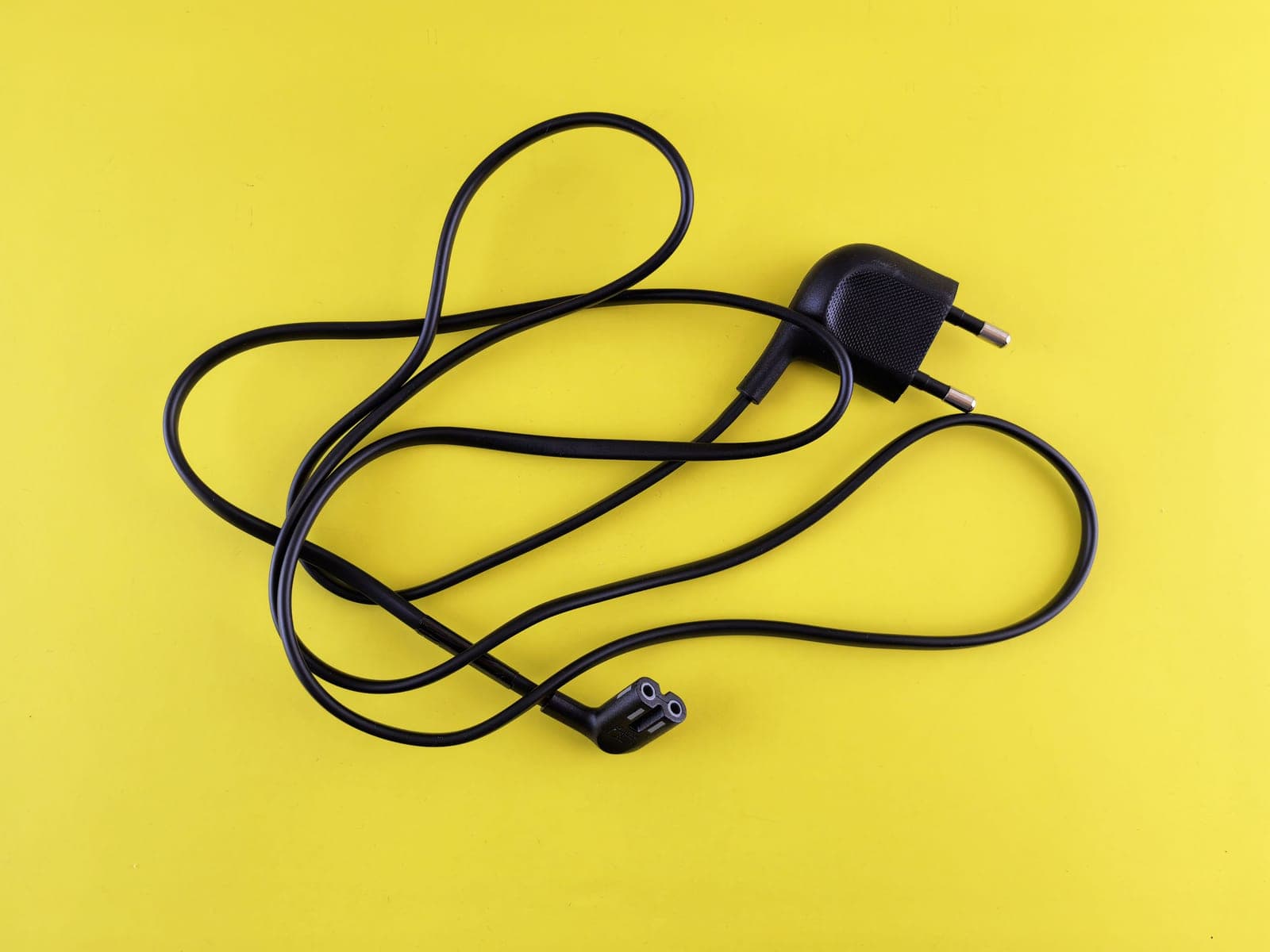
Best Portable Charger
Best portable EV chargers
The portable charger section: plug-in Level 1 and Level 2 units ranked by the outlet you can actually reach, with every spec cited.
Top pick: Grizzl-E Mini Connect Portable Charger

Best Level 1 Charger
The best Level 1 EV chargers
Level 1 chargers ranked for renters: 12 amps against 15 and the breaker that decides it, cable reach, connector and a safety listing you can check.
Top pick: Schumacher Electric SEV1670 Level 1 Portable EV Charger (12A, NEMA 5-15)
Guide
Level 1 vs Level 2, for someone without a garage
The charging-level comparison rewritten for renters, with a renter-viability column and an honest case for Level 1.
Top pick: Lectron Portable Level 1 J1772 Charger (15A, NEMA 5-15)
Guide
How long does charging actually take?
Charging times by outlet and battery size, and the reframe that makes slow charging a non-problem for anyone who parks overnight.
Top pick: Grizzl-E Mini Connect Portable Charger
Best Starter Kit
The renter's EV charging starter kit
The shortest defensible shopping list for a new EV owner with no garage — what to buy first, second, and only if you need it.
Top pick: Lectron Portable Level 1 J1772 Charger (15A, NEMA 5-15)
Guide
24A vs 32A vs 40A: which amperage do you need?
24, 32 or 40 amps — what each needs from the circuit, what each returns overnight, and why the difference matters less than it looks.
Top pick: Grizzl-E Mini Connect Portable Charger