Charging an EV at an RV park
The NEMA 14-50 you cannot find at your apartment is standard equipment at the campground down the road.

How this page is funded: the buy links below are affiliate links, and Renter Volt earns a commission on qualifying purchases at no cost to you. Nothing here was supplied by a manufacturer, and commission plays no part in the ranking — read the full disclosure. Picks are chosen from published specifications rather than hands-on testing; the method is written down so you can check it. Prices last verified September 22, 2026.
An RV site has the outlet your apartment does not: a NEMA 14-50, outdoors, on its own circuit, next to a parking space. For a renter with no reachable 240V at home, a campground is one of the few places that combination exists and is legitimately rentable by the night.
This is a fallback rather than a plan. It costs the price of a site, it takes a trip, and it depends entirely on the park saying yes. But for somebody who occasionally needs a full battery and cannot get one at home, it is a real option — and it uses equipment this site already recommends.
What to look for on the pedestal
RV pedestals typically carry more than one receptacle, and they are not interchangeable. The one that matters is the 50 amp: a NEMA 14-50, the same four-prong receptacle covered in detail on the 14-50 page. If the site you are offered has one, a plug-in 40 amp charger works exactly as it would at home.
| Receptacle | What it is | For charging |
|---|---|---|
| NEMA 14-50 | 240V, 50A, four prongs | The one you want — up to 40A continuous |
| TT-30 | 120V, 30A, three prongs — an RV-specific outlet | Not a 240V outlet despite the 30A; do not assume an adapter makes it one |
| NEMA 5-20 / 5-15 | Ordinary 120V household socket | Level 1 only, and the correct current is 12A on a 15A circuit |
Ask before you arrive
Park policies on EV charging vary and some prohibit it outright, usually because a car drawing 40 amps all night is not what the site's electrical budget was planned around. Call ahead, say plainly that you want to charge an electric car from the 50 amp receptacle, and ask whether that is permitted and what a night costs.
Two reasons to do this rather than turn up and plug in. The first is that being told no on arrival wastes the trip. The second is that charging without asking is exactly the behavior that gets a park to ban it for everyone, and the same courtesy logic applies here as in a shared laundry room.
What to bring
The kit is the same one this site recommends for a dryer outlet or a range outlet at home, which is the point — nothing here is RV-specific. A plug-in Level 2 charger with a NEMA 14-50 plug covers the 50 amp pedestal. An adjustable unit covers a site that turns out to have something smaller. A Level 1 unit covers the case where all you can reach is a household socket by the bathhouse.
Quick picks
Ranked, with the reasoning underneath. Tap any row to jump to that write-up; tap the price to check it on Amazon. Prices come from the live layer, never from this page.
| # | Product | Best for | Type | Price |
|---|---|---|---|---|
| 1 | 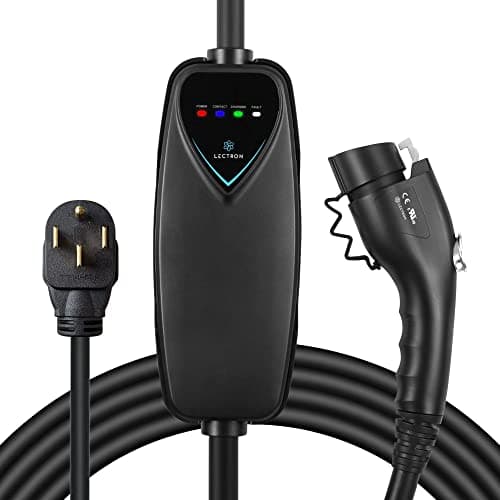 Lectron Portable Level 2 J1772 Charger (40A, NEMA 14-50)The plainest answer to a NEMA 14-50 outlet you can reach: 40 amps, a plug on the end, and nothing screwed to a wall you do not own. Lectron Portable Level 2 J1772 Charger (40A, NEMA 14-50)The plainest answer to a NEMA 14-50 outlet you can reach: 40 amps, a plug on the end, and nothing screwed to a wall you do not own. | A reachable 14-50 outlet | Plug-in Level 2 EVSE | |
| 2 | 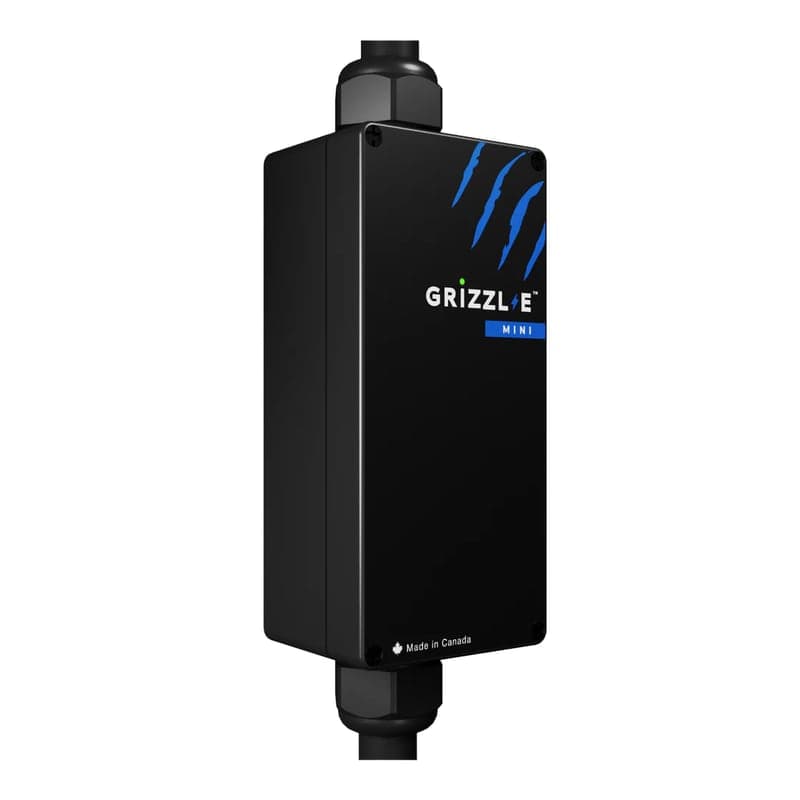 Grizzl-E Mini Connect Portable ChargerAdjustable from 7 to 40 amps and shipped with four plug adapters, which is the closest thing to a unit that fits whatever outlet you turn out to have. Grizzl-E Mini Connect Portable ChargerAdjustable from 7 to 40 amps and shipped with four plug adapters, which is the closest thing to a unit that fits whatever outlet you turn out to have. | Not knowing your outlet yet | Adjustable Level 1 and 2 EVSE | Check price#ad |
| 3 | 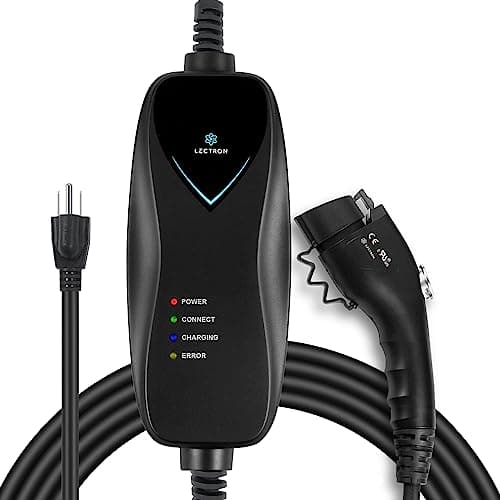 Lectron Portable Level 1 J1772 Charger (15A, NEMA 5-15)The unglamorous answer that covers most commutes: an ordinary 120V socket, overnight, and no conversation with anybody about electrical work. Lectron Portable Level 1 J1772 Charger (15A, NEMA 5-15)The unglamorous answer that covers most commutes: an ordinary 120V socket, overnight, and no conversation with anybody about electrical work. | An ordinary wall socket | Level 1 EVSE |
#1 · A reachable 14-50 outlet
Lectron Portable Level 2 J1772 Charger (40A, NEMA 14-50)
The plainest answer to a NEMA 14-50 outlet you can reach: 40 amps, a plug on the end, and nothing screwed to a wall you do not own.
| Input | 240V, 40A maximumsource |
|---|---|
| Output power | Up to 9.6 kWsource |
| Cable length | 16 ftsource |
| Plug / connector | NEMA 14-50 plug, J1772 connectorsource |
| Certification | UL 2594 / UL 2231 certifiedsource |
| Manufacturer charge-rate claim | Roughly 30 miles of range per hour of chargingsource |
What those numbers mean
9.6 kW is the ceiling this unit can deliver, not what your car will take. A vehicle with a 7.2 kW onboard charger draws 7.2 kW from it and no more, and that is a car limitation no charger fixes.
The 16 ft cable is the number to check before anything else. Measure from the outlet to where your charge port sits when the car is parked as it will actually be parked, not as you would like to park it. Sixteen feet disappears faster than people expect once it has to route around a wall.
A 40 amp unit needs a 50 amp circuit behind the outlet to run at 40 amps continuously. If the outlet is on a smaller breaker, the answer is a lower-amperage charger, not this one turned down.
What it does well
- Plugs in and unplugs — it leaves with you at the end of the lease
- UL 2594 and UL 2231 certified, the two standards that matter for EVSE
- 40 amps covers the fastest charging any renter-reachable outlet realistically supports
What it does not
- 16 ft of cable is short for a parking space that is not directly beside the outlet
- No amperage adjustment, so it is the wrong unit for a 30 amp circuit
Skip this one if: Your only 240V outlet is a 30 amp dryer receptacle. This unit expects a 50 amp circuit behind a NEMA 14-50, and derating it is not an option it offers.
#ad · how this is funded · price as of September 22, 2026
#2 · Not knowing your outlet yet
Grizzl-E Mini Connect Portable Charger
Adjustable from 7 to 40 amps and shipped with four plug adapters, which is the closest thing to a unit that fits whatever outlet you turn out to have.
| Adjustable current | 7A to 40A (9.6 kW maximum)source |
|---|---|
| Voltage | Automatically detects 120V (Level 1) or 240V (Level 2)source |
| Cable length | 25 ft (7.6 m)source |
| Plug and adapters | NEMA 14-50 plug plus four included electrical adapterssource |
| Connector | J1772 or Tesla (NACS) versionssource |
| Enclosure | UL Type 4 / IP67 ratedsource |
| Certification | UL tested and certified, Energy Star certifiedsource |
What those numbers mean
The adjustable current is the feature that matters to a renter, and it is not a convenience. A 30 amp dryer circuit legally supports 24 amps of continuous EV load; a unit that can be set to 24 amps can use that circuit, and a fixed 40 amp unit cannot.
25 ft of cable is nine feet more than the common 16 ft, and nine feet is frequently the difference between reaching the car and not.
IP67 and a UL Type 4 enclosure describe the unit's own weather tolerance. They say nothing about the outlet it plugs into, which is usually the part that is not weather-rated.
What it does well
- 7-40A adjustment means one unit fits a 15, 20, 30 or 50 amp circuit
- 25 ft cable is among the longest on a portable unit
- Four plug adapters included, so an outlet change does not mean a new charger
- Available with either a J1772 or a NACS connector
What it does not
- Costs meaningfully more than a fixed-amperage unit that does one job
- The bundled adapters make it easy to plug into a circuit you have not actually checked
Skip this one if: You know exactly which outlet you have, it is not changing, and you would rather put the money into a longer cable than into adjustability you will set once and never touch.
#ad · how this is funded · price as of September 22, 2026
#3 · An ordinary wall socket
Lectron Portable Level 1 J1772 Charger (15A, NEMA 5-15)
The unglamorous answer that covers most commutes: an ordinary 120V socket, overnight, and no conversation with anybody about electrical work.
| Input | 120V, 15A maximumsource |
|---|---|
| Output power | 1.8 kWsource |
| Cable length | 16 ftsource |
| Plug / connector | NEMA 5-15 plug, J1772 connectorsource |
| Certification | UL 2594 / UL 2231 certifiedsource |
| Manufacturer charge-rate claim | 45+ miles of range overnightsource |
What those numbers mean
1.8 kW sounds trivial next to 9.6 kW, and for a road trip it is. For a commute it usually is not: the average US driver covers well under 45 miles a day, and this replaces that overnight while the car sits anyway.
The honest ceiling is the circuit behind the socket, not the cable. This unit draws 15 amps for hours, which a 20 amp circuit supports continuously and a 15 amp circuit does not — so check the breaker before the first overnight session, and on a 15 amp circuit choose a 12 amp unit instead.
This is the only category of EV charging that is genuinely invisible to a landlord. It draws less than a hair dryer and plugs into a receptacle that already exists.
What it does well
- Works with a socket that already exists, everywhere, with no permission needed
- UL 2594 and UL 2231 certified rather than a generic cordset
- Cheapest possible entry into home charging, by a wide margin
What it does not
- 1.8 kW will not recover a long driving day overnight
- 16 ft cable, and the nearest 120V socket is often not the nearest thing to the car
- Its 15 amp draw needs a 20 amp circuit behind the socket; an ordinary 15 amp circuit supports 12 amps continuously
Skip this one if: You regularly drive more than about 45 miles a day. Level 1 will fall a little further behind every night and you will spend the difference at public chargers.
#ad · how this is funded · price as of September 22, 2026
Work out what a night actually buys you
charging kW × hours plugged in = kWh · kWh × your car's miles per kWh = range
9.6 kW × 10 hours = 96 kWh — more than most EV batteries hold
Which is the real point: on a 50 amp pedestal you are limited by the size of your battery, not by the night. Compare the site fee against what the same energy would cost at a public fast charger — home vs public charging has the arithmetic.
Run that comparison honestly before making a habit of it. A campground site fee is not cheap electricity; it is a night's rent that happens to include an outlet. It wins against DC fast charging on price surprisingly often, and loses badly against a home outlet you could have negotiated for — which is why the landlord request letter is still the higher-value move.
Doing it safely on somebody else's equipment
- Look at the receptacle before you plug in. Scorching, a loose fit or a cracked face means find another site. Pedestals live outdoors and take abuse.
- Set the current deliberately if your charger allows it. The pedestal's breaker is the limit, and running below it is the cheapest insurance available.
- Use a drip loop and keep the charger off the ground. Charging outdoors safely covers the rest.
- Check the plug after an hour. Warm is normal, hot is not — a hot outlet or melted plug is the page to read if it is.
- Do not leave the cable across a road or a footpath. It is a trip hazard and it is the fastest way to have the park change its mind.
What to ask when you call
A short, specific call saves a wasted drive, and being straightforward about what you want makes a yes considerably more likely than turning up and improvising. Five questions cover it.
- Do you allow electric cars to charge from the site pedestal? Ask first and ask plainly. Some parks say yes without hesitation, some have a flat policy against it, and a few charge a supplement.
- Does the site have a 50 amp hookup? This is the NEMA 14-50. Without it you are looking at Level 1 speeds and the trip may not be worth making.
- What does a night cost, and is there a day-use rate? Some parks will sell a few hours rather than a full night, which changes the arithmetic completely.
- Can I park a car rather than an RV on the site? Worth asking explicitly — a few parks are set up only for rigs and will say so.
- Is the pedestal metered? Where it is, you may be charged for what you use on top of the site fee, which is fairer for everybody and worth knowing in advance.
Being upfront also protects the option for the next person. Parks that discover cars charging unannounced tend to write a rule; parks that are asked tend to quote a price.
How it compares to the alternatives
An RV site is one of four fallbacks available to somebody with no home charging, and it is worth knowing where it sits before making a habit of it.
| Option | Speed | The catch |
|---|---|---|
| RV park pedestal | Up to 40A, a full battery overnight | A site fee and a trip; depends on the park's policy |
| Public DC fast charging | Fastest by far | The highest price per kWh of any option |
| A relative's or friend's outlet | Depends on what they have | Free and repeatable, but you are a guest |
| Workplace charging | Usually Level 2 | Only if your employer offers it, and only on workdays |
The point of the table is that a campground night is rarely the cheapest option and almost never the most convenient — it is the one that reliably produces a full battery on your own schedule when nothing else will. Home vs public charging prices the second row properly, which is the comparison that usually decides it.
If the park says no
It happens, and it is worth having a second option rather than arguing. Some parks have been burned by somebody drawing 40 amps all night on a site rented at a tent rate; others simply have not thought about it and default to no.
Two things sometimes change the answer. Offering to pay the 50 amp site rate rather than the cheapest rate addresses the actual objection, which is almost always about electricity cost rather than about cars. And asking whether they meter the pedestal gives them a way to say yes that protects them — if you pay for what you use, their risk disappears.
If the answer is still no, take it gracefully and look at the other rows in the table above. A relative's dryer outlet or a workplace socket will usually beat a campground on both cost and convenience anyway, and the pillar page works through the options in order of how much they cost you.
Timing and season
Two practical constraints that catch people out. Parks fill up in summer and around holidays, so the availability of a 50 amp site is worst exactly when travel demand is highest — book rather than assume. And a pedestal outdoors in winter is a cold, wet receptacle: the charger's own weather rating matters less than whether the outlet has an intact while-in-use cover, which is the part nobody maintains.
If the cover is missing or broken, that is a reason to ask for a different site rather than to improvise. Charging outdoors safely covers what weather does and does not affect, and the drip loop that costs nothing.
When this is genuinely the right answer
For a renter with no home charging at all, an occasional campground night is a way to get a full battery without paying fast-charging rates for every kilowatt-hour. It also works as a road-trip tactic in areas with thin DC coverage, where a site with a 14-50 may be easier to find than a working fast charger.
It is not a substitute for solving the problem at home. If there is any 240V outlet within reach of where you park — a dryer circuit, a range outlet, a laundry room — that is cheaper, closer and repeatable. Start at the pillar if you have not worked through those options yet.
What we could not evaluate
Individual parks. Policies, pricing and pedestal condition vary site by site and change without notice, so everything here is written as questions to ask rather than answers we can give for a place we have not visited. The charger specifications come from each manufacturer's published documentation, cited on every pick. The method sets out the limits.
Questions people actually ask
Can you charge an electric car at an RV park?
Often yes, from the 50 amp NEMA 14-50 receptacle on the site pedestal, using an ordinary plug-in Level 2 charger. Policies vary and some parks prohibit it, so call ahead and ask before you drive there.
What charger do you need for an RV park?
A plug-in Level 2 charger with a NEMA 14-50 plug — the same unit you would use on a range outlet at home. An adjustable charger is the safer buy if you expect to meet smaller receptacles.
Can you charge an EV from a 30 amp RV outlet?
A TT-30 is a 120V outlet despite its 30 amp rating, so it is a Level 1 source at best rather than a smaller version of the 50 amp receptacle. Do not improvise an adapter to treat it as 240V.
How much does it cost to charge at an RV park?
You are paying a site fee for the night rather than a price per kilowatt-hour, so the cost depends entirely on the park. Compare that fee against what the same energy would cost at a public fast charger before making it a routine.
Do I need a special adapter to use an RV pedestal?
Not if the site has a 50 amp hookup and your charger has a NEMA 14-50 plug — that is the same receptacle covered on the 14-50 page, and the charger plugs straight in. Adapters only enter the picture when you try to use a smaller pedestal receptacle, which is where this gets risky rather than convenient.
Is it rude to charge an EV at a campground?
Not if you ask first, pay for the site and keep the cable out of walkways. It becomes a problem when people plug in unannounced, which is how parks end up banning it for everybody.
Sources
Every figure on this page traces to one of these. If a number here disagrees with the manufacturer, the manufacturer is right and we want to know — tell us.
- Lectron — Portable Level 2 J1772 EV Charger, 240V / 40A / NEMA 14-50 (product page)
- Grizzl-E Mini Connect — published specifications (EVolt Home, authorized dealer listing)
- Lectron — Portable Level 1 J1772 EV Charger, 120V / 15A / NEMA 5-15 (product page)
- NFPA — NFPA 70, National Electrical Code (free public access)
- U.S. DOE Alternative Fuels Data Center — Electric vehicle charging levels and speeds
- U.S. Energy Information Administration — Average retail price of electricity to residential customers
Read next

Start here
You don't have a garage. Here's what actually works.
The pillar guide: what charging looks like when there is no garage, no driveway and no landlord willing to run a new circuit.
Top pick: Lectron Portable Level 1 J1772 Charger (15A, NEMA 5-15)

Guide
Charging an EV when you only have street parking
Street parking is the hardest case. What genuinely works, what does not, and how to build a routine that does not depend on a driveway.
Top pick: Lectron Portable Level 1 J1772 Charger (15A, NEMA 5-15)

Guide
NEMA 14-50: the best outlet you can find
What a NEMA 14-50 gives you, where they turn up in rentals, and the checks worth doing before an eight-hour session.
Top pick: Lectron Portable Level 2 J1772 Charger (40A, NEMA 14-50)
Guide
Home vs public charging
The home-versus-public cost comparison for renters, plus a workable routine for anyone with no home charging at all.
Top pick: Lectron Portable Level 1 J1772 Charger (15A, NEMA 5-15)

Guide
The letter to send your landlord
A ready-to-send request letter for building managers, plus the reasoning behind every line in it and the three variants that fit different asks.
Guide
Charging outdoors safely
The safety fundamentals for outdoor charging: what the equipment already handles, what it does not, and the free habits that matter.