Hot outlet or melted plug while charging
This is the one page on this site that starts by telling you to stop. Then it explains why it happened, and what prevents the next one.
How this page is funded: the buy links below are affiliate links, and Renter Volt earns a commission on qualifying purchases at no cost to you. Nothing here was supplied by a manufacturer, and commission plays no part in the ranking — read the full disclosure. Picks are chosen from published specifications rather than hands-on testing; the method is written down so you can check it. Prices last verified October 27, 2026.
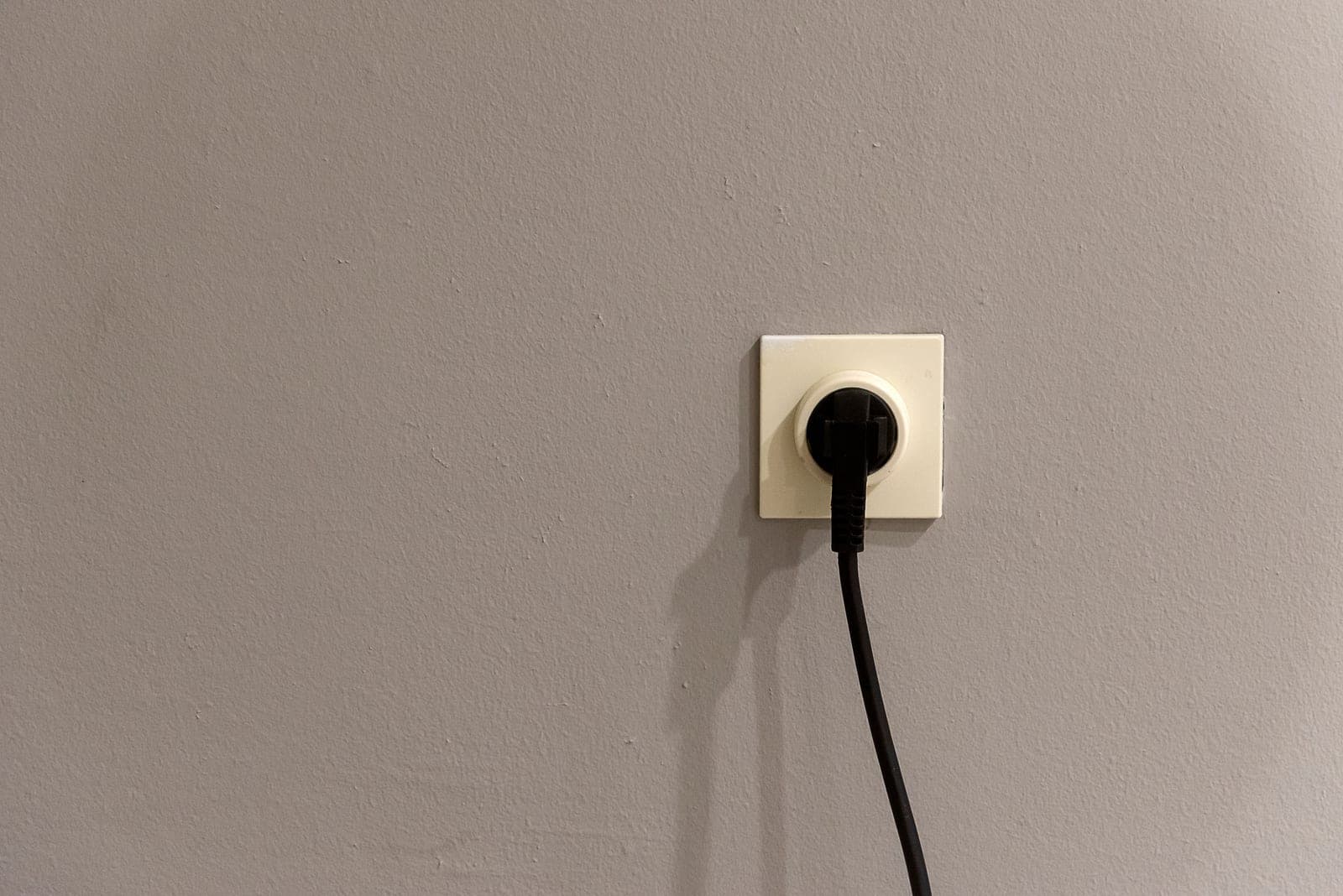
Stop charging on that outlet. Not later — now. A plug too hot to hold comfortably, discoloration around the slots, a faceplate that is warm long after unplugging, or any smell of hot plastic means the connection is failing, and continuing gives it more time to fail properly.
Then report it to the building. This is not a repair to attempt on a receptacle you do not own, and it is a legitimate maintenance request rather than an admission that you did something wrong.
Warm, hot, and failed
| Symptom | Meaning | What to do |
|---|---|---|
| Plug slightly warm after hours of charging | Normal. Current through any connection makes some heat | Nothing — but keep checking it |
| Uncomfortable to hold for a few seconds | Too hot. Contact resistance is climbing | Stop. Reduce current or change outlet |
| Faceplate warm, or warm well after unplugging | Heat is in the receptacle, not just the plug | Stop. Report it |
| Discoloration, browning around the slots | Sustained overheating has already happened | Stop. Report it. Do not reuse |
| Smell of hot plastic, any melting or deformation | Failure in progress | Stop immediately. Report it as urgent |
Why charging does this when nothing else does
Because of the duty cycle. Almost everything else plugged into a residential circuit draws hard for minutes — a kettle, a vacuum, a microwave. EV charging draws near-constant current for six to twelve hours, which is a far harder test of a connection than anything the receptacle was likely to have met before.
The failure mechanism is a loop, and it accelerates. Every connection has some contact resistance. Resistance turns current into heat. Heat degrades and oxidizes the contact surfaces, which raises resistance further, which makes more heat. Over weeks that takes a slightly warm plug to a browned one, and eventually to a melted one.
heat at a connection is proportional to current² × resistance
Dropping from 40A to 24A is 0.6× the current, so roughly 0.36× the heat.
Which is why "charge slower" is the first mitigation on every safety page here. Overnight it costs you almost nothing in range — see how long charging takes.
The four causes, in the order they actually occur
- Drawing more current than the circuit permits continuously. A charger set above 80% of the breaker rating is the most common cause and the easiest to fix. The amperage guide has the numbers.
- A worn or loose receptacle. If the plug goes in loosely or wobbles, the contact area is reduced and resistance is up before you have drawn a single amp. Common on decades-old dryer outlets in rental buildings.
- A poor-quality receptacle. Inexpensive NEMA 14-50 receptacles are a known weak point specifically because EV charging is the first load that ever tests them properly.
- Extra connections in the chain. Every plug adapter, extension coupling and splitter is another contact interface that can heat. That is not a reason to never use them — it is a reason to use ones built for it and to run at a lower current.
Quick picks
Ranked, with the reasoning underneath. Tap any row to jump to that write-up; tap the price to check it on Amazon. Prices come from the live layer, never from this page.
| # | Product | Best for | Type | Price |
|---|---|---|---|---|
| 1 | 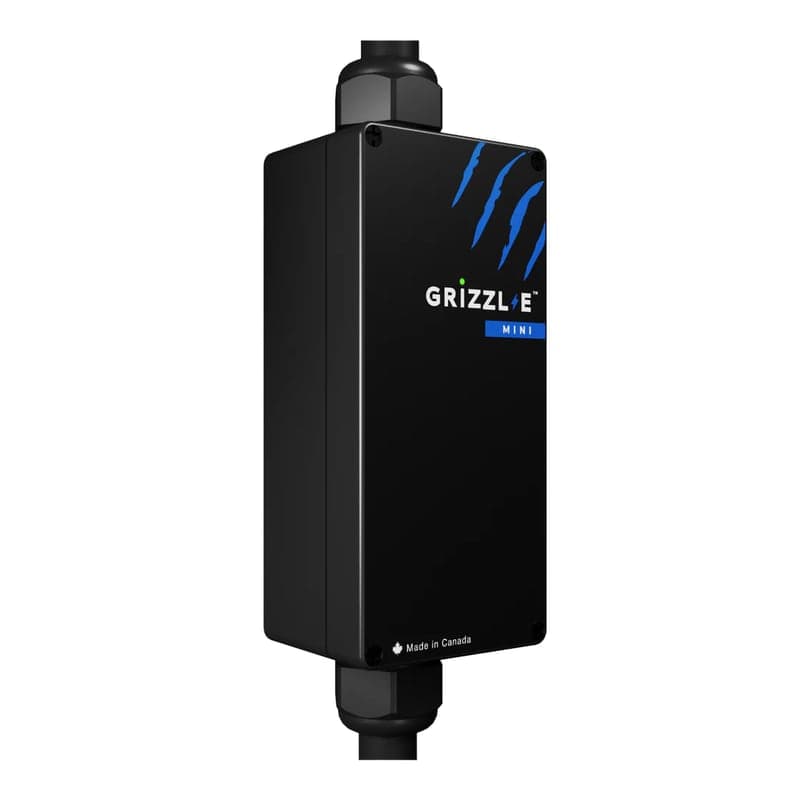 Grizzl-E Mini Connect Portable ChargerAdjustable from 7 to 40 amps and shipped with four plug adapters, which is the closest thing to a unit that fits whatever outlet you turn out to have. Grizzl-E Mini Connect Portable ChargerAdjustable from 7 to 40 amps and shipped with four plug adapters, which is the closest thing to a unit that fits whatever outlet you turn out to have. | Not knowing your outlet yet | Adjustable Level 1 and 2 EVSE | Check price#ad |
| 2 | 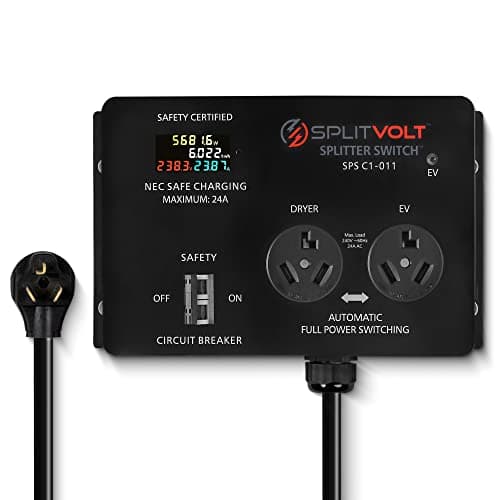 Splitvolt Splitter Switch (NEMA 10-30, 240V, 24A)The one device that makes a shared older dryer outlet a legitimate EV circuit — it switches automatically and carries its own breaker. Splitvolt Splitter Switch (NEMA 10-30, 240V, 24A)The one device that makes a shared older dryer outlet a legitimate EV circuit — it switches automatically and carries its own breaker. | An older 3-prong dryer outlet | Automatic 240V splitter |
#1 · Not knowing your outlet yet
Grizzl-E Mini Connect Portable Charger
Adjustable from 7 to 40 amps and shipped with four plug adapters, which is the closest thing to a unit that fits whatever outlet you turn out to have.
| Adjustable current | 7A to 40A (9.6 kW maximum)source |
|---|---|
| Voltage | Automatically detects 120V (Level 1) or 240V (Level 2)source |
| Cable length | 25 ft (7.6 m)source |
| Plug and adapters | NEMA 14-50 plug plus four included electrical adapterssource |
| Connector | J1772 or Tesla (NACS) versionssource |
| Enclosure | UL Type 4 / IP67 ratedsource |
| Certification | UL tested and certified, Energy Star certifiedsource |
What those numbers mean
The adjustable current is the feature that matters to a renter, and it is not a convenience. A 30 amp dryer circuit legally supports 24 amps of continuous EV load; a unit that can be set to 24 amps can use that circuit, and a fixed 40 amp unit cannot.
25 ft of cable is nine feet more than the common 16 ft, and nine feet is frequently the difference between reaching the car and not.
IP67 and a UL Type 4 enclosure describe the unit's own weather tolerance. They say nothing about the outlet it plugs into, which is usually the part that is not weather-rated.
What it does well
- 7-40A adjustment means one unit fits a 15, 20, 30 or 50 amp circuit
- 25 ft cable is among the longest on a portable unit
- Four plug adapters included, so an outlet change does not mean a new charger
- Available with either a J1772 or a NACS connector
What it does not
- Costs meaningfully more than a fixed-amperage unit that does one job
- The bundled adapters make it easy to plug into a circuit you have not actually checked
Skip this one if: You know exactly which outlet you have, it is not changing, and you would rather put the money into a longer cable than into adjustability you will set once and never touch.
#ad · how this is funded · price as of October 27, 2026
#2 · An older 3-prong dryer outlet
Splitvolt Splitter Switch (NEMA 10-30, 240V, 24A)
The one device that makes a shared older dryer outlet a legitimate EV circuit — it switches automatically and carries its own breaker.
| Input plug | NEMA 10-30 malesource |
|---|---|
| Output sockets | Two NEMA 10-30 female outlets — one for the dryer, one for the EV chargersource |
| Rating | 240V ~ 60Hz, 24A AC maximum loadsource |
| Protection | Integrated 24A circuit breaker with easy resetsource |
| Switching | Automated power switching between the dryer and EV power socketssource |
| Certification | Conforms to UL 60730-1, certified to CSA E60730-1, cETLus listed Intertek 5021938source |
| Installation | No electrical installation required — plug and playsource |
What those numbers mean
24A is the number to design around, and it is not the manufacturer being cautious. A 30 amp circuit supports 24 amps of continuous load under the 80% rule, and continuous is exactly what EV charging is.
Automatic switching is what makes this a device rather than a Y-splitter. Both loads on one 30 amp circuit at once would trip the breaker at best; the switch guarantees only one draws at a time.
The integrated 24A breaker is the part that earns the trust. It means the splitter protects the circuit itself instead of relying only on a panel breaker you cannot see and wiring you cannot inspect.
What it does well
- Plugs in — genuinely no electrician, no permit, no landlord construction
- Its own 24A breaker rather than trusting the panel alone
- cETLus listed with the Intertek file number published
- Automatic switching, so the dryer keeps priority without anybody replugging anything
What it does not
- 24A caps charging at roughly 5.7 kW, well below a NEMA 14-50's ceiling
- NEMA 10-30 is an ungrounded three-wire configuration, which is a real caveat rather than a formality
- Only useful if you can physically reach the laundry outlet from the car
Skip this one if: Your dryer outlet is the modern four-prong NEMA 14-30. Buy the four-prong splitter instead — this one will not fit, and forcing the fit is exactly the wrong instinct.
#ad · how this is funded · price as of October 27, 2026
What actually prevents the next one
- Set the current to 80% of the breaker rating and leave it there. This alone removes the most common cause.
- Prefer a charger that can be set lower, so the circuit's real capacity is something you can configure rather than something you hope for.
- On a shared 240V circuit, use a device with its own breaker. A splitter that enforces a 24A limit in hardware does not depend on you configuring the charger correctly.
- Reduce the number of connections. One continuous cable beats a short charger plus an extension. If you need reach, buy it in the charger.
- Put a hand on the plug after the first long session, and again after the first genuinely hot day and the first cold snap. That check costs nothing and catches the loop early.
What not to do
Reporting it without it becoming a problem
Keep the framing factual and non-accusatory. "The receptacle in the carport is discolored and gets hot when anything is plugged in for a long period — it should probably be looked at" is a maintenance report anybody will act on. It also does not depend on mentioning the car at all, and the outlet genuinely does need attention regardless of what was plugged into it.
If you have an arrangement to use that outlet for charging, say so plainly too — a building that finds out later feels misled, and the arrangement is worth more than the awkwardness. The letter template covers the tone that works.
Questions people actually ask
Is it normal for an EV charger plug to get warm?
Slightly warm after hours of charging is normal. Uncomfortable to hold is not, and a warm faceplate, discoloration or any smell of hot plastic means stop and report it — the connection is failing.
Why did my EV charger melt the outlet?
Contact resistance turns current into heat, heat degrades the contacts, and that raises resistance further. EV charging drives that loop because it draws near-constant current for hours, which most receptacles have never been tested by.
Can I keep using an outlet that got hot?
No. A receptacle that has overheated has damaged contact surfaces and will do it again faster. Use a different outlet and have that one replaced by whoever maintains the building.
Does charging at a lower amperage prevent overheating?
It helps a great deal. Heat at a connection scales with the square of the current, so dropping from 40A to 24A cuts it to roughly a third — and overnight it costs almost no range.
Should I tell my landlord the outlet overheated?
Yes. Keep it factual — the receptacle needs attention regardless of what was plugged into it, and a building that discovers it later feels misled.
Sources
Every figure on this page traces to one of these. If a number here disagrees with the manufacturer, the manufacturer is right and we want to know — tell us.
Read next
Best Dryer-Outlet Setup
Charging from an outlet you already have
The existing-240V section: dryer, range and RV outlets, how to share one safely, and what changes in an older building.
Top pick: Splitvolt Splitter Switch (NEMA 10-30, 240V, 24A)
Guide
Your EV charger keeps tripping the breaker
A diagnostic order for breaker trips during charging, from the amperage setting through shared loads to GFCI interaction — and what fixes each.
Top pick: Grizzl-E Mini Connect Portable Charger
Guide
Working out the amp rating you need
A step-by-step method for sizing charger amperage to a real circuit, including how to find the breaker and what to do when you cannot.
Top pick: Grizzl-E Mini Connect Portable Charger
Guide
Identify your outlet in about a minute
A visual identification method for the NEMA outlets that matter, plus the two lookalike pairs that cause the wrong purchase.
Top pick: Grizzl-E Mini Connect Portable Charger
Guide
Is an EV extension cord safe?
The extension cord safety question, answered with the actual failure mechanism, the specification that avoids it, and what we will not endorse.
Top pick: A2Z EV J1772 to J1772 Extension Cord, 16 ft