Best EV charging gear for outdoors and winter
Ranked on the two specifications most of this category declines to publish: a mated ingress rating and a real temperature range.
How this page is funded: the buy links below are affiliate links, and Renter Volt earns a commission on qualifying purchases at no cost to you. Nothing here was supplied by a manufacturer, and commission plays no part in the ranking — read the full disclosure. Picks are chosen from published specifications rather than hands-on testing; the method is written down so you can check it. Prices last verified October 27, 2026.
If your car lives in an uncovered lot, the specification to shop on is the one most of this category leaves out: a published operating temperature range, and an ingress rating measured while the connector is mated. Almost everything advertises a sealed body. Far less tells you what happens at -20°F, or what the rating is while it is actually plugged in.
That is the criterion this page ranks on, because for a renter without a garage it is the whole difference between gear that survives a winter and gear that does not.
How we judged this, before the ranking
- A published operating temperature range. Stated by the manufacturer, in numbers. Its absence is not evidence of poor performance, but it means nobody has told you.
- A mated ingress rating. The unmated figure describes the part sitting alone; the mated one applies while it is connected overnight in weather. Careful manufacturers publish both.
- Enclosure classification — UL Type 3R or Type 4 for equipment that stays outside.
- Cable length, because a longer cable means a gentler route and less strain at the connector in cold, when cables stiffen.
- Then price tier, within everything that clears the above.
What the ratings actually promise
| Rating | Covers | Does not cover |
|---|---|---|
| IP54 | Dust ingress and water spray from any direction | Immersion or standing water |
| IP66 | Dust tight; powerful water jets | Immersion; and it is usually the unmated figure |
| IP67 | Dust tight; temporary immersion | Continuous immersion |
| NEMA Type 3R | Outdoor rain, sleet, ice formation | Hose-directed water |
| NEMA Type 4 | Windblown dust, rain, splashing, hose-directed water | It rates the enclosure, not the circuit |
Quick picks
Ranked, with the reasoning underneath. Tap any row to jump to that write-up; tap the price to check it on Amazon. Prices come from the live layer, never from this page.
| # | Product | Best for | Type | Price |
|---|---|---|---|---|
| 1 | 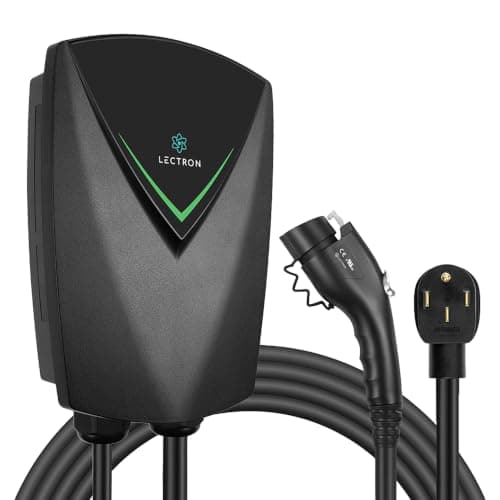 Lectron NEXUS Level 2 Charger (NEMA 14-50 plug)A 23 ft cable on a plug-in 40 amp unit, which is the specification that decides whether a parking space two bays from the outlet works at all. Lectron NEXUS Level 2 Charger (NEMA 14-50 plug)A 23 ft cable on a plug-in 40 amp unit, which is the specification that decides whether a parking space two bays from the outlet works at all. | Long cable reach | Plug-in Level 2 EVSE | |
| 2 | 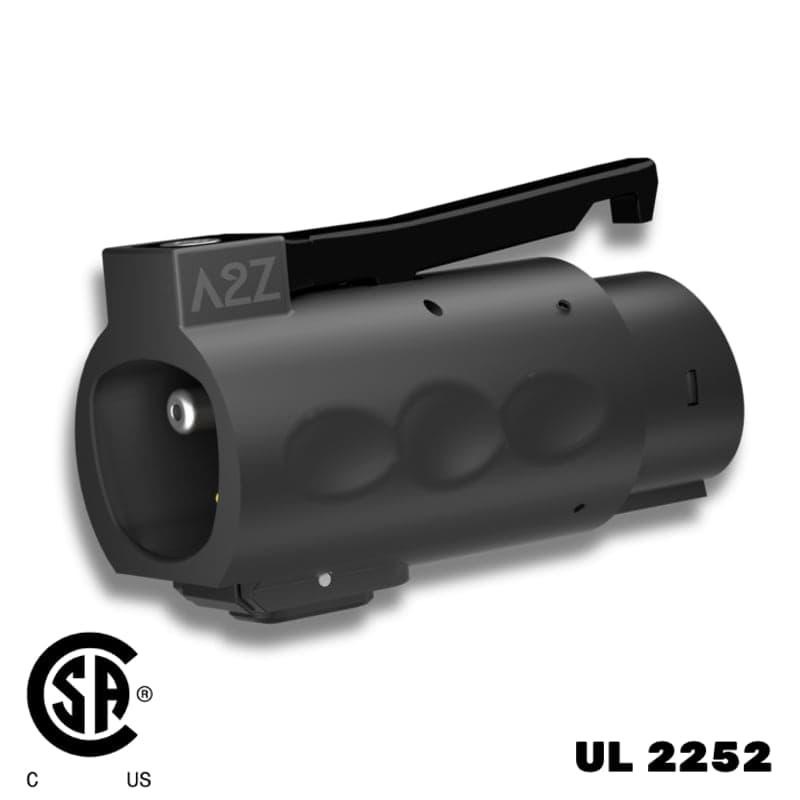 A2Z EV Stellar NACS to J1772 Adapter, 80AThe same direction as the Lectron with a higher rating, an IP67 body and a published temperature range — the one to buy if it lives outdoors. A2Z EV Stellar NACS to J1772 Adapter, 80AThe same direction as the Lectron with a higher rating, an IP67 body and a published temperature range — the one to buy if it lives outdoors. | Outdoor, year-round use | AC charging adapter | Check price#ad |
| 3 | 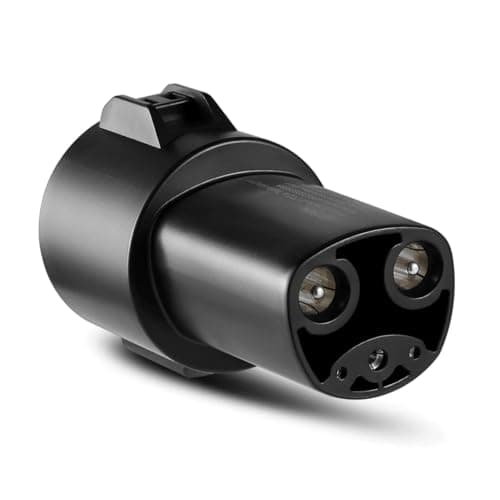 Lectron J1772 to Tesla (NACS) AdapterThe opposite direction, and the one Tesla drivers actually need: it lets a NACS car take the J1772 cable that most workplaces and older buildings already have. Lectron J1772 to Tesla (NACS) AdapterThe opposite direction, and the one Tesla drivers actually need: it lets a NACS car take the J1772 cable that most workplaces and older buildings already have. | A Tesla at a J1772 station | AC charging adapter | |
| 4 | 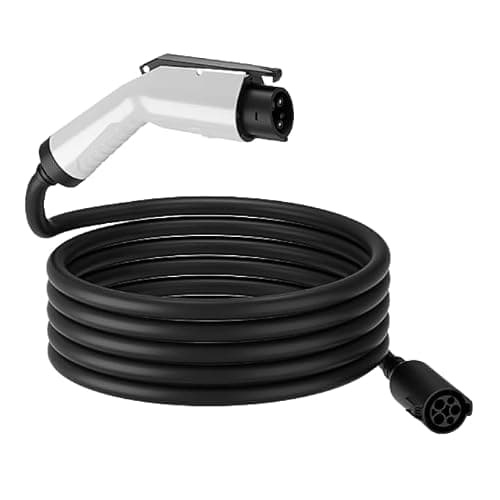 A2Z EV J1772 to J1772 Extension Cord, 16 ftA purpose-built EV extension on the car side of the charger — the correct place to add length — and the only one here whose maker publishes the code caveat that comes with it. A2Z EV J1772 to J1772 Extension Cord, 16 ftA purpose-built EV extension on the car side of the charger — the correct place to add length — and the only one here whose maker publishes the code caveat that comes with it. | A charger that will not reach | J1772 extension cable |
#1 · Long cable reach
Lectron NEXUS Level 2 Charger (NEMA 14-50 plug)
A 23 ft cable on a plug-in 40 amp unit, which is the specification that decides whether a parking space two bays from the outlet works at all.
| Input | 240V, 40A maximumsource |
|---|---|
| Output power | 9.6 kWsource |
| Cable length | 23 ftsource |
| Plug / connector | NEMA 14-50 plug, J1772 / CCS connectorsource |
| Enclosure | IP66-rated automotive-grade housingsource |
| Certification | UL 2594 / UL 2231 / UL 2251 / UL 817 certifiedsource |
| Manufacturer charge-rate claim | Up to 38 miles of range per hoursource |
What those numbers mean
23 ft against the 16 ft of the cheaper Lectron unit is the whole argument for this one. Cable length is the specification renters underestimate most and the one an extension cable is the worst way to fix.
IP66 means the housing tolerates jets of water. Read that as permission to leave the unit outdoors, not as permission to leave the outlet it plugs into exposed.
The manufacturer's 38 miles per hour figure assumes a car that can accept the full 9.6 kW. Halve your car's onboard charger rating and you halve that number.
What it does well
- 23 ft cable, seven feet more than the common 16 ft portable
- IP66 housing rated for sustained outdoor exposure
- Four UL listings including UL 2251 for the coupler
What it does not
- Physically larger and heavier to move between parking spots than a bare portable
- Fixed 40 amps, so it cannot step down onto a 30 amp dryer circuit
Skip this one if: Your outlet is within a few feet of the charge port. You would be paying for reach you do not need and carrying the extra bulk for nothing.
#ad · how this is funded · price as of October 27, 2026
#2 · Outdoor, year-round use
A2Z EV Stellar NACS to J1772 Adapter, 80A
The same direction as the Lectron with a higher rating, an IP67 body and a published temperature range — the one to buy if it lives outdoors.
| Rated current | 80Asource |
|---|---|
| Rated voltage | 240V ACsource |
| Direction | NACS charger connector into a J1772 vehicle portsource |
| Charging type | AC only — not compatible with DC chargerssource |
| Certification | UL 2252 / CSA-C22.2 certified, certification number 80265273source |
| Ingress rating | IP67; IP54 when matedsource |
| Operating temperature | -30°C to 50°Csource |
What those numbers mean
A published operating temperature range is rarer in this category than it should be, and it is the figure that matters if your car lives in an uncovered lot through a real winter.
IP67 is the unmated rating — the adapter sitting in a puddle. IP54 mated is the number that applies while it is actually plugged in, and it is the more useful of the two.
The 80A rating is far above anything a residential AC circuit delivers — a plug-in charger tops out at 40A. Treat it as headroom, not as speed.
What it does well
- Published -30°C to 50°C operating range
- IP67 sealed body, IP54 while mated
- UL 2252 and CSA certified, with the certificate number published
What it does not
- Costs more than the adequate-for-most 48A alternatives
- The 80A headline is irrelevant on any residential AC circuit
Skip this one if: The adapter will live in a glovebox and get used indoors in a mild climate. You are paying for sealing and a temperature range that will never be tested.
#ad · how this is funded · price as of October 27, 2026
#3 · A Tesla at a J1772 station
Lectron J1772 to Tesla (NACS) Adapter
The opposite direction, and the one Tesla drivers actually need: it lets a NACS car take the J1772 cable that most workplaces and older buildings already have.
| Maximum current | Up to 80A at 240V ACsource |
|---|---|
| Direction | SAE J1772 charging station into a Tesla (NACS / J3400) vehicle portsource |
| Compatibility | Any Level 1 or Level 2 charger with a J1772 connector; Tesla Model S, 3, X and Y plus other NACS (J3400) vehiclessource |
| Ingress rating | IP67-rated for water and dustsource |
| Operating temperature | -22°F to 122°Fsource |
| Certification | UL 2251 and TUV certifiedsource |
What those numbers mean
Most public and workplace AC charging in the US is still J1772, and most Teslas ship without an adapter for it. This is the part that fills that gap, and it lives in the frunk.
IP67 is the strongest ingress rating of any adapter here — dust tight and rated for temporary immersion rather than just spray. That is the specification to want for something left connected outdoors overnight, though it is still worth keeping the coupling out of standing water.
80A is roughly double what any Level 2 AC station will hand you, so the adapter is never the limiting factor in the chain. Treat the rating as headroom on a connection that carries current for hours, not as speed.
What it does well
- The direction Tesla drivers actually need for apartment and workplace J1772 cables
- IP67 rating and a published -22°F to 122°F operating range
- UL 2251 and TUV certified
What it does not
- AC only — it does nothing at a CCS DC fast charger
- Small and valuable, which is exactly the theft profile of a shared parking garage
Skip this one if: Your car has a J1772 port. This adapter is for NACS-port vehicles and will not fit yours in either orientation.
#ad · how this is funded · price as of October 27, 2026
#4 · A charger that will not reach
A2Z EV J1772 to J1772 Extension Cord, 16 ft
A purpose-built EV extension on the car side of the charger — the correct place to add length — and the only one here whose maker publishes the code caveat that comes with it.
| Rating | 48A, AC Level 1 and Level 2source |
|---|---|
| Length | 16 ft / 5 msource |
| Compatibility | J1772 EV charging station into a J1772 / CCS1 vehiclesource |
| Component certification | UL-certified cable (E341631), UL 2251 connectors, UL 62 cabling; CE on the connector, FCC (EMI)source |
| Assembled-unit listing | Not UL Listed as an assembled unit — the manufacturer states an end-product category for EV extension cables is still being finalizedsource |
| Manufacturer's recommended use | Portable, occasional or emergency use; NEC Article 625 generally expects the cable to be integral to the station for permanent installationssource |
| Warranty | 12 months against manufacturing defectssource |
What those numbers mean
Extending on the J1772 side is safer than extending on the wall side, because the EVSE is still the thing controlling current and it still sits between the outlet and the extension.
Read the last three specification rows together, because they are the honest part. The components carry UL certification but the assembled cable is not UL Listed, and the manufacturer says so plainly rather than letting the component certifications imply something they do not. It also tells you NEC Article 625 expects a charging cable to be integral to the station for a permanent installation, and that this cord is for portable or occasional use. No other extension we looked at publishes any of that.
48A is well above the 40A ceiling of plug-in Level 2 charging, so the cable is never the constraint. Used at 24 amps on a shared dryer circuit it has a great deal of margin, which is exactly where you want to be.
What it does well
- Built for EV charging rather than a household cord pressed into the job
- 48A rating leaves real margin at any renter-reachable current
- The manufacturer publishes the UL-listing status and the NEC caveat instead of glossing over them
- Designed and tested in North America, with a stated 12-month warranty
What it does not
- Adds two contact interfaces to a circuit that runs for hours at high current
- Not UL Listed as an assembled unit — a real distinction, even though its components are certified
- 16 ft, so it is a shorter reach than some discontinued alternatives offered
- Not a substitute for a charger with a long enough cable in the first place
Skip this one if: You have not yet bought the charger. Buy a unit with a 23 or 25 ft cable and skip the extension entirely — one continuous cable always beats two joined ones.
#ad · how this is funded · price as of October 27, 2026
What cold actually does
Two separate effects, and it is worth keeping them apart because only one is about the equipment.
- Cables stiffen. Below freezing many become noticeably harder to route, and the damage in winter is usually mechanical — forcing a stiff cable, or levering a connector that has iced into the inlet. Handle a cold cable gently and warm an iced latch rather than pulling it.
- The car charges more slowly. A cold battery accepts charge at a reduced rate and the vehicle spends some of the incoming energy warming itself. A winter overnight returns meaningfully less than the same session in summer. That is the car, not the charger, and no purchase changes it — see why charging is slower than expected.
The receptacle is still the weak point
Everything above rates the equipment you bought. The receptacle it plugs into, in a carport built decades ago, frequently carries no weather rating at all — and a flat flip-lid cover propped permanently open by a plug is an open socket facing the weather.
What you want is a while-in-use cover: the deep bubble style that closes over a plug while it is connected. It is an inexpensive part and a reasonable thing to ask a building for. Leaving a charger outside covers the request and the setup.
The two habits that cost nothing
Snow and ice, specifically
- Clear snow from the inlet before connecting, so it does not melt into the connection and refreeze.
- Never force an iced connector. Warm it with a hand or wait. Levering a frozen latch breaks the latch.
- Keep the cable off ground where it can freeze into ice — the damage happens when you free it, not when it freezes.
- Expect lower overnight returns and plan around them rather than assuming a fault.
What we could not evaluate
How any of this actually behaves after a winter outdoors — seal aging, cable flexibility after repeated freeze cycles, connector wear in grit and salt. That needs hardware and a season, and we have neither. This ranking is built on what each manufacturer publishes and, just as importantly, on which figures they decline to publish. The method is written down.
Questions people actually ask
What IP rating do I need for outdoor EV charging?
IP54 mated is a reasonable floor for gear that stays connected outdoors. Look for a published mated figure rather than only the higher unmated number, because the mated one is what applies overnight in weather.
Can I charge an EV outside in winter?
Yes, and most of the world does. Expect lower overnight returns because a cold battery accepts charge more slowly, and handle cold cables gently — winter damage is usually mechanical rather than electrical.
Does cold weather damage a charger?
Within its published operating range, no. Several manufacturers publish -30°C to 50°C. The risk is forcing a stiffened cable or levering an iced connector, not the cold itself.
What is a drip loop?
Letting the cable hang below the outlet before rising to the plug, so water runs to the low point and drips off rather than into the socket. It costs nothing and prevents the most common outdoor receptacle failure.
Why does my EV charge slower in winter?
A cold battery accepts charge at a reduced rate and the car uses some of the incoming energy to warm itself. It is a vehicle behavior, not a charger fault, and no equipment purchase changes it.
Sources
Every figure on this page traces to one of these. If a number here disagrees with the manufacturer, the manufacturer is right and we want to know — tell us.
- A2Z EV — NACS Charger to J1772 Vehicle adapter, UL 2252 certified (product page)
- Lectron — J1772 to Tesla (NACS) EV Adapter, 240V / 80A (product page)
- Lectron — published specification table for the Level 1 and Level 2 charger range
- A2Z EV — J1772 to J1772 Extension Cord, AC, 48A / 16 ft (product page)
- U.S. DOE Alternative Fuels Data Center — Electric vehicle charging levels and speeds
Read next

Best EV Extension
EV extension cords and charging cables
Adding reach safely: EV-specific extensions, the right side of the charger to extend on, and the gauge arithmetic nobody publishes.
Top pick: A2Z EV J1772 to J1772 Extension Cord, 16 ft

Guide
Cables in rain, snow and heat
Weather ratings decoded, plus the drip loop, the hook and the temperature realities that decide how long an outdoor setup lasts.
Top pick: Lectron NEXUS Level 2 Charger (NEMA 14-50 plug)
Guide
Leaving a portable charger outside
What IP and NEMA enclosure ratings actually promise, why the outlet is the weak point, and a practical setup for permanent outdoor use.
Top pick: Lectron NEXUS Level 2 Charger (NEMA 14-50 plug)
Guide
Charging outdoors safely
The safety fundamentals for outdoor charging: what the equipment already handles, what it does not, and the free habits that matter.
Guide
Why your EV is charging slower than expected
A diagnostic for home charging that underperforms the headline number, separating the causes you can fix from the ones you cannot.
Top pick: Grizzl-E Mini Connect Portable Charger