Supercharger adapters for non-Tesla EVs
The DC adapters that open one fast-charging network to the other kind of car — and the direction rule that decides which one you need.
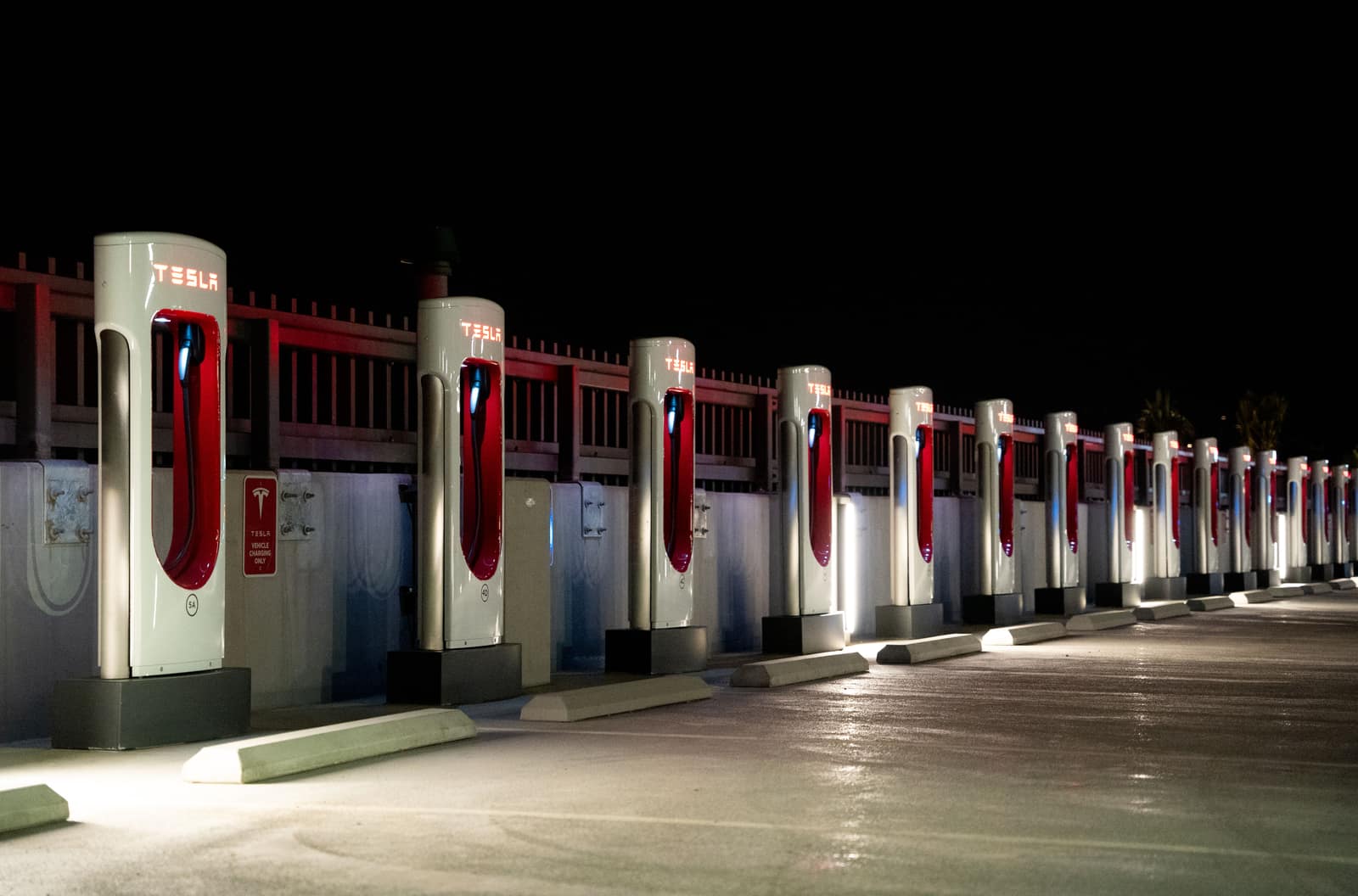
How this page is funded: the buy links below are affiliate links, and Renter Volt earns a commission on qualifying purchases at no cost to you. Nothing here was supplied by a manufacturer, and commission plays no part in the ranking — read the full disclosure. Picks are chosen from published specifications rather than hands-on testing; the method is written down so you can check it. Prices last verified September 22, 2026.
Every adapter on this page is named source-first: the first name is the cable it plugs onto, the second is the car it presents to. The second name in the product title is your car. A CCS1 car that wants Superchargers needs a NACS-to-CCS1 adapter. A Tesla or NACS car that wants CCS stations needs a CCS1-to-NACS adapter. Buy the wrong direction and it will not physically fit.
That rule is the same one that governs the AC adapters in this section, and it catches people out just as often here — more so, because these cost several times as much.
Why this matters more if you rent
Public fast charging is a convenience for somebody with a garage and a wall unit. For a renter with no reachable outlet at home, it is the backbone of owning the car at all, and the size of the network you can actually reach is the difference between a routine and a running problem.
That is what these adapters buy: access to the other network. Home vs public charging prices what that costs per mile, and charging with only street parking covers building a routine around it.
Which direction do you need?
| Your car's charge port | The network you are trying to reach | The adapter to buy |
|---|---|---|
| CCS1 (most non-Tesla EVs sold before the NACS switch) | Tesla Superchargers | NACS to CCS1 |
| NACS (Tesla, and newer cars with a NACS inlet) | CCS stations — Electrify America, EVgo and the rest | CCS1 to NACS |
This is not a bigger version of an AC adapter
The connector shapes are shared between AC and DC charging, which is exactly why this confusion exists. A NACS plug carries AC Level 2 at a home or destination charger and DC fast charging at a Supercharger, through the same physical shape — but the equipment behind it is entirely different, and so is the adapter.
An AC adapter passes a few tens of amps and costs tens of dollars. These pass hundreds of amps at up to a thousand volts, carry different certifications, and cost several times more. Why charging adapters are AC only explains the split in full; this page is the other half of it.
How these were ranked
- Published certification, read precisely. UL 2252 is the standard written for EV adapters. Some products state they are certified to it, some state they comply with it, and one here is listed to UL 2251 — the coupler standard — instead. Those are three different claims and the rankings treat them that way.
- Voltage rating, because it is the specification that bites on an 800V car. A 500V adapter and a 1000V adapter look identical in a listing and are not interchangeable.
- A locking or interlock mechanism. A rigid adapter hanging off a heavy DC cable on a public forecourt is a joint under mechanical load; something that holds it together is worth paying for.
- Published vehicle compatibility. The adapters that name specific models and model years are more useful than the ones that say 'most EVs', and the difference is checkable before you buy.
- Price, last, because the gap between the cheapest and the dearest here is smaller than one bad session at a station that will not start.
Quick picks
Ranked, with the reasoning underneath. Tap any row to jump to that write-up; tap the price to check it on Amazon. Prices come from the live layer, never from this page.
| # | Product | Best for | Type | Price |
|---|---|---|---|---|
| 1 | 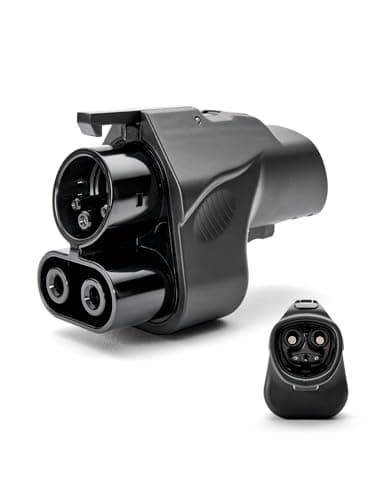 LENZ NACS to CCS1 Adapter (Supercharger access)The cheaper way into the Supercharger network for a CCS1 car, with the same 500A rating as adapters costing considerably more. LENZ NACS to CCS1 Adapter (Supercharger access)The cheaper way into the Supercharger network for a CCS1 car, with the same 500A rating as adapters costing considerably more. | A CCS1 car at a Supercharger | DC fast-charging adapter | |
| 2 | 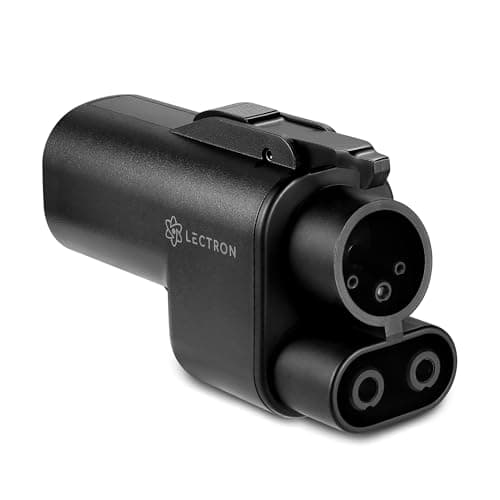 Lectron Vortex Plus NACS to CCS Adapter with InterlockThe one that publishes a UL 2252 certification and an interlock, which is what you want on a part carrying 500 amps of DC on a public forecourt. Lectron Vortex Plus NACS to CCS Adapter with InterlockThe one that publishes a UL 2252 certification and an interlock, which is what you want on a part carrying 500 amps of DC on a public forecourt. | A locked connection at 500 amps | DC fast-charging adapter | |
| 3 | 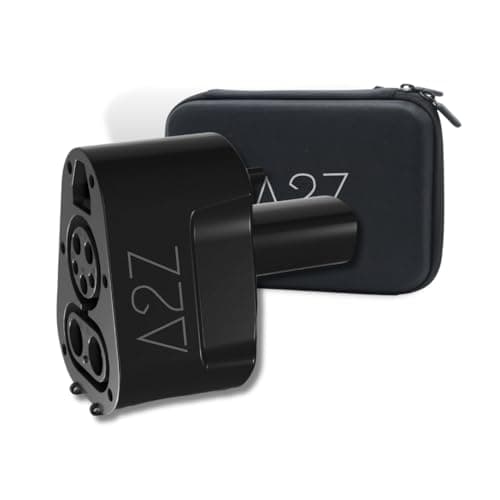 A2Z EV Thunderstorm CCS1 to NACS Adapter (DC)The other direction: it opens the CCS fast-charging network to a Tesla or any newer car with a NACS inlet, with a certification and an interlock pin published. A2Z EV Thunderstorm CCS1 to NACS Adapter (DC)The other direction: it opens the CCS fast-charging network to a Tesla or any newer car with a NACS inlet, with a certification and an interlock pin published. | A NACS car at a CCS station | DC fast-charging adapter | |
| 4 | 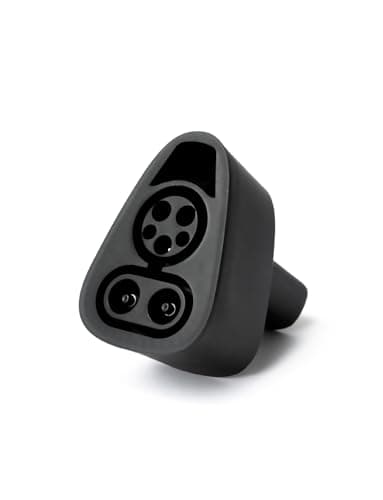 LENZ CCS1 to NACS AdapterThe budget route into CCS fast charging for a NACS car, with a lower voltage rating than the A2Z and a safety listing to a different standard. LENZ CCS1 to NACS AdapterThe budget route into CCS fast charging for a NACS car, with a lower voltage rating than the A2Z and a safety listing to a different standard. | The cheapest CCS access | DC fast-charging adapter |
#1 · A CCS1 car at a Supercharger
LENZ NACS to CCS1 Adapter (Supercharger access)
The cheaper way into the Supercharger network for a CCS1 car, with the same 500A rating as adapters costing considerably more.
| Direction | NACS (Supercharger) cable into a CCS1 vehicle portsource |
|---|---|
| Rating | Up to 500A and 1000Vsource |
| Certification | UL 2252 compliant, SGS listedsource |
| Vehicle requirement | CCS1 charging ports only, and the automaker must have Supercharger access — LENZ names Ford, Rivian, GM, Hyundai, Genesis, Volvo and Polaris among themsource |
| Operating temperature | -22°F to 122°Fsource |
| Support | 2-year support, carrying case includedsource |
What those numbers mean
The direction is the whole product. This plugs onto the Supercharger's NACS cable and presents a CCS1 plug to your car, which is what a non-Tesla with a CCS1 port needs. It is not the adapter a Tesla owner wants.
Access is granted by your automaker, not by the adapter. LENZ says so plainly and lists the brands it knows are supported; the Tesla app is what actually shows you which stations will work for your car.
500A and 1000V are the connector's ratings rather than a promise about speed. What you actually get depends on the Supercharger generation and your car's own DC charging curve.
What it does well
- Substantially cheaper than the certified-with-interlock tier
- 500A / 1000V rating, the same headline figures as the premium option
- Published operating range of -22°F to 122°F
- Carrying case and a two-year support commitment
What it does not
- LENZ describes it as UL 2252 compliant and SGS listed rather than UL certified
- No interlock mechanism, which the Lectron alternative publishes
- Useless if your automaker has not enabled Supercharger access for your model
Skip this one if: Your car has a NACS port. This is the wrong direction entirely — you want a CCS1-to-NACS adapter so you can use CCS stations.
#ad · how this is funded · price as of September 22, 2026
#2 · A locked connection at 500 amps
Lectron Vortex Plus NACS to CCS Adapter with Interlock
The one that publishes a UL 2252 certification and an interlock, which is what you want on a part carrying 500 amps of DC on a public forecourt.
| Direction | NACS (Supercharger) cable into a CCS1 vehicle portsource |
|---|---|
| Rating | 500A / 1,000Vsource |
| Certification | UL 2252 certified — Lectron describes it as the first publicly available NACS to CCS adapter certified to that standardsource |
| Interlock | Built-in interlock mechanism to hold the connection during DC fast chargingsource |
| Standard | SAE J3400 (NACS) to CCSsource |
| Not compatible with | Tesla vehicles, and AC charging stationssource |
What those numbers mean
The interlock is the reason to pay the difference. A DC adapter is a rigid lump hanging off a heavy cable at a public station, and a mechanism that holds the joint together is worth more here than on any AC adapter.
Lectron states this is certified to UL 2252 rather than compliant with it, and that distinction is exactly the one this site keeps insisting on elsewhere. It is the strongest published certification claim in this group.
Lectron's own listing says it works with V3 and V4 Superchargers and only with CCS1 cars whose automaker has enabled access. The charging-speed claims in its marketing vary by station generation and vehicle, which Lectron also says.
What it does well
- Published UL 2252 certification rather than a compliance claim
- Interlock mechanism for a secure joint under DC fast charging
- 500A / 1,000V rating
- Explicit about what it will not do — no Tesla vehicles, no AC stations
What it does not
- The most expensive adapter on this page by a clear margin
- Still bounded by whether your automaker has enabled Supercharger access
- Useless for AC charging, so it does not replace a J1772 adapter
Skip this one if: You want one adapter for everything. This is DC only and CCS1 only; the AC adapters in this section are a separate purchase for a separate job.
#ad · how this is funded · price as of September 22, 2026
#3 · A NACS car at a CCS station
A2Z EV Thunderstorm CCS1 to NACS Adapter (DC)
The other direction: it opens the CCS fast-charging network to a Tesla or any newer car with a NACS inlet, with a certification and an interlock pin published.
| Direction | CCS1 station cable into a NACS vehicle portsource |
|---|---|
| Charging type | DC fast chargingsource |
| Certification | UL2252 / CSA-C22.2 certified — A2Z describes it as the first certified CCS1 to NACS adaptersource |
| Locking | Locks in while charging, with an interlock safety pin that prevents removal until the car, phone or station releases itsource |
| Ingress rating | IP54, hard case includedsource |
| Tesla requirement | CCS Adapter Support must show as enabled under additional vehicle information in the car's settingssource |
What those numbers mean
This is the mirror image of the two adapters above, and the one a Tesla driver actually wants. It takes a CCS1 station cable and presents NACS to the car.
The Tesla requirement is the part that catches people: older cars need CCS Adapter Support enabled, and A2Z tells you exactly where to look for it in the car's settings before you buy.
A2Z publishes a list of currently compatible vehicles that now runs well beyond Tesla — newer Hyundai, Kia, Lucid, Rivian, Nissan and Chevrolet models with a NACS inlet are on it. Check the list against your model year rather than assuming.
What it does well
- UL2252 and CSA-C22.2 certified, with the certification stated plainly
- Interlock safety pin and a lock that holds while charging
- IP54 rated with a hard case
- A published, specific vehicle-compatibility list rather than a vague claim
What it does not
- Wrong direction for a CCS1 car — it will not get you into a Supercharger
- Tesla owners need CCS Adapter Support enabled, which not every older car has
- Costs more than the LENZ adapter in the same direction
Skip this one if: Your car has a CCS1 port. You need the opposite direction — a NACS-to-CCS1 adapter — and this one will not fit your car at all.
#ad · how this is funded · price as of September 22, 2026
#4 · The cheapest CCS access
LENZ CCS1 to NACS Adapter
The budget route into CCS fast charging for a NACS car, with a lower voltage rating than the A2Z and a safety listing to a different standard.
| Direction | CCS1 station cable into a NACS vehicle portsource |
|---|---|
| Rating | Supports up to 500V DCsource |
| Certification | SGS listed to comply with UL 2251 and CSA C22.2source |
| Operating temperature | -22°F to 122°F operating, -40°F to 185°F storagesource |
| Tesla requirement | The car must be CCS enabled — LENZ points to Controls, Software, Additional Vehicle Information, CCS Adapter Supportsource |
| Warranty | 2 yearssource |
What those numbers mean
The cheapest way to reach CCS stations with a NACS car, and the specification to read closely is the voltage: LENZ publishes up to 500V, where the A2Z alternative publishes 1000V. On an 800V car that difference is the whole decision.
Note the standard as well. LENZ lists this one to UL 2251, the coupler standard, while the adapters above cite UL 2252, which covers EV adapters specifically. Both are real listings; they are not the same claim.
The storage range is unusually wide, which matters for a part that lives in a trunk through a summer and a winter.
What it does well
- The least expensive adapter on this page
- SGS listed to UL 2251 and CSA C22.2
- Wide published storage and operating temperature ranges
- Two-year warranty with US-based support
What it does not
- 500V rating, against 1000V on the A2Z adapter in the same direction — the limiting figure on an 800V car
- Listed to UL 2251 rather than the EV-adapter standard UL 2252
- No interlock pin published
Skip this one if: Your car runs an 800V architecture or you want the strongest published certification in this direction. The A2Z adapter is rated to 1000V and certified to UL2252.
The adapter does not grant access — your automaker does
This is the single most important thing on the page, and both manufacturers say it themselves. A NACS-to-CCS1 adapter is a physical and electrical bridge; whether a Supercharger will actually start a session for your car depends on your automaker having enabled Supercharger access for that model.
Lectron states its adapter is designed exclusively for CCS1 EVs that have Supercharger access through their automaker. LENZ says the same and names Ford, Rivian, GM, Hyundai, Genesis, Volvo and Polaris among the brands that qualify, alongside the instruction to locate compatible stations in the Tesla app. Check your own model against your automaker before ordering anything here — the adapter cannot fix a car the network does not recognize.
Tesla owners: check one setting first
500 volts against 1000 volts
In the CCS1-to-NACS direction the two picks differ on a figure that is easy to miss: one publishes support for up to 500V DC, the other is rated to 1000V. For a 400V car — which is most of them — either is fine. For an 800V architecture the 500V part is the wrong component, and no amount of current rating compensates.
If you do not know which your car is, that is a specification in the owner's manual rather than something to guess at. It is also the kind of detail that makes the cheaper adapter genuinely cheaper rather than merely worse.
Certified, compliant, and listed to what
The certification language in this category rewards close reading, and the differences here are real:
- Certified to UL 2252. The strongest claim available, and the standard written specifically for EV adapters. Two of the picks here state it.
- Compliant with UL 2252, SGS listed. A testing house has listed the product against that standard. It is a real statement and it is not the same sentence as certified.
- Listed to UL 2251. That is the coupler standard rather than the adapter standard. Also real, also checkable, and worth knowing you are reading a different document.
None of this makes the weaker-worded products dangerous, and this site is not going to imply otherwise from a desk. It means the claims differ, the differences are published, and a part that carries 500 amps unattended is the place to prefer the specific claim over the vague one. The same logic drives the AC adapter comparison.
Do you actually need one?
Check the obvious thing first: if your car was delivered with a NACS inlet, or your automaker already supplied an adapter with the vehicle, you may own this capability and not know it. Several brands shipped one in the trunk during the switchover.
The second check is your own map. If the stations you actually pass on the routes you actually drive already work with your car, an adapter is insurance rather than access, and it can wait until a trip needs it. The readers for whom these are genuinely worth buying up front are the ones with no home charging, because for them the network is not a convenience — it is the whole arrangement.
What these adapters will not do
- They will not charge your car at home. These are DC-only. Home charging is AC, and it needs a portable charger and an outlet.
- They will not work at an AC destination charger. Lectron says so explicitly of its own product. For a Tesla cable at a hotel or a workplace you want an AC adapter instead.
- They will not make your car charge faster than it can. The station's output, the Supercharger generation and your car's own DC curve set the rate. The adapter is a connector, not a power supply.
- They will not unlock a network your automaker has not joined. Covered above, and it is the most common disappointment in this category.
Living with one
These are heavier and more rigid than an AC adapter, and they hang off a DC cable that is heavier still. Support the weight when you connect rather than letting the adapter lever on the car's inlet, keep the hard case it came with, and store it where it will not be crushed — the failure points are the same ones that kill any connector, just with more mass behind them.
In a shared or public space the locking mechanisms matter for a second reason: they make an expensive part harder to walk off with while you are inside. That concern is the same one behind the J1772 adapter lock on the AC side.
What we could not evaluate
Any of it in use. We have not taken these to a station, measured a session, or watched one age through a winter in a trunk. There is no test bench behind this site and no loaner fleet, and the category is full of publishers implying otherwise. What is above is each manufacturer's published documentation — certifications, ratings, compatibility lists and the requirements they state themselves — read carefully and compared. The method is written down, including what it cannot tell you.
Questions people actually ask
Can a non-Tesla EV use a Tesla Supercharger?
Many can, with a NACS-to-CCS1 adapter and an automaker that has enabled Supercharger access for that model. The adapter is only the physical and electrical bridge; whether a session starts depends on your car being recognized by the network, which the Tesla app will show you.
Which direction adapter do I need?
Read the product name last-word-first: the second name is your car. A CCS1 car reaching Superchargers needs NACS to CCS1. A Tesla or NACS-inlet car reaching CCS stations needs CCS1 to NACS. The wrong direction will not fit.
Will a J1772 adapter work at a Supercharger?
No. J1772 adapters are AC only. A Supercharger delivers DC, the communication is different, and the pins are carrying far more than an AC adapter is built for. It is a different class of product entirely.
Do I need a 1000V adapter?
Only if your car uses an 800V architecture, in which case a 500V-rated adapter is the wrong part. For a 400V car — still the majority — either rating works, and the cheaper adapter is genuinely cheaper rather than merely weaker.
Why is my Tesla not working with a CCS adapter?
Check CCS Adapter Support in the car: Controls, Software, Additional Vehicle Information. Some older cars are not enabled, and that is a property of the vehicle rather than a fault in the adapter.
Are DC fast-charging adapters safe?
The ones worth buying publish a certification you can look up — UL 2252 is the standard written for EV adapters. Prefer a product that states certification to a named standard over one that says only that it is certified, and prefer one with a locking or interlock mechanism for a joint carrying hundreds of amps.
Can I use one of these to charge at home?
No. These are DC adapters for public fast charging. Home charging is AC and needs a portable charger plugged into an outlet, which is a completely separate purchase.
Sources
Every figure on this page traces to one of these. If a number here disagrees with the manufacturer, the manufacturer is right and we want to know — tell us.
- LENZ — NACS to CCS Adapter for non-Tesla EVs at Supercharger stations (product page)
- Lectron — NACS to CCS Adapter with Interlock, Vortex Plus, 500A / 1,000V (product page)
- A2Z EV — Thunderstorm CCS1 Charger to NACS Vehicle DC adapter, UL2252/CSA-C22.2 (product page)
- LENZ — CCS1 to NACS Port (Tesla) Charging Adapter (product page)
- Tesla — North American Charging Standard (NACS) connector specification
- SAE International — J1772 electric vehicle conductive charge coupler standard
- U.S. DOE Alternative Fuels Data Center — Electric vehicle charging levels and speeds
Read next

Best Charging Adapter
NACS and J1772 adapters
The adapter section — direction first, brand second. Which adapter your car needs, why AC-only is not a limitation, and what to buy.
Top pick: A2Z EV Stellar NACS to J1772 Adapter, 80A
Guide
Why your adapter is AC only
AC versus DC charging explained through the connector: why an adapter that fits perfectly can still do nothing at a fast charger.
Top pick: A2Z EV Stellar NACS to J1772 Adapter, 80A
Guide
NACS to J1772 vs J1772 to NACS
The direction question answered up front: an adapter is named for the cable it plugs onto first and the car it presents to second.
Top pick: Lectron Tesla (NACS) to J1772 Adapter, 48A
Best NACS Adapter
Best NACS adapters
Both directions ranked together, because the wrong-direction purchase is the real risk. Certification numbers, IP ratings and temperature ranges compared.
Top pick: A2Z EV Stellar NACS to J1772 Adapter, 80A

Guide
Home vs public charging
The home-versus-public cost comparison for renters, plus a workable routine for anyone with no home charging at all.
Top pick: Lectron Portable Level 1 J1772 Charger (15A, NEMA 5-15)

Guide
Charging an EV when you only have street parking
Street parking is the hardest case. What genuinely works, what does not, and how to build a routine that does not depend on a driveway.
Top pick: Lectron Portable Level 1 J1772 Charger (15A, NEMA 5-15)