Home vs public charging
For a renter this is not an abstract comparison. It is the difference between two ways of owning the same car, and one of them costs meaningfully more.
How this page is funded: the buy links below are affiliate links, and Renter Volt earns a commission on qualifying purchases at no cost to you. Nothing here was supplied by a manufacturer, and commission plays no part in the ranking — read the full disclosure. Picks are chosen from published specifications rather than hands-on testing; the method is written down so you can check it. Prices last verified October 27, 2026.
Public DC fast charging typically costs several times the per-kWh price of residential electricity, and in some markets it approaches the per-mile cost of gasoline. That is the fact that decides how much home charging is worth to you, and it is why the effort of finding any reachable outlet usually pays for itself.
We are not going to publish a per-kWh public charging price, because it varies by network, by state, by time of day, by membership tier and by whether the session is billed by energy or by minute. Run the arithmetic with the price on the screen in front of you instead.
cost per mile = price per kWh ÷ your car's miles per kWh
Home at $0.17 ÷ 3.5 = $0.049/mile. A fast charger at $0.48 ÷ 3.5 = $0.137/mile.
Same car, same miles, roughly 2.8 times the cost. Substitute the actual prices you face — the point is the ratio, not the placeholder figures.
The three kinds of public charging, priced differently
| Type | Typical power | Cost profile | Best used for |
|---|---|---|---|
| Free destination charging | Level 2, 3-9 kW | Free or nominal | Grocery, gym, cinema — time you were spending anyway |
| Paid Level 2 public | 3-9 kW | Moderate per kWh, sometimes per hour | Workplace and long stops |
| DC fast charging | 50-350 kW | The most expensive per kWh, by a wide margin | Road trips, and the weekly top-up if you have no home access |
Watch for per-minute billing, which punishes a car that charges slowly or a session that continues past the fast portion of the curve. And watch for idle fees, which are reasonable in principle and expensive when you forget.
Quick picks
Ranked, with the reasoning underneath. Tap any row to jump to that write-up; tap the price to check it on Amazon. Prices come from the live layer, never from this page.
| # | Product | Best for | Type | Price |
|---|---|---|---|---|
| 1 | 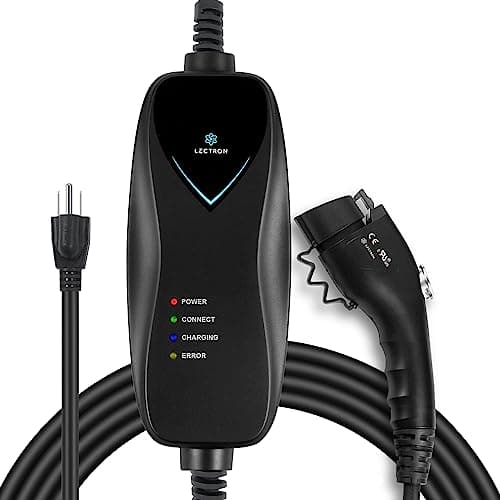 Lectron Portable Level 1 J1772 Charger (15A, NEMA 5-15)The unglamorous answer that covers most commutes: an ordinary 120V socket, overnight, and no conversation with anybody about electrical work. Lectron Portable Level 1 J1772 Charger (15A, NEMA 5-15)The unglamorous answer that covers most commutes: an ordinary 120V socket, overnight, and no conversation with anybody about electrical work. | An ordinary wall socket | Level 1 EVSE | |
| 2 | 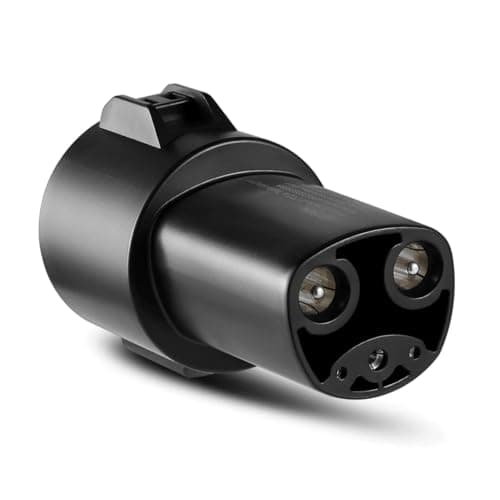 Lectron J1772 to Tesla (NACS) AdapterThe opposite direction, and the one Tesla drivers actually need: it lets a NACS car take the J1772 cable that most workplaces and older buildings already have. Lectron J1772 to Tesla (NACS) AdapterThe opposite direction, and the one Tesla drivers actually need: it lets a NACS car take the J1772 cable that most workplaces and older buildings already have. | A Tesla at a J1772 station | AC charging adapter | |
| 3 | 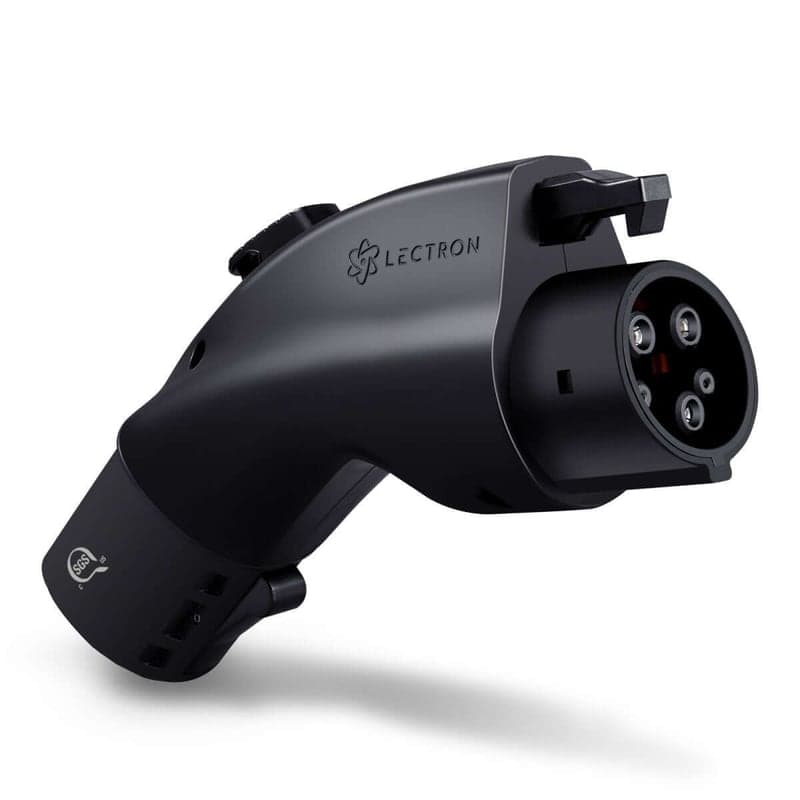 Lectron Tesla (NACS) to J1772 Adapter, 48AThe adapter a J1772 car needs to use a Tesla wall, destination or mobile connector — which is the direction many apartment buildings have already installed. Lectron Tesla (NACS) to J1772 Adapter, 48AThe adapter a J1772 car needs to use a Tesla wall, destination or mobile connector — which is the direction many apartment buildings have already installed. | A J1772 car at a Tesla cable | AC charging adapter | Check price#ad |
#1 · An ordinary wall socket
Lectron Portable Level 1 J1772 Charger (15A, NEMA 5-15)
The unglamorous answer that covers most commutes: an ordinary 120V socket, overnight, and no conversation with anybody about electrical work.
| Input | 120V, 15A maximumsource |
|---|---|
| Output power | 1.8 kWsource |
| Cable length | 16 ftsource |
| Plug / connector | NEMA 5-15 plug, J1772 connectorsource |
| Certification | UL 2594 / UL 2231 certified, and separately described as ETL-certified; no certificate number publishedsource |
| Ingress rating | IP65 weather-resistant, stated in the specification textsource |
| Manufacturer charge-rate claim | 45+ miles of range overnight; 3-5 miles of range per hoursource |
What those numbers mean
1.8 kW sounds trivial next to 9.6 kW, and for a road trip it is. For a commute it usually is not: the average US driver covers well under 45 miles a day, and this replaces that overnight while the car sits anyway.
The honest ceiling is the circuit behind the socket, not the cable. This unit draws 15 amps for hours, which a 20 amp circuit supports continuously and a 15 amp circuit does not — so check the breaker before the first overnight session, and on a 15 amp circuit choose a 12 amp unit instead.
This is the only category of EV charging that is genuinely invisible to a landlord. It draws less than a hair dryer and plugs into a receptacle that already exists.
What it does well
- Works with a socket that already exists, everywhere, with no permission needed
- UL 2594 and UL 2231 certified rather than a generic cordset
- Cheapest possible entry into home charging, by a wide margin
What it does not
- 1.8 kW will not recover a long driving day overnight
- 16 ft cable, and the nearest 120V socket is often not the nearest thing to the car
- Its 15 amp draw needs a 20 amp circuit behind the socket; an ordinary 15 amp circuit supports 12 amps continuously
Skip this one if: You regularly drive more than about 45 miles a day. Level 1 will fall a little further behind every night and you will spend the difference at public chargers.
#2 · A Tesla at a J1772 station
Lectron J1772 to Tesla (NACS) Adapter
The opposite direction, and the one Tesla drivers actually need: it lets a NACS car take the J1772 cable that most workplaces and older buildings already have.
| Maximum current | Up to 80A at 240V ACsource |
|---|---|
| Direction | SAE J1772 charging station into a Tesla (NACS / J3400) vehicle portsource |
| Compatibility | Any Level 1 or Level 2 charger with a J1772 connector; Tesla Model S, 3, X and Y plus other NACS (J3400) vehiclessource |
| Ingress rating | IP67-rated for water and dustsource |
| Operating temperature | -22°F to 122°Fsource |
| Certification | UL 2251 and TUV certifiedsource |
What those numbers mean
Most public and workplace AC charging in the US is still J1772, and most Teslas ship without an adapter for it. This is the part that fills that gap, and it lives in the frunk.
IP67 is the strongest ingress rating of any adapter here — dust tight and rated for temporary immersion rather than just spray. That is the specification to want for something left connected outdoors overnight, though it is still worth keeping the coupling out of standing water.
80A is roughly double what any Level 2 AC station will hand you, so the adapter is never the limiting factor in the chain. Treat the rating as headroom on a connection that carries current for hours, not as speed.
What it does well
- The direction Tesla drivers actually need for apartment and workplace J1772 cables
- IP67 rating and a published -22°F to 122°F operating range
- UL 2251 and TUV certified
What it does not
- AC only — it does nothing at a CCS DC fast charger
- Small and valuable, which is exactly the theft profile of a shared parking garage
Skip this one if: Your car has a J1772 port. This adapter is for NACS-port vehicles and will not fit yours in either orientation.
#ad · how this is funded · price as of October 27, 2026
#3 · A J1772 car at a Tesla cable
Lectron Tesla (NACS) to J1772 Adapter, 48A
The adapter a J1772 car needs to use a Tesla wall, destination or mobile connector — which is the direction many apartment buildings have already installed.
| Rating | Up to 48A / 240V (11.5 kW)source |
|---|---|
| Direction | Tesla (NACS) charging source into a J1772 vehicle portsource |
| Compatibility | Tesla High Powered Wall Connectors, all generations of Destination Charger, and Mobile Connectorssource |
| Charging type | AC Level 1 and Level 2 only — not compatible with Superchargerssource |
| Certification | SGS certified to UL 2251source |
What those numbers mean
Get the direction right before the brand. This adapter goes on a Tesla-shaped plug so a J1772 car can take it. If you drive a Tesla and the building's charger is J1772, you need the opposite adapter and this one will not physically fit.
The 48 amp rating is the adapter's ceiling. It does not raise anything: the slowest link in the chain — station, adapter, cable, car — sets the speed.
AC only, and that is a property of the adapter rather than a limitation to work around. Superchargers are DC and use an entirely different UL standard.
What it does well
- Rated to 48A, above what any Tesla AC source will deliver, so the adapter is never the bottleneck
- Certified to UL 2251, the standard written for charging couplers
- Turns a building's existing Tesla destination chargers into infrastructure your J1772 car can use
What it does not
- AC only, so it does nothing at a Supercharger
- Small enough to walk off from a shared parking structure
Skip this one if: You drive a Tesla. This is the wrong direction — you want a J1772-to-NACS adapter instead, and buying this one is the most common mistake in the category.
#ad · how this is funded · price as of October 27, 2026
The routine if you have no home charging at all
It is workable — it is how a large share of urban EV owners live — and it is a different pattern rather than a broken one. If most of your charging happens on one public network, that is also the one case where a networked home charger earns its premium: ChargePoint Home Flex vs Emporia Classic works through when it does and does not. The components:
- Workplace charging, if it exists. Usually Level 2, often free or cheap, and a full working day at 7 kW is 50 kWh. This single item does most of the work for most people who have it. Check the connector — you may need an adapter.
- One weekly DC session. 30-45 minutes covers a typical commuting week. Do it somewhere you would spend the time anyway.
- Destination charging opportunistically. Slow, but free time is free time.
- A Level 1 cable in the trunk. For any outlet you ever park near — a relative's, a friend's driveway, a rental. It costs little and it makes every socket usable.
What that routine actually costs you
Two things, and it is worth being clear about both before you commit to an EV without home access. Money: the per-mile difference from the formula above, multiplied by your annual mileage. Time: the fast-charging stops, which are real minutes even when they happen somewhere convenient.
When public charging is genuinely the right answer
- Road trips. Nothing else works and nothing else is trying to.
- Free workplace charging. Cheaper than home, and you were parked there anyway.
- Free destination charging on a trip you were making. Same reasoning.
- A genuinely inaccessible parking situation — street parking with a public sidewalk in between is the honest case where home charging is not available.
What it is not right for is routine daily charging that could have happened overnight from an outlet you did not go looking for. That is the expensive version of the same car.
Questions people actually ask
Is public EV charging more expensive than home charging?
Usually yes, and DC fast charging is typically several times the per-kWh price of residential electricity. Run the comparison with the actual prices you face — divide each price per kWh by your car's miles per kWh to get cost per mile.
Can you own an EV without home charging?
Yes, and many people do. The routine is workplace charging where it exists, one weekly DC session, opportunistic destination charging, and a Level 1 cable for any outlet you happen to park near. It costs more per mile and takes more of your time.
How often would I need to fast charge with no home charging?
For a typical commuting pattern, roughly one 30-45 minute session a week, less if there is any charging at work.
Is workplace charging cheaper than home?
Frequently, because it is often free or subsidized, and the car is parked there anyway. If it is available, it is usually the best charging you have access to.
Sources
Every figure on this page traces to one of these. If a number here disagrees with the manufacturer, the manufacturer is right and we want to know — tell us.
- U.S. Energy Information Administration — Average retail price of electricity to residential customers
- U.S. DOE Alternative Fuels Data Center — Electric vehicle charging levels and speeds
- U.S. Department of Energy — Electric vehicle charging at home
- Lectron — J1772 to Tesla (NACS) EV Adapter, 240V / 80A (product page)
Read next
Guide
Learn
Reference and explainers: charging levels, cost per mile, session times, outdoor safety and a glossary written in plain English.

Guide
What it actually costs to charge
The cost arithmetic in full: cost per charge, cost per mile, and an honest comparison against gasoline using your own numbers.
Top pick: Lectron Portable Level 1 J1772 Charger (15A, NEMA 5-15)

Guide
Charging an EV when you only have street parking
Street parking is the hardest case. What genuinely works, what does not, and how to build a routine that does not depend on a driveway.
Top pick: Lectron Portable Level 1 J1772 Charger (15A, NEMA 5-15)

Guide
How to charge an EV in an apartment complex
The ordered playbook for apartment charging: survey the property, find reachable power, and make the ask that gets a yes.
Top pick: Lectron Tesla (NACS) to J1772 Adapter, 48A
Best Charging Adapter
NACS and J1772 adapters
The adapter section — direction first, brand second. Which adapter your car needs, why AC-only is not a limitation, and what to buy.
Top pick: A2Z EV Stellar NACS to J1772 Adapter, 80A

Best Value Smart Charger
ChargePoint Home Flex vs Emporia Classic
The premium smart-charger head-to-head, read for renters: 23 ft against 25 ft of cable, the circuit each plug version accepts, and the two apps.
Top pick: Emporia Classic Level 2 EV Charger (NEMA 14-50 plug)