The renter's EV charging starter kit
Three items, in order. This is the shortest honest shopping list for someone who just picked up an EV and parks in a lot.
How this page is funded: the buy links below are affiliate links, and Renter Volt earns a commission on qualifying purchases at no cost to you. Nothing here was supplied by a manufacturer, and commission plays no part in the ranking — read the full disclosure. Picks are chosen from published specifications rather than hands-on testing; the method is written down so you can check it. Prices last verified October 27, 2026.
Buy the Level 1 charger first, the adapter second, and the lock only if you park somewhere other people walk. That is the whole list. Almost everybody starting out overbuys, and the usual pattern is a 40 amp charger for an outlet that turns out not to exist.
This page is deliberately short. If you already know your outlet and want the fast option, go to portable chargers instead — this is the list for the first week, when you are still working out where you can plug in at all.
1. A Level 1 charger, even if you plan to go faster later
Most EVs still ship with a 120V cable, but not all of them do. The ones that do often ship with a 12 amp unit, which is the correct current for an ordinary 15 amp household circuit — the best Level 1 chargers explains why a faster 15 amp unit needs a 20 amp circuit. A Level 1 charger works with an outlet that exists everywhere: at your parking space if you are lucky, at a friend's house, at a relative's over a holiday, at a rental cabin. It is the piece of equipment you will still own in five years.
It is also the only charging you can do without any conversation with anybody. That matters more in the first month than speed does.
2. The adapter your car needs — in the correct direction
North America is halfway through switching from J1772 to NACS. Your building's charger and your car may both be modern and still not fit. Which adapter you need depends entirely on which side is which:
| Your car's port | The charger you want to use | The adapter |
|---|---|---|
| J1772 | Tesla / NACS cable | NACS to J1772 |
| NACS (Tesla) | J1772 cable | J1772 to NACS |
| J1772 | J1772 cable | None |
| NACS (Tesla) | Tesla / NACS cable | None |
Buying the wrong direction is the most common single mistake in this category, and the reason is that both products are described with the same four words in a different order. We wrote a page about exactly that.
3. A lock, only if your parking is shared
An adapter is small, generic, worth real money secondhand, and left plugged in unattended for eight hours at a time. In a private garage that is fine. In an open apartment lot or a shared structure, a locking ring is a few dollars against losing the adapter and the charging session at once.
Quick picks
Ranked, with the reasoning underneath. Tap any row to jump to that write-up; tap the price to check it on Amazon. Prices come from the live layer, never from this page.
| # | Product | Best for | Type | Price |
|---|---|---|---|---|
| 1 | 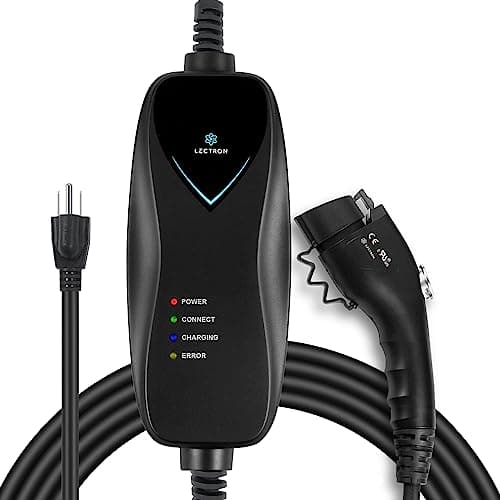 Lectron Portable Level 1 J1772 Charger (15A, NEMA 5-15)The unglamorous answer that covers most commutes: an ordinary 120V socket, overnight, and no conversation with anybody about electrical work. Lectron Portable Level 1 J1772 Charger (15A, NEMA 5-15)The unglamorous answer that covers most commutes: an ordinary 120V socket, overnight, and no conversation with anybody about electrical work. | An ordinary wall socket | Level 1 EVSE | |
| 2 | 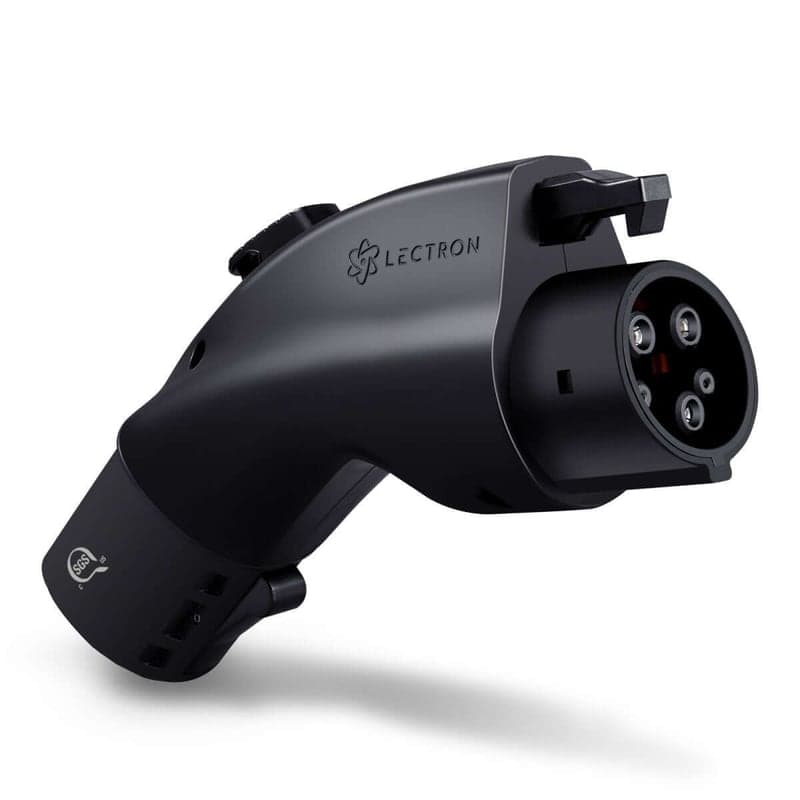 Lectron Tesla (NACS) to J1772 Adapter, 48AThe adapter a J1772 car needs to use a Tesla wall, destination or mobile connector — which is the direction many apartment buildings have already installed. Lectron Tesla (NACS) to J1772 Adapter, 48AThe adapter a J1772 car needs to use a Tesla wall, destination or mobile connector — which is the direction many apartment buildings have already installed. | A J1772 car at a Tesla cable | AC charging adapter | Check price#ad |
| 3 |  LENZ Charger Lock for J1772 to Tesla Adapters (2-pack)A locking ring that borrows your car's own door lock to hold the adapter on, which is a cleverer answer than a cable and costs less than losing the adapter once. LENZ Charger Lock for J1772 to Tesla Adapters (2-pack)A locking ring that borrows your car's own door lock to hold the adapter on, which is a cleverer answer than a cable and costs less than losing the adapter once. | Shared or public parking | Adapter locking ring |
#1 · An ordinary wall socket
Lectron Portable Level 1 J1772 Charger (15A, NEMA 5-15)
The unglamorous answer that covers most commutes: an ordinary 120V socket, overnight, and no conversation with anybody about electrical work.
| Input | 120V, 15A maximumsource |
|---|---|
| Output power | 1.8 kWsource |
| Cable length | 16 ftsource |
| Plug / connector | NEMA 5-15 plug, J1772 connectorsource |
| Certification | UL 2594 / UL 2231 certified, and separately described as ETL-certified; no certificate number publishedsource |
| Ingress rating | IP65 weather-resistant, stated in the specification textsource |
| Manufacturer charge-rate claim | 45+ miles of range overnight; 3-5 miles of range per hoursource |
What those numbers mean
1.8 kW sounds trivial next to 9.6 kW, and for a road trip it is. For a commute it usually is not: the average US driver covers well under 45 miles a day, and this replaces that overnight while the car sits anyway.
The honest ceiling is the circuit behind the socket, not the cable. This unit draws 15 amps for hours, which a 20 amp circuit supports continuously and a 15 amp circuit does not — so check the breaker before the first overnight session, and on a 15 amp circuit choose a 12 amp unit instead.
This is the only category of EV charging that is genuinely invisible to a landlord. It draws less than a hair dryer and plugs into a receptacle that already exists.
What it does well
- Works with a socket that already exists, everywhere, with no permission needed
- UL 2594 and UL 2231 certified rather than a generic cordset
- Cheapest possible entry into home charging, by a wide margin
What it does not
- 1.8 kW will not recover a long driving day overnight
- 16 ft cable, and the nearest 120V socket is often not the nearest thing to the car
- Its 15 amp draw needs a 20 amp circuit behind the socket; an ordinary 15 amp circuit supports 12 amps continuously
Skip this one if: You regularly drive more than about 45 miles a day. Level 1 will fall a little further behind every night and you will spend the difference at public chargers.
#2 · A J1772 car at a Tesla cable
Lectron Tesla (NACS) to J1772 Adapter, 48A
The adapter a J1772 car needs to use a Tesla wall, destination or mobile connector — which is the direction many apartment buildings have already installed.
| Rating | Up to 48A / 240V (11.5 kW)source |
|---|---|
| Direction | Tesla (NACS) charging source into a J1772 vehicle portsource |
| Compatibility | Tesla High Powered Wall Connectors, all generations of Destination Charger, and Mobile Connectorssource |
| Charging type | AC Level 1 and Level 2 only — not compatible with Superchargerssource |
| Certification | SGS certified to UL 2251source |
What those numbers mean
Get the direction right before the brand. This adapter goes on a Tesla-shaped plug so a J1772 car can take it. If you drive a Tesla and the building's charger is J1772, you need the opposite adapter and this one will not physically fit.
The 48 amp rating is the adapter's ceiling. It does not raise anything: the slowest link in the chain — station, adapter, cable, car — sets the speed.
AC only, and that is a property of the adapter rather than a limitation to work around. Superchargers are DC and use an entirely different UL standard.
What it does well
- Rated to 48A, above what any Tesla AC source will deliver, so the adapter is never the bottleneck
- Certified to UL 2251, the standard written for charging couplers
- Turns a building's existing Tesla destination chargers into infrastructure your J1772 car can use
What it does not
- AC only, so it does nothing at a Supercharger
- Small enough to walk off from a shared parking structure
Skip this one if: You drive a Tesla. This is the wrong direction — you want a J1772-to-NACS adapter instead, and buying this one is the most common mistake in the category.
#ad · how this is funded · price as of October 27, 2026
#3 · Shared or public parking
LENZ Charger Lock for J1772 to Tesla Adapters (2-pack)
A locking ring that borrows your car's own door lock to hold the adapter on, which is a cleverer answer than a cable and costs less than losing the adapter once.
| Type | Locking ring that snaps onto the charging adapter until it clicks into placesource |
|---|---|
| Function | Prevents unwanted unplugging — the adapter cannot be disconnected while the car is lockedsource |
| Compatibility | J1772 to Tesla charging adapters, and most Tesla models including S, 3, X and Ysource |
| Materials | Manufacturer states corrosion, weather and heat resistant; no specific material is publishedsource |
| Quantity | Set of two locking ringssource |
What those numbers mean
This is the cheapest item on the site and the one most likely to save you the price of something else. An adapter in a shared garage is small, generic and worth real money secondhand.
The mechanism is worth understanding because it is not a padlock. The ring holds the adapter captive on the charging handle, and the thing actually doing the securing is your car's own charge-port lock — which is already engaged while the car is locked. That means there is no extra key to carry and nothing extra to unlock, but it also means the protection ends the moment you unlock the car.
The manufacturer does not publish a lock mechanism type or a security rating, so we are not going to imply one. Treat it as a deterrent against somebody opportunistic walking past, not a defense against tools.
What it does well
- Addresses the specific theft that renters in shared parking actually report
- No extra key and nothing extra to unlock — it rides on the car's own lock
- Ships as a pair, so a second car or a spare adapter is covered
- Costs a fraction of the adapter it protects
What it does not
- No published security rating or lock-mechanism specification
- Protection lapses whenever the car is unlocked
- Fits adapters of a particular shape — check yours against the listing before buying
Skip this one if: You charge in a locked private garage, or you take the adapter with you every time. Then it is a step in your routine that buys nothing.
#ad · how this is funded · price as of October 27, 2026
What to skip in the first month
- A 40 amp charger, until you have found a 50 amp outlet. Buying the fast unit before finding the circuit is spending money on a specification you cannot use.
- An extension cord, until you have measured. Measure the actual route — around the car, not through it. Half the extensions bought in this category are solving a problem a 25 ft charger cable would have prevented.
- A smart charger, unless your rate changes overnight. Scheduling is worth real money on a time-of-use tariff and nothing at all on a flat one.
- Anything a landlord has to approve. If the purchase requires permission, it is not a starter-kit purchase.
The order matters more than the brands
Every product above is chosen because it is safety-listed and because its specifications are published. Several equivalents would do. What is not interchangeable is the sequence: solve access first, connector second, security third. People who do it in the other order end up with a fast charger, a wrong adapter, and nowhere to plug either of them in.
Once the kit is in the car, the next useful thing to read is how long charging actually takes, because it reframes what "slow" means when the car is parked for twelve hours anyway.
Questions people actually ask
What do I need to charge an EV at an apartment?
At minimum: a Level 1 charger and an outlet you can reach. Add an adapter if your car's connector does not match what your building has installed, and a lock if that adapter will be left unattended in shared parking.
Does my EV come with a charger?
Most do ship with a 120V cable, but it is not universal and the included units are often lower amperage than an aftermarket one. Check what came in the trunk before buying a second one.
Do I need a NACS adapter if I do not drive a Tesla?
You may. Many apartment buildings installed Tesla destination chargers, and a J1772 car needs a NACS-to-J1772 adapter to use them. That is the opposite direction from the adapter a Tesla driver buys.
How much should a first setup cost?
We do not publish price estimates, because prices move and a remembered number is worse than no number. Every buy button on this site shows the live price when our price layer has one, and says "Check price" when it does not.
Sources
Every figure on this page traces to one of these. If a number here disagrees with the manufacturer, the manufacturer is right and we want to know — tell us.
- Lectron — published specification table for the Level 1 and Level 2 charger range
- Lectron — Tesla (NACS) to J1772 EV Adapter, 240V / 48A (product page)
- LENZ — Charger Lock compatible with J1772 to Tesla charging adapters (product page)
- SAE International — J1772 electric vehicle conductive charge coupler standard
Read next

Start here
You don't have a garage. Here's what actually works.
The pillar guide: what charging looks like when there is no garage, no driveway and no landlord willing to run a new circuit.
Top pick: Lectron Portable Level 1 J1772 Charger (15A, NEMA 5-15)
Best No-Install Setup
The best EV chargers that need no installation
Ranked no-install charging setups, from an ordinary wall socket to a shared dryer circuit — every one of them plugs in and leaves with you.
Top pick: Grizzl-E Mini Connect Portable Charger
Guide
NACS to J1772 vs J1772 to NACS
The direction question answered up front: an adapter is named for the cable it plugs onto first and the car it presents to second.
Top pick: Lectron Tesla (NACS) to J1772 Adapter, 48A
Guide
Level 1 vs Level 2, for someone without a garage
The charging-level comparison rewritten for renters, with a renter-viability column and an honest case for Level 1.
Top pick: Lectron Portable Level 1 J1772 Charger (15A, NEMA 5-15)
Guide
How long does charging actually take?
Charging times by outlet and battery size, and the reframe that makes slow charging a non-problem for anyone who parks overnight.
Top pick: Grizzl-E Mini Connect Portable Charger
Best Budget Level 2
Best budget Level 2 EV chargers
Cheap Level 2 charging done properly: what to give up, what to keep, and the safety listing that is never the place to save money.
Top pick: Lectron Portable Level 2 J1772 Charger (40A, NEMA 14-50)