Is Level 1 charging bad for your EV battery?
The worry runs backwards. Level 1 is the gentlest thing you can do to a battery, and the published evidence never even looked for harm.
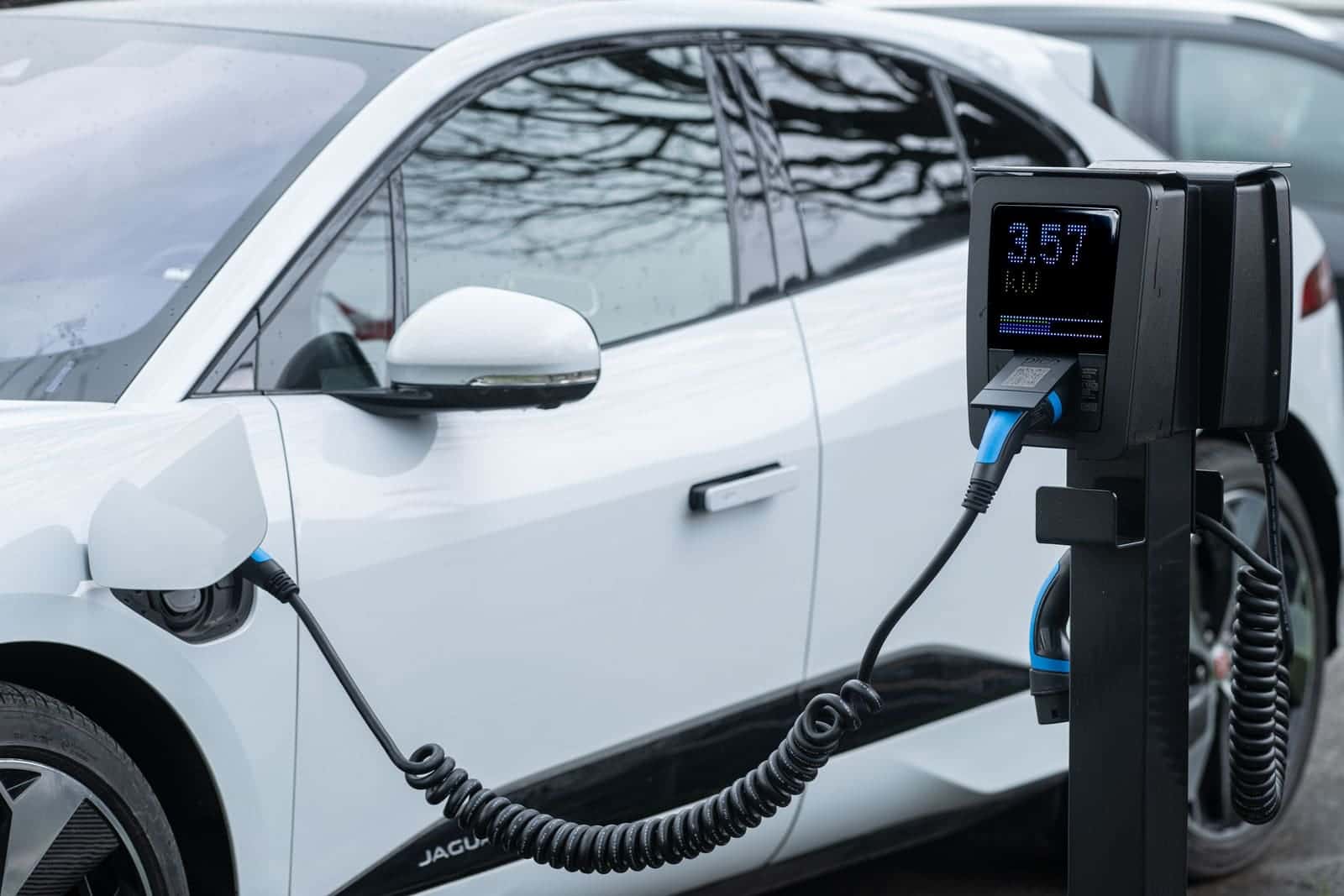
How this page is funded: the buy links below are affiliate links, and Renter Volt earns a commission on qualifying purchases at no cost to you. Nothing here was supplied by a manufacturer, and commission plays no part in the ranking — read the full disclosure. Picks are chosen from published specifications rather than hands-on testing; the method is written down so you can check it. Prices last verified October 27, 2026.
No. Level 1 charging is the lowest-power way to put energy into an EV, and there is no published evidence that it harms a battery — the controlled study people cite on this subject never tested Level 1 at all. If 120V is the outlet you can reach, a good Level 1 cord is a legitimate long-term plan rather than a compromise you are getting away with.
This question gets asked because of a real finding that has been misremembered. The finding was about DC fast charging, which is roughly thirty-five times the power of a Level 1 cord. Somewhere along the way it became a general anxiety about charging speed, and the arrow got pointed at the slowest option on the menu.
Quick picks
Ranked, with the reasoning underneath. Tap any row to jump to that write-up; tap the price to check it on Amazon. Prices come from the live layer, never from this page.
| # | Product | Best for | Type | Price |
|---|---|---|---|---|
| 1 | 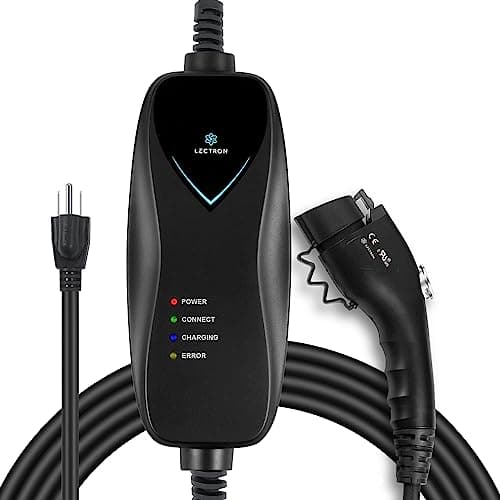 Lectron Portable Level 1 J1772 Charger (15A, NEMA 5-15)The unglamorous answer that covers most commutes: an ordinary 120V socket, overnight, and no conversation with anybody about electrical work. | An ordinary wall socket | Level 1 EVSE | |
| 2 | 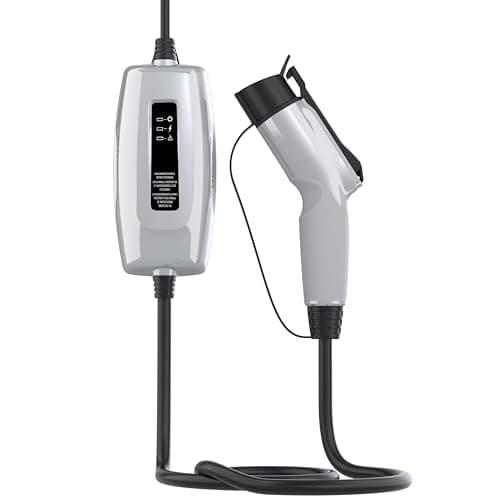 Schumacher Electric SEV1670 Level 1 Portable EV Charger (12A, NEMA 5-15)A 12 amp Level 1 charger sized correctly for an ordinary 15 amp household circuit, with a 20 ft cable that reaches further than most. | A 15 amp circuit and a longer reach | Level 1 EVSE | |
| 3 | 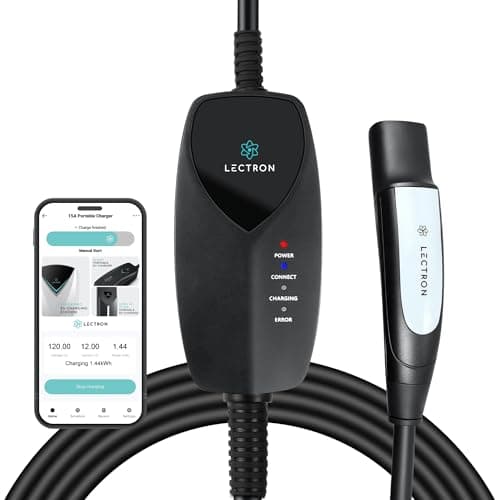 Lectron Portable Level 1 Tesla (NACS) Charger, WiFi (12A, NEMA 5-15)A 12 amp NACS Level 1 charger with app scheduling: the right current for a 15 amp circuit and the right connector for a Tesla, with no adapter in between. | A Tesla or NACS car on a household socket | Level 1 smart EVSE |
#1 · An ordinary wall socket
Lectron Portable Level 1 J1772 Charger (15A, NEMA 5-15)
The unglamorous answer that covers most commutes: an ordinary 120V socket, overnight, and no conversation with anybody about electrical work.
| Input | 120V, 15A maximumsource |
|---|---|
| Output power | 1.8 kWsource |
| Cable length | 16 ftsource |
| Plug / connector | NEMA 5-15 plug, J1772 connectorsource |
| Certification | UL 2594 / UL 2231 certified, and separately described as ETL-certified; no certificate number publishedsource |
| Ingress rating | IP65 weather-resistant, stated in the specification textsource |
| Manufacturer charge-rate claim | 45+ miles of range overnight; 3-5 miles of range per hoursource |
What those numbers mean
1.8 kW sounds trivial next to 9.6 kW, and for a road trip it is. For a commute it usually is not: the average US driver covers well under 45 miles a day, and this replaces that overnight while the car sits anyway.
The honest ceiling is the circuit behind the socket, not the cable. This unit draws 15 amps for hours, which a 20 amp circuit supports continuously and a 15 amp circuit does not — so check the breaker before the first overnight session, and on a 15 amp circuit choose a 12 amp unit instead.
This is the only category of EV charging that is genuinely invisible to a landlord. It draws less than a hair dryer and plugs into a receptacle that already exists.
What it does well
- Works with a socket that already exists, everywhere, with no permission needed
- UL 2594 and UL 2231 certified rather than a generic cordset
- Cheapest possible entry into home charging, by a wide margin
What it does not
- 1.8 kW will not recover a long driving day overnight
- 16 ft cable, and the nearest 120V socket is often not the nearest thing to the car
- Its 15 amp draw needs a 20 amp circuit behind the socket; an ordinary 15 amp circuit supports 12 amps continuously
Skip this one if: You regularly drive more than about 45 miles a day. Level 1 will fall a little further behind every night and you will spend the difference at public chargers.
#2 · A 15 amp circuit and a longer reach
Schumacher Electric SEV1670 Level 1 Portable EV Charger (12A, NEMA 5-15)
A 12 amp Level 1 charger sized correctly for an ordinary 15 amp household circuit, with a 20 ft cable that reaches further than most.
| Charging current | 12A continuous, 120Vsource |
|---|---|
| Output power | 1.44 kWsource |
| Cable length | 20 ftsource |
| Plug / connector | NEMA 5-15 plug, J1772 connectorsource |
| Certification | ETL and Energy Starsource |
| Enclosure | IP66 housingsource |
| Built-in protection | Leakage, undervoltage, overvoltage, overcurrent, over-temperature, ground-fault and relay-fault protectionsource |
What those numbers mean
Twelve amps is not a low number for this category; it is the correct one. A 15 amp circuit supports 12 amps of continuous load, and overnight charging is continuous by any definition, so this unit uses an ordinary household circuit right up to its limit and no further.
The 20 ft cable is four feet longer than the common 16 ft. At a carport or a curbside socket, those four feet are frequently the difference between reaching the charge port and reaching for an extension cord.
Over-temperature protection is on the manufacturer's list, but the published specification does not say where the sensor sits. Treat it as a backstop, and still feel the plug at the wall during the first few long sessions.
What it does well
- Sized for a 15 amp circuit, the most common household circuit there is
- 20 ft cable, longer than the usual 16 ft
- ETL and Energy Star certified, with an IP66 housing
- The manufacturer publishes the full list of built-in protections
What it does not
- J1772 only — a Tesla or other NACS car needs an adapter or a NACS unit
- No app or scheduling, and no current adjustment in the published specification
- 1.44 kW will not recover a long driving day overnight
Skip this one if: Your car has a NACS (Tesla-style) port, or you regularly drive more than about 40 miles a day. The first needs a different connector; the second needs more power than any Level 1 unit can deliver.
#3 · A Tesla or NACS car on a household socket
Lectron Portable Level 1 Tesla (NACS) Charger, WiFi (12A, NEMA 5-15)
A 12 amp NACS Level 1 charger with app scheduling: the right current for a 15 amp circuit and the right connector for a Tesla, with no adapter in between.
| Charging current | 12A, 120Vsource |
|---|---|
| Output power | Up to 1.44 kWsource |
| Cable length | 16 ftsource |
| Plug / connector | NEMA 5-15 plug, NACS (Tesla) connectorsource |
| Certification | UL 2594 / UL 2231 certifiedsource |
| Enclosure | IP67-rated control boxsource |
| App features | Charging schedules, real-time status and a kWh limit per session in the Lectron appsource |
What those numbers mean
The 12 amp rating is what makes this the NACS pick for most renters: it matches the continuous limit of an ordinary 15 amp circuit, where a 15 amp unit would need a 20 amp circuit behind the socket.
A NACS connector means a Tesla, or any other NACS car, plugs in directly. That is one fewer connection carrying current for twelve hours, and one fewer part to leave in a shared parking space.
The app earns its place on a time-of-use electricity rate, where starting the session inside the cheap window is worth money every night. On a flat rate it is mostly a status display.
What it does well
- Sized for a 15 amp household circuit
- Native NACS connector — no adapter needed on a Tesla
- Scheduling and a per-session kWh limit in the app
- UL 2594 / UL 2231 certified, with an IP67 control box
What it does not
- 16 ft cable, and the nearest socket is often further away than that
- The scheduling runs through the app, so it needs a network where you park
- NACS only — a J1772 car would need an adapter
Skip this one if: Your car has a J1772 port, or your electricity costs the same at every hour and there is no Wi-Fi where you park. A plain 12 amp unit does the same electrical job.
#ad · how this is funded · price as of October 27, 2026
What is actually published, and by whom
The DOE publishes a lifespan range — and attributes it to climate
The Department of Energy's consumer site states that "a DOE study suggests these batteries may last 12 to 15 years in moderate climates and 8 to 12 years in severe climates." Read the variable in that sentence: it is climate, not charging level. The one factor the DOE puts its name to for how long a pack lasts is the weather where the car lives.
The DOE also admits the data is thin
The Alternative Fuels Data Center is blunt about it: "While comprehensive data on EV battery failures is not available" — and goes on to note that packs "have a limited number of charging cycles", are "designed for extended life but will wear out eventually", and that "many manufacturers offer 8-year/100,000-mile warranties" for them.
That is a federal agency saying the comprehensive evidence does not exist. Anyone telling you confidently that Level 1 is bad for your battery is working from something other than published data.
The one controlled study compared the wrong pair for this question
Idaho National Laboratory ran the experiment this subject needs. Its published description: "four new 2012 Nissan Leaf battery electric vehicles", of which "Two vehicles were charged exclusively by AC level 2 EVSE, while two were exclusively DC fast charged with a 50 kW charger", with on-road testing "carried out through 70,000 miles" and lab testing of the packs at 10,000-mile intervals.
The arithmetic that explains why nobody tested it
amps × volts ÷ 1000 = kW going into the battery
12A × 120V = 1.44 kW (Level 1) · 24A × 240V = 5.8 kW (Level 2 on a dryer circuit) · 40A × 240V = 9.6 kW (full Level 2) · A 50 kW DC fast charger = 50 kW, about 35× Level 1
Heat is what wears a battery, and the heat a pack must shed rises with the power going into it. Level 1 is the smallest number on that list by a wide margin. That is arithmetic from published voltages and currents, not a claim about any study.
| Charging level | Typical power | Relative to Level 1 | Published degradation evidence |
|---|---|---|---|
| Level 1 (120V) | About 1.4 kW | 1× | None — never tested as a suspect in the controlled study |
| Level 2 on a dryer circuit (240V, 24A) | About 5.8 kW | ~4× | Covered by the study's AC Level 2 arm |
| Level 2 at 40A (240V) | 9.6 kW | ~7× | Covered by the study's AC Level 2 arm |
| DC fast charging (50 kW) | 50 kW | ~35× | The arm the study was designed to examine |
The real cost of Level 1, which is not the battery
Level 1 has a genuine drawback and it is worth being straight about: it is slow, and on a large pack it can be too slow. That is a scheduling problem, not a chemistry problem, and it is the only reason to move up.
kW × hours = kWh, then ÷ pack size = share of the battery
1.44 kW × 12 h = 17.3 kWh overnight · On a 75 kWh pack that is about 23% · At roughly 3.5 miles per kWh it is about 60 miles
Sixty miles a night is comfortably more than most people drive. It is when your daily mileage exceeds what a night returns that Level 1 stops working — and is a Level 2 charger worth it? is the page that does that comparison for your own numbers.
So the honest framing is the opposite of the question. Level 1 is not a risk you are taking with the battery; it is a constraint you are accepting on how fast you refill. Decide it on your mileage, not on battery anxiety. Level 1 against Level 2 sets out that whole trade, and why charging is slower than expected covers the cases where even the slow number does not materialize.
How these three picks were chosen
- Current, which is the only speed lever a 120V socket offers. 15A against 12A is about a 25% difference in rate. That matters when the whole number is small.
- Whether the household circuit can carry it. A 15A cord on a 15A circuit leaves no headroom at all, so the 12A unit is the safer default on old wiring. Why the breaker keeps tripping is what the wrong choice here looks like.
- Published weather figures. The Schumacher publishes IP66, which is a specific checkable ingress rating. Most of this category publishes nothing.
- Cable length. 20.5 ft against 16 ft, which decides whether the cord reaches at all in a carport.
- Connector direction. Two J1772 cords and one native NACS cord, so a Tesla-port car is covered without an adapter — which direction you need settles it.
- Warranty. Schumacher publishes a 3 Year Limited Warranty. How long chargers last explains why that is the only durability number anyone in this category stands behind.
What this page cannot tell you
We have not tested a battery, run a cycle rig or measured a pack, and the methodology page states that without qualification. Everything above is published DOE and EPA material, the Idaho National Laboratory study's own published description, and arithmetic from manufacturers' voltages and currents. What nobody can tell you — including us — is what your specific pack will do over ten years, because the federal agency that would know says the comprehensive data does not exist yet.
Questions people actually ask
Is Level 1 charging bad for an EV battery?
There is no published evidence that it is. Level 1 delivers about 1.4 kW, roughly a thirty-fifth of a 50 kW DC fast charger, and the controlled Idaho National Laboratory study on charging rate compared AC Level 2 against DC fast charging without testing Level 1 at all. The only lifespan variable the DOE publishes is climate, not charging level.
Does slow charging damage an EV battery?
No published source says so, and the mechanism people worry about runs the other way: heat is what ages a pack, and heat scales with the power going in. Slow charging is the low-power end of that scale.
Is it okay to charge an EV every night?
Nothing in the published material suggests nightly charging is a problem, and on Level 1 it is effectively required if you drive a normal amount. The DOE publishes expected battery life of 12 to 15 years in moderate climates and 8 to 12 in severe ones, attributing the difference to climate rather than charging frequency. Your owner's manual is the authority on state-of-charge habits for your specific car.
Can I leave my EV plugged in all the time?
This is a question for your vehicle manufacturer rather than for a charger. The car, not the cord, decides when to stop drawing current and how to manage its state of charge. A portable EVSE does nothing at all once the car stops asking for power.
Should I unplug my EV charger when it is not in use?
There is no safety reason to unplug a listed charger from a sound outlet, though in shared or outdoor parking there are practical reasons — theft and weather among them. Leaving one outside has its own considerations, which we cover separately.
Is Level 2 charging worse for the battery than Level 1?
No published study compares them directly. Level 2 delivers roughly four to seven times the power of Level 1, and the one controlled study that examined charging rate placed AC Level 2 as the gentler arm against 50 kW DC fast charging. If you need Level 2 for your mileage, battery anxiety is not a good reason to avoid it.
How long do EV batteries actually last?
The DOE publishes 12 to 15 years in moderate climates and 8 to 12 years in severe climates, and notes that many manufacturers warrant the pack for 8 years or 100,000 miles. The Alternative Fuels Data Center also states plainly that comprehensive data on EV battery failures is not available.
If Level 1 is fine, why would anyone buy Level 2?
Speed, and only speed. An overnight Level 1 session returns roughly 60 miles; if you drive more than that daily you will fall behind. That is a scheduling calculation about your own mileage, and it is the one that should decide the purchase.
Sources
Every figure on this page traces to one of these. If a number here disagrees with the manufacturer, the manufacturer is right and we want to know — tell us.
- U.S. DOE / EPA fueleconomy.gov — electric vehicle batteries: published service-life range and replacement cost
- U.S. DOE Alternative Fuels Data Center — maintenance and safety of electric vehicles (battery life and warranties)
- Idaho National Laboratory (via OSTI) — Effects of Electric Vehicle Fast Charging on Battery Life and Vehicle Performance, INL/CON-14-33490
- U.S. DOE Alternative Fuels Data Center — Electric vehicle charging levels and speeds
- U.S. Department of Energy — Electric vehicle charging at home
- Nissan — 2026 LEAF press kit and specifications (75 kWh battery, 7.2 kW onboard charger, J1772 AC port and NACS fast-charge port, 150 kW DC peak, 10-80% in 35 minutes)
- Schumacher Electric — SEV1670 Level 1 Portable EV Charger, 120V / 12A (product page and specifications)
- Lectron — Portable Level 1 J1772 EV Charger, 120V / 15A / NEMA 5-15 (product page)
Read next
Guide
Learn
Reference and explainers: charging levels, cost per mile, session times, outdoor safety and a glossary written in plain English.
Guide
Level 1 vs Level 2, for someone without a garage
The charging-level comparison rewritten for renters, with a renter-viability column and an honest case for Level 1.
Top pick: Lectron Portable Level 1 J1772 Charger (15A, NEMA 5-15)

Guide
Is a Level 2 charger worth it if you rent?
A decision framework for Level 2 rather than a sales pitch: the two numbers that decide it, and the cases where Level 1 genuinely wins.
Top pick: Lectron Portable Level 1 J1772 Charger (15A, NEMA 5-15)
Guide
Why your EV is charging slower than expected
A diagnostic for home charging that underperforms the headline number, separating the causes you can fix from the ones you cannot.
Top pick: Grizzl-E Mini Connect Portable Charger
Guide
How long does a portable EV charger last?
A cross-brand comparison of every published warranty period on this site, from five years down to none at all, plus the one manufacturer FAQ that contradicts itself on the subject.
Top pick: Grizzl-E Mini Connect Portable Charger

Best Level 1 Charger
The best Level 1 EV chargers
Level 1 chargers ranked for renters: 12 amps against 15 and the breaker that decides it, cable reach, connector and a safety listing you can check.
Top pick: Schumacher Electric SEV1670 Level 1 Portable EV Charger (12A, NEMA 5-15)