ChargePoint Home Flex, reviewed
The most recommended home charger in America, examined by somebody who does not own the wall it would hang on.
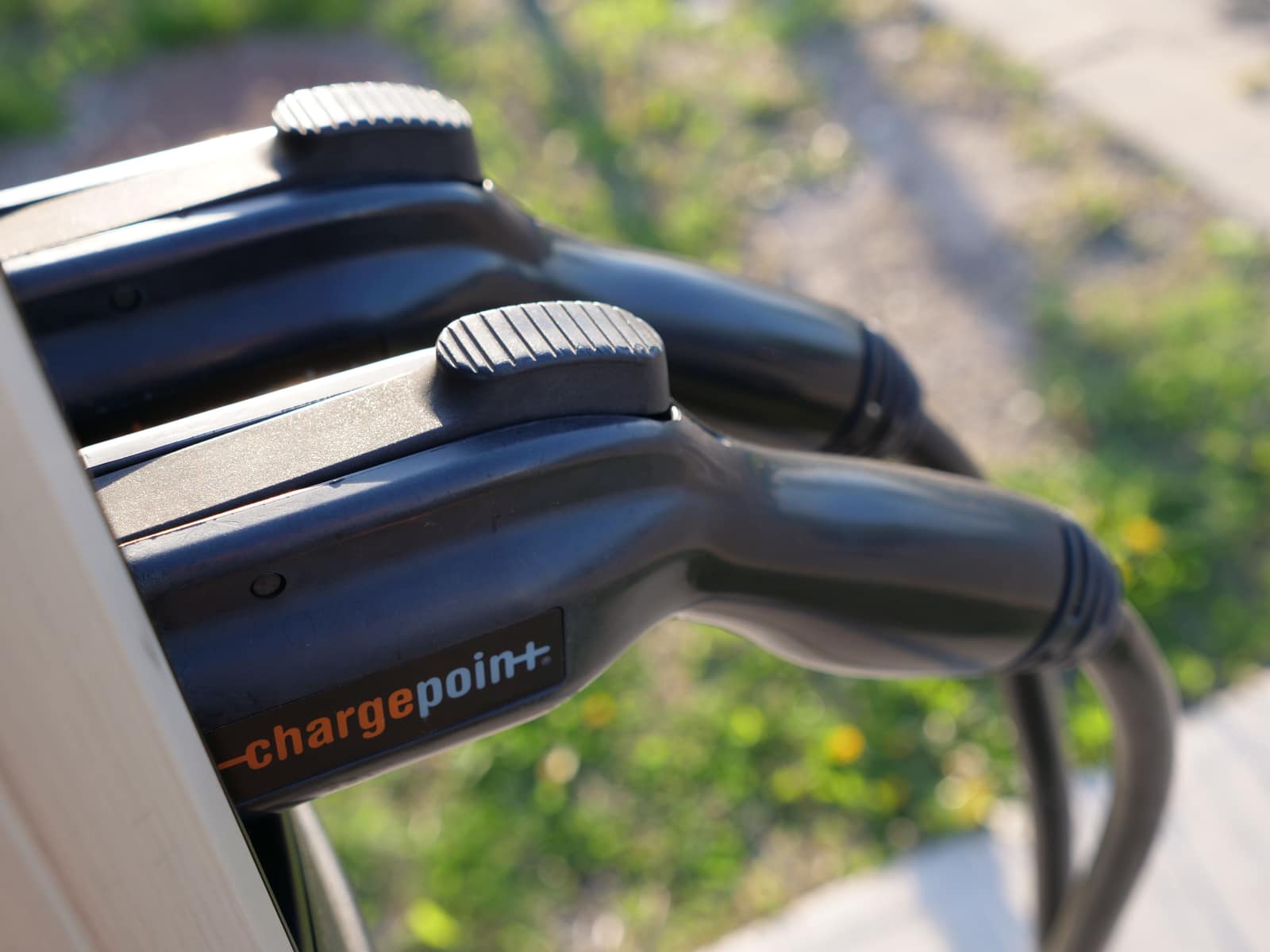
How this page is funded: the buy links below are affiliate links, and Renter Volt earns a commission on qualifying purchases at no cost to you. Nothing here was supplied by a manufacturer, and commission plays no part in the ranking — read the full disclosure. Picks are chosen from published specifications rather than hands-on testing; the method is written down so you can check it. Prices last verified September 22, 2026.
The Home Flex is the charger most 'best home charger' lists put first, and it is a genuinely good piece of equipment. It is also sold in configurations a renter cannot use, under a circuit rule that is stricter than its rivals'. This review is about which of those things applies to you.
Quick picks
Ranked, with the reasoning underneath. Tap any row to jump to that write-up; tap the price to check it on Amazon. Prices come from the live layer, never from this page.
| # | Product | Best for | Type | Price |
|---|---|---|---|---|
| 1 | 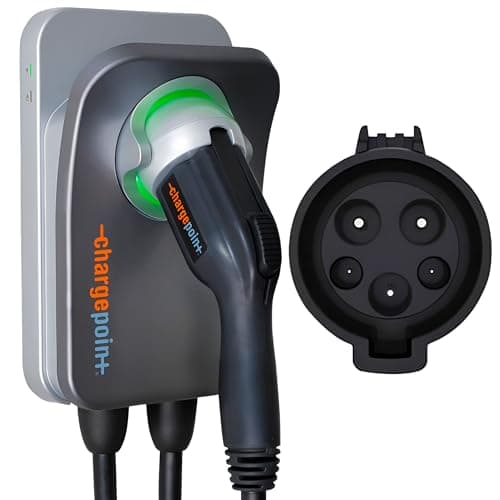 ChargePoint Home Flex Level 2 EV Charger (40A, NEMA 14-50 plug)A plug-in 40 amp smart charger whose app runs both this unit and ChargePoint's public network, which is the one thing here the cheaper units cannot match. ChargePoint Home Flex Level 2 EV Charger (40A, NEMA 14-50 plug)A plug-in 40 amp smart charger whose app runs both this unit and ChargePoint's public network, which is the one thing here the cheaper units cannot match. | One app for home and public | Plug-in smart EVSE |
#1 · One app for home and public
ChargePoint Home Flex Level 2 EV Charger (40A, NEMA 14-50 plug)
A plug-in 40 amp smart charger whose app runs both this unit and ChargePoint's public network, which is the one thing here the cheaper units cannot match.
| Amperage | 16 to 50A flexible amperage across the range; the plug-in version delivers up to 40Asource |
|---|---|
| Circuit required (plug-in) | A circuit rated 40A or 50A. ChargePoint states the hardwired version is required for all other circuit ratingssource |
| Cable length | 23 ftsource |
| Plug / connector | NEMA 14-50 plug (a 6-50 version is also sold), J1772 or NACS connectorsource |
| Certification | UL Listed and ENERGY STAR certifiedsource |
| Warranty | 3 yearssource |
| Outdoor installation | ChargePoint requires hardwiring the station or using a weatherproof receptacle for outdoor installationsource |
What those numbers mean
The 50 amp headline belongs to the hardwired version. On a plug it delivers up to 40 amps, which is the ceiling a 50 amp circuit permits continuously and the same ceiling every plug-in charger shares.
The circuit requirement is stricter than it first looks. ChargePoint states the plug-in version needs a circuit rated 40 or 50 amps and that the hardwired version is required for anything else, so a smaller circuit is not something you can simply dial down to.
The app is the real differentiator. It handles this charger and ChargePoint's public stations from one place, which is worth more to somebody who charges partly away from home than to somebody with a driveway and a fixed routine.
What it does well
- One app for this charger and ChargePoint's public network
- Amperage is selected in the app to match the breaker feeding the outlet
- UL Listed and ENERGY STAR certified, with a three-year warranty
- Sold with a J1772 or a NACS connector, and a NACS cable conversion kit exists for units already owned
What it does not
- The plug-in version needs a circuit rated 40 or 50 amps; ChargePoint requires hardwiring for anything smaller
- 23 ft of cable, shorter than some rivals at this price
- Outdoors, ChargePoint asks for hardwiring or a weatherproof receptacle rather than a bare plug
- It sits at the top of the plug-in price bracket
Skip this one if: Your 240V outlet is on a circuit smaller than 40 amps, or you never use public charging and only want an overnight timer. In both cases you would be paying for the part of this charger you cannot use.
The configurations, and the two that matter
ChargePoint sells the Home Flex hardwired, with a NEMA 6-50 plug, or with a NEMA 14-50 plug, and each of those comes with either a J1772 or a NACS connector. The connector choice is about your car. The connection choice decides whether this is a purchase you can make at all.
| Version | How it connects | Delivers | Usable in a rental? |
|---|---|---|---|
| Hardwired | Wired in by an electrician | Up to 50A | No — it alters the building |
| NEMA 14-50 plug | Into an existing 14-50 receptacle | Up to 40A | Yes, if you can reach one |
| NEMA 6-50 plug | Into an existing 6-50 receptacle | Up to 40A | Yes, if you can reach one |
The hardwired version is where the headline 50 amps lives. On either plug the unit delivers up to 40 amps, which is what a 50 amp circuit permits continuously — the same ceiling every plug-in charger shares, from any brand. Hardwired vs plug-in works through why that limit exists and why it is not worth an electrician to beat.
The circuit rule that decides most of this
ChargePoint is unusually explicit here, and it is the single most important line in its documentation for a renter: plug-in installation with a NEMA 6-50 or 14-50 outlet requires circuits rated 40 A or 50 A, and the hardwired version is required for all other circuit ratings.
In practice most readers with a genuine NEMA 14-50 are on a 50 amp circuit and this never comes up. It matters when the receptacle was installed for something other than a car, which is exactly the situation this site's readers are usually in. How to identify your outlet covers reading the breaker rather than guessing from the socket.
What ChargePoint publishes
- 16 to 50 amp flexible amperage across the range; the plug-in version delivers up to 40 amps.
- A 23 ft charging cable, which is seven feet longer than the 16 ft that is common on portable units and two feet shorter than the longest units in the category.
- UL Listed and ENERGY STAR certified.
- A three-year warranty.
- J1772 or NACS connectors, plus a NACS cable conversion kit for a Home Flex already owned.
- Amperage selected in the app during activation, matched to the breaker feeding the outlet.
Setup assumes an electrician you do not need
ChargePoint's instructions are written for somebody having a circuit installed: they tell an electrician to apply amperage labels to the breaker and the station, and the app then asks you to enter the amperage that matches the label. If you are plugging into a receptacle that already exists, nobody applied a label and there is no electrician to ask.
That is not a defect, but it is a small friction the reviews written for homeowners never mention. You will need to find the breaker that feeds your outlet and read its rating yourself, which is a thing this site thinks you should do anyway before plugging in a charger for twelve hours at a time.
Outdoors, read the fine print
ChargePoint's guidance is that outdoor installation requires hardwiring the station or using a weatherproof receptacle. Note where that requirement points: at the outlet, not at the charger. A renter usually cannot change the receptacle, so if your only 14-50 is exposed on a carport post, this is a real constraint rather than a formality.
A rival worth knowing about here is the Emporia Classic, which publishes a NEMA 4 rating for indoor or outdoor use as it ships. The head-to-head sets the two side by side. In either case leaving a charger outside covers the while-in-use cover and the drip loop that matter more than the charger's own rating.
The app is the reason to pay the premium
ChargePoint runs a public charging network and its app manages both that network and this charger from one place. No competitor in this price band can offer that, because no competitor runs a network. For a renter who charges partly away from home — which is most renters — one account and one session history across both is a genuine convenience rather than a spec-sheet bullet.
If you do not use ChargePoint's network, that advantage evaporates and you are paying the top of the plug-in price bracket for scheduling you can get for less. Is a smart charger worth it? works through what the app features are worth on their own.
Who should skip it
- Your 240V outlet is on a circuit smaller than 40 amps. ChargePoint's own documentation sends you to the hardwired version, which a tenant cannot install.
- Your only 240V is a dryer outlet. The plug is a 14-50 and will not reach a 14-30 or 10-30 receptacle — that case wants an adjustable charger with plug adapters or a splitter.
- You never use public charging. The network integration is the premium, and you would not open it.
- There is no signal where you park. Same conclusion, different cause.
- You need maximum reach. At 23 ft it is good, not best in class — the long-cable roundup ranks the alternatives.
The verdict
For a renter with a confirmed 40 or 50 amp circuit behind a NEMA 14-50, who already uses ChargePoint's public network, this is the right charger and the app genuinely justifies the price. Buy the plug version, match the connector to your car, and read the breaker before you order.
For everybody else the Home Flex is more charger than the situation needs, and its circuit rule makes it less forgiving than rivals of exactly the improvised outlets renters end up using. That is not a flaw in the product — it is a mismatch between a product designed around a professional installation and a reader who is plugging into whatever the building already has.
What we could not evaluate
Everything that needs a unit in hand: app reliability over months, cable behavior below freezing, connector wear across hundreds of cycles, how the enclosure ages in sun, and how ChargePoint handles a warranty claim. There is no test bench behind this site and we will not imply one. What is above is ChargePoint's published documentation and installation guidance, the circuit arithmetic, and reasoning about which buyer the result fits. The method is written down, including what it cannot tell you.
Questions people actually ask
Is the ChargePoint Home Flex worth it?
If you have a confirmed 40 or 50 amp circuit and you already use ChargePoint's public network, yes — one app across home and public charging is something no rival offers. Otherwise you are paying the top of the plug-in bracket for scheduling that cheaper chargers also provide.
Does the Home Flex really deliver 50 amps?
Only hardwired. Both plug-in versions deliver up to 40 amps, which is the continuous ceiling on a 50 amp circuit. The 50 amp figure belongs to the hardwired configuration, which is not a renter option.
Can a renter install a ChargePoint Home Flex?
Yes, if you buy a plug-in version and already have a matching 14-50 or 6-50 receptacle on a 40 or 50 amp circuit. The hardwired version needs an electrician and permanent work on the building.
Will the Home Flex work on a 30 amp circuit?
Not the plug-in version. ChargePoint states plug-in installation requires circuits rated 40 A or 50 A and that the hardwired version is required for all other ratings. A charger that lets you set a smaller breaker size is the better fit for that case.
How long is the ChargePoint Home Flex cable?
23 ft, per ChargePoint. That is seven feet longer than the 16 ft common on portable units, and two feet shorter than the 25 ft units that lead the category on reach.
Can I use the Home Flex with a Tesla?
Yes. It is sold with a NACS connector as well as J1772, and ChargePoint also sells a NACS cable conversion kit for a unit you already own, so changing cars does not have to mean changing chargers.
Can the Home Flex be installed outdoors?
ChargePoint asks for hardwiring or a weatherproof receptacle for outdoor installation. That requirement lands on the outlet rather than the charger, which is awkward for a tenant who cannot change the receptacle.
Sources
Every figure on this page traces to one of these. If a number here disagrees with the manufacturer, the manufacturer is right and we want to know — tell us.
- ChargePoint — Home Flex home charger: configurations, amperage and certifications
- ChargePoint — Home Flex installation and amperage selection FAQ (circuit ratings, cable length, outdoor installation)
- Emporia Energy — Classic Level 2 EV Charger specifications
- NFPA — NFPA 70, National Electrical Code (free public access)
- U.S. DOE Alternative Fuels Data Center — Electric vehicle charging levels and speeds
Read next
Best Portable Charger
Best portable EV chargers
The portable charger section: plug-in Level 1 and Level 2 units ranked by the outlet you can actually reach, with every spec cited.
Top pick: Grizzl-E Mini Connect Portable Charger

Best Value Smart Charger
ChargePoint Home Flex vs Emporia Classic
The premium smart-charger head-to-head, read for renters: 23 ft against 25 ft of cable, the circuit each plug version accepts, and the two apps.
Top pick: Emporia Classic Level 2 EV Charger (NEMA 14-50 plug)
Best Plug-In Level 2
Hardwired vs plug-in EV charger
What hardwiring actually buys you, what it costs you, and why a renter's answer to this question is decided before the comparison starts.
Top pick: Grizzl-E Mini Connect Portable Charger
Best Plain 40A Charger
Is a smart EV charger worth it?
What 'smart' actually buys on an EV charger, when it pays for itself in a rental, and the plain unit to buy instead when it does not.
Top pick: Lectron Portable Level 2 J1772 Charger (40A, NEMA 14-50)

Best Long-Cable Charger
EV chargers with a long cable
Chargers ranked by the cable on the end of them, with the arithmetic for how much horizontal reach 16, 20, 23 and 25 ft actually buys.
Top pick: Emporia Classic Level 2 EV Charger (NEMA 14-50 plug)

Guide
NEMA 14-50: the best outlet you can find
What a NEMA 14-50 gives you, where they turn up in rentals, and the checks worth doing before an eight-hour session.
Top pick: Lectron Portable Level 2 J1772 Charger (40A, NEMA 14-50)