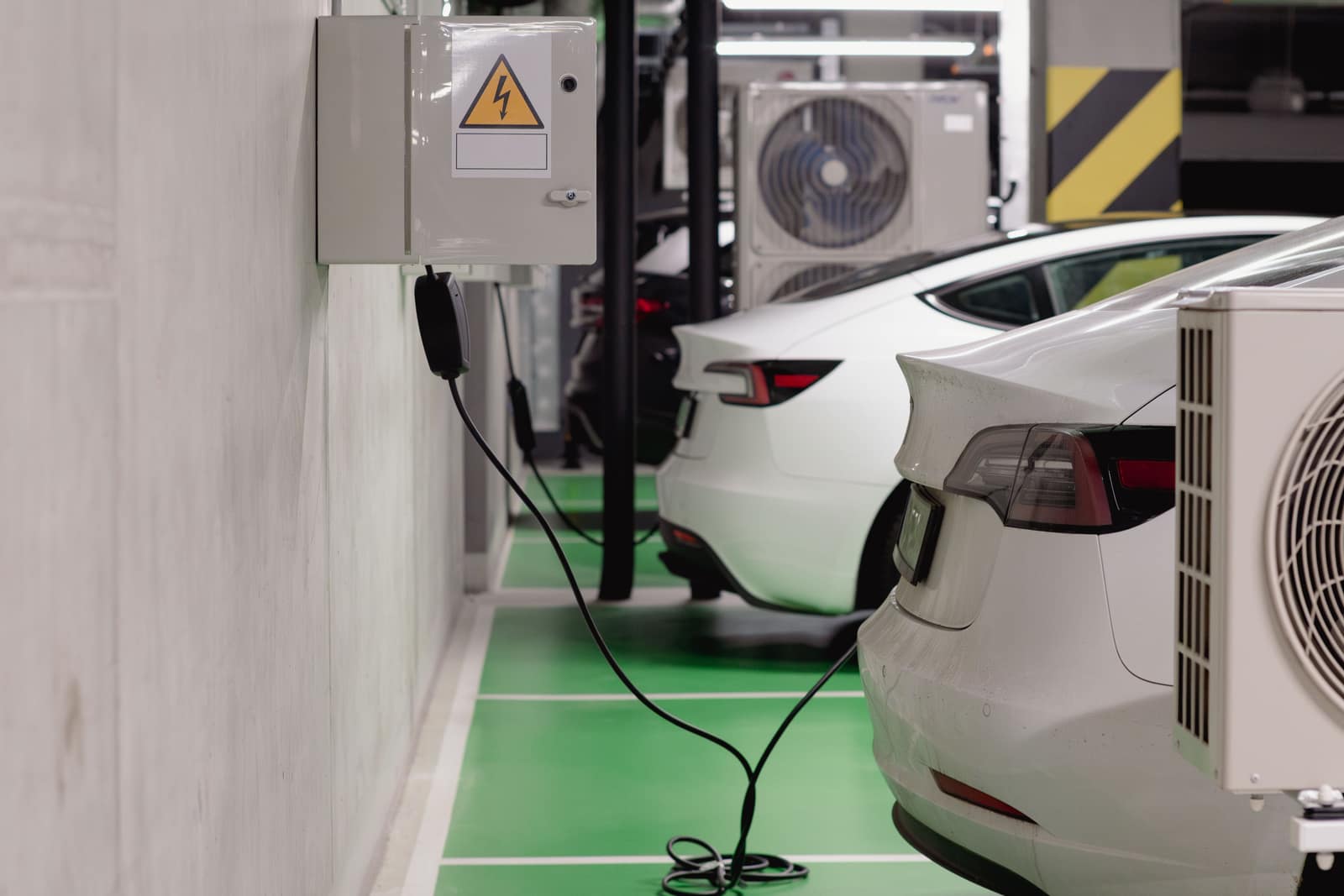
EV extension cords and charging cables
The outlet exists, and it is twenty feet from the car. This section is about closing that gap without pretending the risk is zero.

How this page is funded: the buy links below are affiliate links, and Renter Volt earns a commission on qualifying purchases at no cost to you. Nothing here was supplied by a manufacturer, and commission plays no part in the ranking — read the full disclosure. Picks are chosen from published specifications rather than hands-on testing; the method is written down so you can check it. Prices last verified October 27, 2026.
The single most useful thing on this page: extend on the car side of the charger, not on the wall side. A J1772 extension goes between the charger and the car, so the EVSE is still sitting between the outlet and the extension, still measuring, still controlling current, and still able to stop. A household extension cord between the wall and the charger puts an uncontrolled length of wire upstream of everything that does the protecting.
Every competing article on this subject opens by telling you not to use an extension cord. Renters use one anyway, because the alternative is not charging. So this section takes the question seriously instead: here is the correct way, here is the arithmetic, and here is the specification that makes it defensible.
Why length is the constraint renters actually hit
Portable chargers commonly ship with 16 ft of cable. That is generous in a garage where the outlet is on the wall the car noses up to. It is nothing in a carport where the receptacle is by the door, the car parks nose-out, and the charge port is on the far rear quarter. The route is rarely a straight line, and the car's own width is often three or four feet of it.
| Segment | Typical | Notes |
|---|---|---|
| Outlet height to ground | 3-4 ft | Unavoidable, and it is spent before you have moved horizontally |
| Around an obstacle | 2-6 ft | A post, a wall corner, a parked neighbor |
| Along the car to the port | 4-8 ft | Depends entirely on which side and which end the port is |
| Slack for a drip loop and no strain | 2-3 ft | Not optional; a taut cable at the plug is a failure waiting |
Add those up and a 16 ft cable covers roughly 5 to 7 ft of useful horizontal reach. That is the number to compare against your actual measurement.
Quick picks
Ranked, with the reasoning underneath. Tap any row to jump to that write-up; tap the price to check it on Amazon. Prices come from the live layer, never from this page.
| # | Product | Best for | Type | Price |
|---|---|---|---|---|
| 1 | 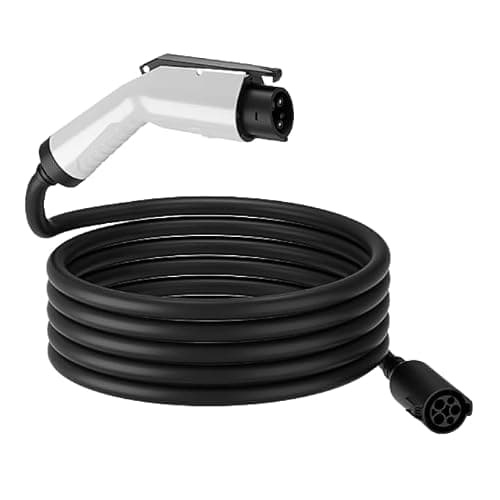 A2Z EV J1772 to J1772 Extension Cord, 16 ftA purpose-built EV extension on the car side of the charger — the correct place to add length — and the only one here whose maker publishes the code caveat that comes with it. A2Z EV J1772 to J1772 Extension Cord, 16 ftA purpose-built EV extension on the car side of the charger — the correct place to add length — and the only one here whose maker publishes the code caveat that comes with it. | A charger that will not reach | J1772 extension cable | |
| 2 | 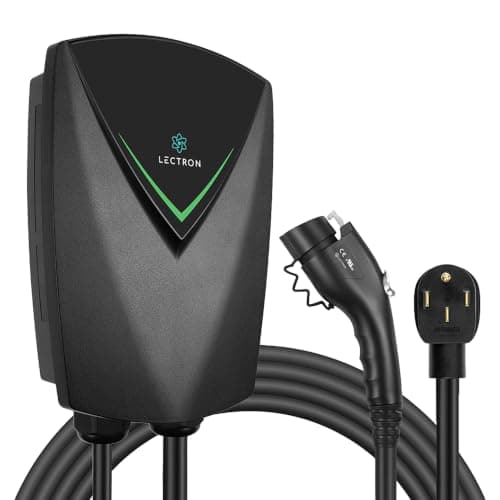 Lectron NEXUS Level 2 Charger (NEMA 14-50 plug)A 23 ft cable on a plug-in 40 amp unit, which is the specification that decides whether a parking space two bays from the outlet works at all. Lectron NEXUS Level 2 Charger (NEMA 14-50 plug)A 23 ft cable on a plug-in 40 amp unit, which is the specification that decides whether a parking space two bays from the outlet works at all. | Long cable reach | Plug-in Level 2 EVSE | |
| 3 | 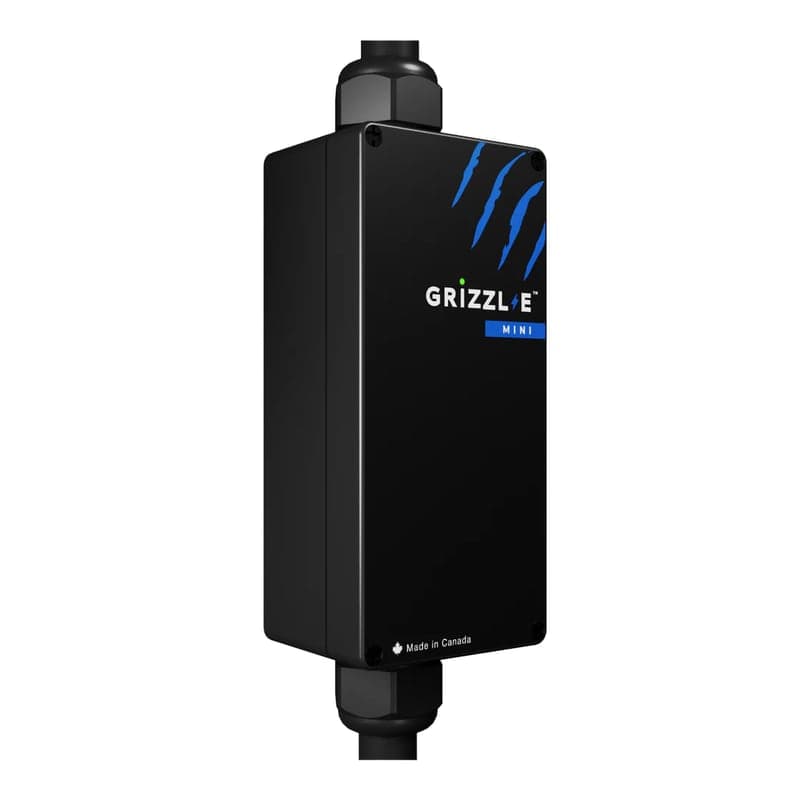 Grizzl-E Mini Connect Portable ChargerAdjustable from 7 to 40 amps and shipped with four plug adapters, which is the closest thing to a unit that fits whatever outlet you turn out to have. Grizzl-E Mini Connect Portable ChargerAdjustable from 7 to 40 amps and shipped with four plug adapters, which is the closest thing to a unit that fits whatever outlet you turn out to have. | Not knowing your outlet yet | Adjustable Level 1 and 2 EVSE | Check price#ad |
#1 · A charger that will not reach
A2Z EV J1772 to J1772 Extension Cord, 16 ft
A purpose-built EV extension on the car side of the charger — the correct place to add length — and the only one here whose maker publishes the code caveat that comes with it.
| Rating | 48A, AC Level 1 and Level 2source |
|---|---|
| Length | 16 ft / 5 msource |
| Compatibility | J1772 EV charging station into a J1772 / CCS1 vehiclesource |
| Component certification | UL-certified cable (E341631), UL 2251 connectors, UL 62 cabling; CE on the connector, FCC (EMI)source |
| Assembled-unit listing | Not UL Listed as an assembled unit — the manufacturer states an end-product category for EV extension cables is still being finalizedsource |
| Manufacturer's recommended use | Portable, occasional or emergency use; NEC Article 625 generally expects the cable to be integral to the station for permanent installationssource |
| Warranty | 12 months against manufacturing defectssource |
What those numbers mean
Extending on the J1772 side is safer than extending on the wall side, because the EVSE is still the thing controlling current and it still sits between the outlet and the extension.
Read the last three specification rows together, because they are the honest part. The components carry UL certification but the assembled cable is not UL Listed, and the manufacturer says so plainly rather than letting the component certifications imply something they do not. It also tells you NEC Article 625 expects a charging cable to be integral to the station for a permanent installation, and that this cord is for portable or occasional use. No other extension we looked at publishes any of that.
48A is well above the 40A ceiling of plug-in Level 2 charging, so the cable is never the constraint. Used at 24 amps on a shared dryer circuit it has a great deal of margin, which is exactly where you want to be.
What it does well
- Built for EV charging rather than a household cord pressed into the job
- 48A rating leaves real margin at any renter-reachable current
- The manufacturer publishes the UL-listing status and the NEC caveat instead of glossing over them
- Designed and tested in North America, with a stated 12-month warranty
What it does not
- Adds two contact interfaces to a circuit that runs for hours at high current
- Not UL Listed as an assembled unit — a real distinction, even though its components are certified
- 16 ft, so it is a shorter reach than some discontinued alternatives offered
- Not a substitute for a charger with a long enough cable in the first place
Skip this one if: You have not yet bought the charger. Buy a unit with a 23 or 25 ft cable and skip the extension entirely — one continuous cable always beats two joined ones.
#ad · how this is funded · price as of October 27, 2026
#2 · Long cable reach
Lectron NEXUS Level 2 Charger (NEMA 14-50 plug)
A 23 ft cable on a plug-in 40 amp unit, which is the specification that decides whether a parking space two bays from the outlet works at all.
| Input | 240V, 40A maximumsource |
|---|---|
| Output power | 9.6 kWsource |
| Cable length | 23 ftsource |
| Plug / connector | NEMA 14-50 plug, J1772 / CCS connectorsource |
| Enclosure | IP66-rated automotive-grade housingsource |
| Certification | UL 2594 / UL 2231 / UL 2251 / UL 817 certifiedsource |
| Manufacturer charge-rate claim | Up to 38 miles of range per hoursource |
What those numbers mean
23 ft against the 16 ft of the cheaper Lectron unit is the whole argument for this one. Cable length is the specification renters underestimate most and the one an extension cable is the worst way to fix.
IP66 means the housing tolerates jets of water. Read that as permission to leave the unit outdoors, not as permission to leave the outlet it plugs into exposed.
The manufacturer's 38 miles per hour figure assumes a car that can accept the full 9.6 kW. Halve your car's onboard charger rating and you halve that number.
What it does well
- 23 ft cable, seven feet more than the common 16 ft portable
- IP66 housing rated for sustained outdoor exposure
- Four UL listings including UL 2251 for the coupler
What it does not
- Physically larger and heavier to move between parking spots than a bare portable
- Fixed 40 amps, so it cannot step down onto a 30 amp dryer circuit
Skip this one if: Your outlet is within a few feet of the charge port. You would be paying for reach you do not need and carrying the extra bulk for nothing.
#ad · how this is funded · price as of October 27, 2026
#3 · Not knowing your outlet yet
Grizzl-E Mini Connect Portable Charger
Adjustable from 7 to 40 amps and shipped with four plug adapters, which is the closest thing to a unit that fits whatever outlet you turn out to have.
| Adjustable current | 7A to 40A (9.6 kW maximum)source |
|---|---|
| Voltage | Automatically detects 120V (Level 1) or 240V (Level 2)source |
| Cable length | 25 ft (7.6 m)source |
| Plug and adapters | NEMA 14-50 plug plus four included electrical adapterssource |
| Connector | J1772 or Tesla (NACS) versionssource |
| Enclosure | UL Type 4 / IP67 ratedsource |
| Certification | UL tested and certified, Energy Star certifiedsource |
What those numbers mean
The adjustable current is the feature that matters to a renter, and it is not a convenience. A 30 amp dryer circuit legally supports 24 amps of continuous EV load; a unit that can be set to 24 amps can use that circuit, and a fixed 40 amp unit cannot.
25 ft of cable is nine feet more than the common 16 ft, and nine feet is frequently the difference between reaching the car and not.
IP67 and a UL Type 4 enclosure describe the unit's own weather tolerance. They say nothing about the outlet it plugs into, which is usually the part that is not weather-rated.
What it does well
- 7-40A adjustment means one unit fits a 15, 20, 30 or 50 amp circuit
- 25 ft cable is among the longest on a portable unit
- Four plug adapters included, so an outlet change does not mean a new charger
- Available with either a J1772 or a NACS connector
What it does not
- Costs meaningfully more than a fixed-amperage unit that does one job
- The bundled adapters make it easy to plug into a circuit you have not actually checked
Skip this one if: You know exactly which outlet you have, it is not changing, and you would rather put the money into a longer cable than into adjustability you will set once and never touch.
#ad · how this is funded · price as of October 27, 2026
The order to solve this in
- Buy enough cable in the first place. 23 and 25 ft portable chargers exist — the long-cable roundup ranks them. One continuous cable always beats two joined ones, and the price difference is smaller than an extension.
- If you already own a short charger, add a [J1772 extension](/cables-and-cords/j1772-extension) on the car side, rated for the current you are actually using.
- Charge slower. Every connection is a resistance point that becomes heat. A 40 amp rated extension running at 24 amps has margin; the same extension at 40 amps is at its design limit. This is the cheapest safety measure available and it costs almost nothing in overnight range.
- Only then think about moving where you park, which is sometimes the real answer and is free.
What we will not tell you to do
Where to go next
- Is an EV extension cord safe? — the full answer, with the standards.
- Gauge and length chart — the arithmetic, so you can check any cable.
- Level 1 extension cords — the 120V case, which has different numbers.
- Outdoor and weather — ratings, drip loops and what cold does.
Questions people actually ask
Can you use an extension cord with an EV charger?
Yes, and the important part is which side. A J1772 extension between the charger and the car keeps the EVSE upstream, still controlling and monitoring current. A household cord between the wall and the charger puts unmanaged wire ahead of everything that does the protecting.
How long can an EV charging cable be?
Purpose-built J1772 extensions are sold from about 16 ft to 40 ft. The practical limit is voltage drop and heat, both of which get better as you reduce current — so a longer run and a lower amperage setting go together.
Why do EV chargers come with such short cables?
Because most were designed for a garage where the outlet is close to the car. 16 ft is common and covers about 5-7 ft of real horizontal reach once you account for outlet height, obstacles and the car's own length.
Is it better to buy a longer charger or an extension?
A longer charger, every time. One continuous cable has no added connections, and the price difference is usually smaller than the cost of the extension.
Sources
Every figure on this page traces to one of these. If a number here disagrees with the manufacturer, the manufacturer is right and we want to know — tell us.
Read next
Guide
Is an EV extension cord safe?
The extension cord safety question, answered with the actual failure mechanism, the specification that avoids it, and what we will not endorse.
Top pick: A2Z EV J1772 to J1772 Extension Cord, 16 ft
Guide
Gauge and length: the arithmetic
Wire gauge, current and distance, with the voltage-drop formula written out and a reference table built from it.
Top pick: A2Z EV J1772 to J1772 Extension Cord, 16 ft
Best J1772 Extension
The J1772 extension cable, reviewed
A single-product review of the purpose-built J1772 extension: published ratings, the design detail that matters, and when not to buy it.
Top pick: A2Z EV J1772 to J1772 Extension Cord, 16 ft
Best Level 1 Extension
Extension cords for Level 1 charging
The 120V extension question: lower current, easier numbers, same rule about which side of the charger to extend on.
Top pick: A2Z EV J1772 to J1772 Extension Cord, 16 ft

Guide
Cables in rain, snow and heat
Weather ratings decoded, plus the drip loop, the hook and the temperature realities that decide how long an outdoor setup lasts.
Top pick: Lectron NEXUS Level 2 Charger (NEMA 14-50 plug)
Best Portable Charger
Best portable EV chargers
The portable charger section: plug-in Level 1 and Level 2 units ranked by the outlet you can actually reach, with every spec cited.
Top pick: Grizzl-E Mini Connect Portable Charger