Dual Level 1 and Level 2 chargers: worth it?
One unit, both voltages, two plugs in the bag. It is the right buy for a specific reader and the wrong one for everybody else.

How this page is funded: the buy links below are affiliate links, and Renter Volt earns a commission on qualifying purchases at no cost to you. Nothing here was supplied by a manufacturer, and commission plays no part in the ranking — read the full disclosure. Picks are chosen from published specifications rather than hands-on testing; the method is written down so you can check it. Prices last verified October 27, 2026.
A dual-voltage charger is worth it if you do not yet know which outlet you will end up with, or if you move between two. For everybody else it is a premium paid for a capability that gets configured once and never touched. That is the whole answer; the rest of this page is the reasoning.
What "dual Level 1 and 2" actually means
Two things, and it is worth separating them because listings blur them:
- Voltage detection. The unit senses whether it is on 120V or 240V and configures itself. This is common and largely automatic.
- Plug interchangeability. The unit ships with more than one NEMA plug, or with adapters, so it can physically connect to more than one outlet type. This is the part that costs money.
A charger with the first and not the second is not much use to a renter — it can handle either voltage but only fits one socket. What you want is both.
The three readers this is genuinely right for
| Situation | Why dual wins |
|---|---|
| You have not moved in yet | You are buying before you know what outlet exists. One unit covers every outcome |
| You charge in two places | 120V at home during the week, a relative's dryer outlet at weekends, one cable for both |
| You expect to move within the lease term | The next building's outlet is unknown and this survives being wrong about it |
And who should buy a single-voltage unit instead
If you know your outlet and it is not changing, a single-purpose unit does that one job for less money and often with a better cable. A dedicated Level 1 charger is inexpensive enough to own alongside a Level 2 one, and two purpose-built units frequently cost less than one very flexible one — while giving you a spare.
Quick picks
Ranked, with the reasoning underneath. Tap any row to jump to that write-up; tap the price to check it on Amazon. Prices come from the live layer, never from this page.
| # | Product | Best for | Type | Price |
|---|---|---|---|---|
| 1 | 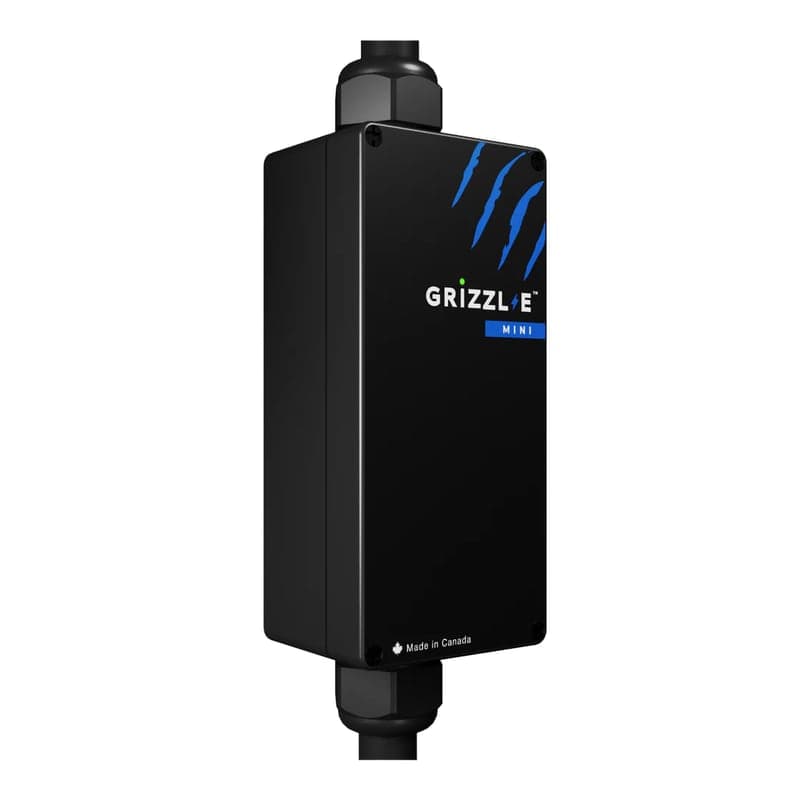 Grizzl-E Mini Connect Portable ChargerAdjustable from 7 to 40 amps and shipped with four plug adapters, which is the closest thing to a unit that fits whatever outlet you turn out to have. Grizzl-E Mini Connect Portable ChargerAdjustable from 7 to 40 amps and shipped with four plug adapters, which is the closest thing to a unit that fits whatever outlet you turn out to have. | Not knowing your outlet yet | Adjustable Level 1 and 2 EVSE | Check price#ad |
| 2 | 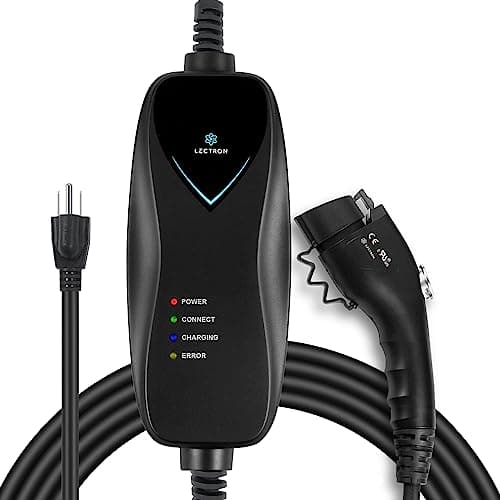 Lectron Portable Level 1 J1772 Charger (15A, NEMA 5-15)The unglamorous answer that covers most commutes: an ordinary 120V socket, overnight, and no conversation with anybody about electrical work. Lectron Portable Level 1 J1772 Charger (15A, NEMA 5-15)The unglamorous answer that covers most commutes: an ordinary 120V socket, overnight, and no conversation with anybody about electrical work. | An ordinary wall socket | Level 1 EVSE | |
| 3 | 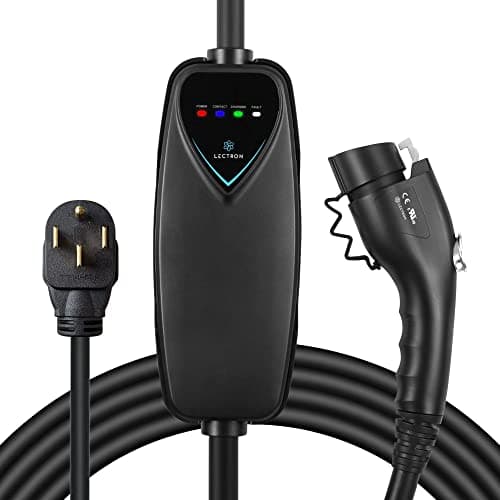 Lectron Portable Level 2 J1772 Charger (40A, NEMA 14-50)The plainest answer to a NEMA 14-50 outlet you can reach: 40 amps, a plug on the end, and nothing screwed to a wall you do not own. Lectron Portable Level 2 J1772 Charger (40A, NEMA 14-50)The plainest answer to a NEMA 14-50 outlet you can reach: 40 amps, a plug on the end, and nothing screwed to a wall you do not own. | A reachable 14-50 outlet | Plug-in Level 2 EVSE |
#1 · Not knowing your outlet yet
Grizzl-E Mini Connect Portable Charger
Adjustable from 7 to 40 amps and shipped with four plug adapters, which is the closest thing to a unit that fits whatever outlet you turn out to have.
| Adjustable current | 7A to 40A (9.6 kW maximum)source |
|---|---|
| Voltage | Automatically detects 120V (Level 1) or 240V (Level 2)source |
| Cable length | 25 ft (7.6 m)source |
| Plug and adapters | NEMA 14-50 plug plus four included electrical adapterssource |
| Connector | J1772 or Tesla (NACS) versionssource |
| Enclosure | UL Type 4 / IP67 ratedsource |
| Certification | UL tested and certified, Energy Star certifiedsource |
What those numbers mean
The adjustable current is the feature that matters to a renter, and it is not a convenience. A 30 amp dryer circuit legally supports 24 amps of continuous EV load; a unit that can be set to 24 amps can use that circuit, and a fixed 40 amp unit cannot.
25 ft of cable is nine feet more than the common 16 ft, and nine feet is frequently the difference between reaching the car and not.
IP67 and a UL Type 4 enclosure describe the unit's own weather tolerance. They say nothing about the outlet it plugs into, which is usually the part that is not weather-rated.
What it does well
- 7-40A adjustment means one unit fits a 15, 20, 30 or 50 amp circuit
- 25 ft cable is among the longest on a portable unit
- Four plug adapters included, so an outlet change does not mean a new charger
- Available with either a J1772 or a NACS connector
What it does not
- Costs meaningfully more than a fixed-amperage unit that does one job
- The bundled adapters make it easy to plug into a circuit you have not actually checked
Skip this one if: You know exactly which outlet you have, it is not changing, and you would rather put the money into a longer cable than into adjustability you will set once and never touch.
#ad · how this is funded · price as of October 27, 2026
#2 · An ordinary wall socket
Lectron Portable Level 1 J1772 Charger (15A, NEMA 5-15)
The unglamorous answer that covers most commutes: an ordinary 120V socket, overnight, and no conversation with anybody about electrical work.
| Input | 120V, 15A maximumsource |
|---|---|
| Output power | 1.8 kWsource |
| Cable length | 16 ftsource |
| Plug / connector | NEMA 5-15 plug, J1772 connectorsource |
| Certification | UL 2594 / UL 2231 certified, and separately described as ETL-certified; no certificate number publishedsource |
| Ingress rating | IP65 weather-resistant, stated in the specification textsource |
| Manufacturer charge-rate claim | 45+ miles of range overnight; 3-5 miles of range per hoursource |
What those numbers mean
1.8 kW sounds trivial next to 9.6 kW, and for a road trip it is. For a commute it usually is not: the average US driver covers well under 45 miles a day, and this replaces that overnight while the car sits anyway.
The honest ceiling is the circuit behind the socket, not the cable. This unit draws 15 amps for hours, which a 20 amp circuit supports continuously and a 15 amp circuit does not — so check the breaker before the first overnight session, and on a 15 amp circuit choose a 12 amp unit instead.
This is the only category of EV charging that is genuinely invisible to a landlord. It draws less than a hair dryer and plugs into a receptacle that already exists.
What it does well
- Works with a socket that already exists, everywhere, with no permission needed
- UL 2594 and UL 2231 certified rather than a generic cordset
- Cheapest possible entry into home charging, by a wide margin
What it does not
- 1.8 kW will not recover a long driving day overnight
- 16 ft cable, and the nearest 120V socket is often not the nearest thing to the car
- Its 15 amp draw needs a 20 amp circuit behind the socket; an ordinary 15 amp circuit supports 12 amps continuously
Skip this one if: You regularly drive more than about 45 miles a day. Level 1 will fall a little further behind every night and you will spend the difference at public chargers.
#3 · A reachable 14-50 outlet
Lectron Portable Level 2 J1772 Charger (40A, NEMA 14-50)
The plainest answer to a NEMA 14-50 outlet you can reach: 40 amps, a plug on the end, and nothing screwed to a wall you do not own.
| Input | 240V, 40A maximumsource |
|---|---|
| Output power | Up to 9.6 kWsource |
| Cable length | 16 ftsource |
| Plug / connector | NEMA 14-50 plug, J1772 connectorsource |
| Certification | UL 2594 / UL 2231 certifiedsource |
| Manufacturer charge-rate claim | Roughly 30 miles of range per hour of chargingsource |
What those numbers mean
9.6 kW is the ceiling this unit can deliver, not what your car will take. A vehicle with a 7.2 kW onboard charger draws 7.2 kW from it and no more, and that is a car limitation no charger fixes.
The 16 ft cable is the number to check before anything else. Measure from the outlet to where your charge port sits when the car is parked as it will actually be parked, not as you would like to park it. Sixteen feet disappears faster than people expect once it has to route around a wall.
A 40 amp unit needs a 50 amp circuit behind the outlet to run at 40 amps continuously. If the outlet is on a smaller breaker, the answer is a lower-amperage charger, not this one turned down.
What it does well
- Plugs in and unplugs — it leaves with you at the end of the lease
- UL 2594 and UL 2231 certified, the two standards that matter for EVSE
- 40 amps covers the fastest charging any renter-reachable outlet realistically supports
What it does not
- 16 ft of cable is short for a parking space that is not directly beside the outlet
- No amperage adjustment, so it is the wrong unit for a 30 amp circuit
Skip this one if: Your only 240V outlet is a 30 amp dryer receptacle. This unit expects a 50 amp circuit behind a NEMA 14-50, and derating it is not an option it offers.
#ad · how this is funded · price as of October 27, 2026
The amperage trap
This is where dual-voltage units go wrong in practice. Plugging a unit into a 120V household socket through an adapter does not tell it what the circuit behind that socket can carry. A 15 amp household circuit supports 12 amps continuously. If the charger defaults to 16 amps because it detected 120V and assumed the best, you will find out when the breaker trips — or, worse, when it does not trip and the receptacle gets warm.
What the included adapters do and do not tell you
A unit shipping with four NEMA adapters is genuinely useful and slightly dangerous, because it makes it trivial to plug into a circuit you have not checked. The adapter fits, the charger starts, and nothing in that sequence verified the breaker or the wiring behind the outlet. In an older building this is exactly the situation that produces a hot receptacle.
Before the first long session on a new outlet: confirm what the breaker is rated at, set the charger to 80% of it, and touch the plug after an hour. That is the whole procedure, and it takes less time than reading this paragraph.
The verdict, plainly
Buy dual if you are uncertain. Buy single if you are not. And if you already own a Level 1 cable from the car, the marginal purchase that improves your life most is usually a longer cable rather than a more flexible one — cable length is the constraint people actually hit.
Questions people actually ask
Is a dual Level 1 and Level 2 EV charger worth it?
It is worth it if you do not yet know which outlet you will use, or if you charge in two different places. If your outlet is known and fixed, a single-voltage unit does the same job for less and usually comes with a better cable.
Can one charger do both 120V and 240V?
Yes. Many units detect the voltage automatically and configure themselves. The part that costs money is the interchangeable plugs or adapters that let it physically connect to more than one outlet type.
Does a dual-voltage charger set its own amperage?
It sets a default for the voltage it detects, which is not the same as knowing what the circuit can carry. Set the current yourself to 80% of the breaker rating whenever you move it to a new outlet.
Should I keep the cable that came with my car?
Yes. A second unit means one lives where you park and one lives in the trunk, and the spare costs nothing to keep.
Sources
Every figure on this page traces to one of these. If a number here disagrees with the manufacturer, the manufacturer is right and we want to know — tell us.
- Grizzl-E Mini Connect — published specifications (EVolt Home, authorized dealer listing)
- Lectron — published specification table for the Level 1 and Level 2 charger range
- U.S. DOE Alternative Fuels Data Center — Electric vehicle charging levels and speeds
- U.S. Department of Energy — Electric vehicle charging at home
Read next
Best Portable Charger
Best portable EV chargers
The portable charger section: plug-in Level 1 and Level 2 units ranked by the outlet you can actually reach, with every spec cited.
Top pick: Grizzl-E Mini Connect Portable Charger
Guide
Working out the amp rating you need
A step-by-step method for sizing charger amperage to a real circuit, including how to find the breaker and what to do when you cannot.
Top pick: Grizzl-E Mini Connect Portable Charger
Guide
Level 1 vs Level 2, for someone without a garage
The charging-level comparison rewritten for renters, with a renter-viability column and an honest case for Level 1.
Top pick: Lectron Portable Level 1 J1772 Charger (15A, NEMA 5-15)
Guide
Gauge and length: the arithmetic
Wire gauge, current and distance, with the voltage-drop formula written out and a reference table built from it.
Top pick: A2Z EV J1772 to J1772 Extension Cord, 16 ft
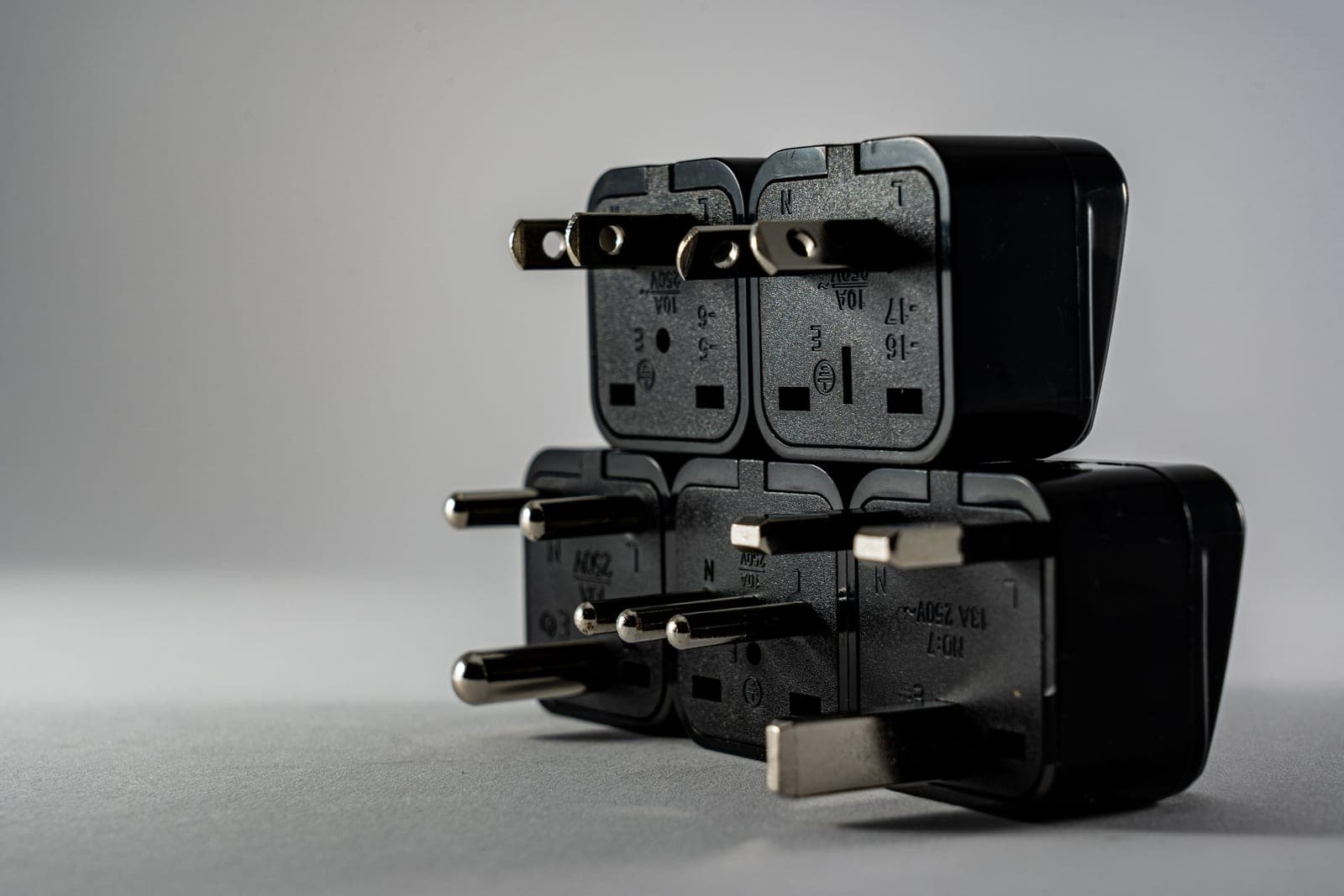
Guide
EV charger plug types, explained
A plain reference for the NEMA plug types that matter to EV charging, what circuit each implies, and which charger to buy for it.
Top pick: Grizzl-E Mini Connect Portable Charger
Best Adjustable Portable
Grizzl-E Mini Connect, reviewed
The adjustable 7-40A portable charger examined properly: what the range buys you, what the 25 ft cable is worth, and who should buy something else.
Top pick: Grizzl-E Mini Connect Portable Charger