A2Z EV adapters, by direction
One brand, five adapters, and only one question that decides between them — which cable you are plugging onto, and which car it has to present to.
How this page is funded: the buy links below are affiliate links, and Renter Volt earns a commission on qualifying purchases at no cost to you. Nothing here was supplied by a manufacturer, and commission plays no part in the ranking — read the full disclosure. Picks are chosen from published specifications rather than hands-on testing; the method is written down so you can check it. Prices last verified September 26, 2026.
A2Z makes an adapter for every direction that matters in North America, and they all look broadly alike in a listing. The only question that separates them is which cable you plug onto and which car it has to present to. Get that right and the rest of this page is detail. Get it wrong and the part will not physically fit your car.
The naming convention is the same one this site applies everywhere: source first, car second. The second name in the product title is your car. An adapter called J1772-to-NACS goes onto a J1772 cable and presents NACS to the vehicle.
The lineup, sorted by what it does
| Adapter | Plugs onto | Presents to your car | Type |
|---|---|---|---|
| Atom | A J1772 cable | NACS (Tesla) port | AC Level 1 and 2 |
| Stellar | A NACS (Tesla) cable | J1772 port | AC Level 1 and 2 |
| J1772 extension cord | Your own J1772 charger | J1772 port — it adds length | AC Level 1 and 2 |
| Thunderstorm | A CCS1 fast charger | NACS port | DC fast charging |
| Typhoon Pro | A NACS fast charger | CCS1 port | DC fast charging |
Read the middle column and stop there. If your car has a NACS port you are looking at the Atom for home and destination charging, and the Thunderstorm for DC. If it has a J1772 or CCS1 port you want the Stellar and the Typhoon Pro instead. The direction guide covers why this trips people up so consistently.
Why this brand gets its own page
Because of what it publishes rather than what it claims. A2Z prints certificate numbers rather than the word certified, states ingress ratings both mated and unmated, gives operating temperature ranges, and lists compatible vehicles by model and year. In a category where most listings say "safety certified" and stop, that is checkable information.
That is also the finding of the Lectron versus A2Z comparison, which looked at the same question across two brands. This page is the single-brand version: what A2Z actually offers, and which one of it you need.
How these were ranked
- Direction first, then everything else. An adapter in the wrong direction is not a worse purchase, it is a useless one.
- How many renters the direction serves. AC adapters come first because a building's existing charger is a far more common problem than a fast-charging network, and they cost a fraction as much.
- A published, issued certificate. UL 2252 is the adapter standard. A certificate number beats the word certified, and an issued certificate beats one in progress — which is a real distinction in this lineup.
- Mated ingress rating and temperature range, because an adapter left connected outdoors overnight is exposed in a way the unmated figure does not describe.
- Price, last. The spread here runs from a part that costs less than a tank of gas to one that costs more than a portable charger.
Quick picks
Ranked, with the reasoning underneath. Tap any row to jump to that write-up; tap the price to check it on Amazon. Prices come from the live layer, never from this page.
| # | Product | Best for | Type | Price |
|---|---|---|---|---|
| 1 | 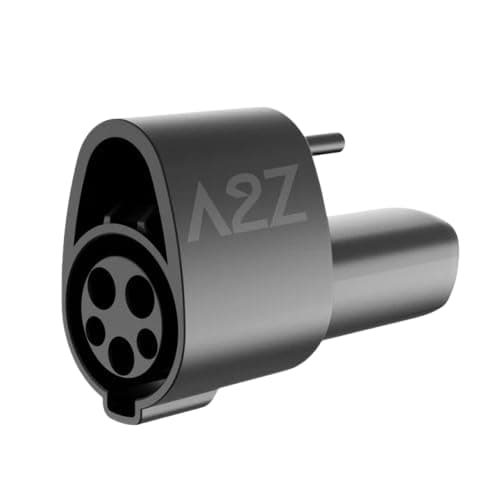 A2Z EV J1772 to NACS Adapter, 80ASame direction as the Lectron, with an integrated locking pin — the answer if your charging happens somewhere other people walk past. A2Z EV J1772 to NACS Adapter, 80ASame direction as the Lectron, with an integrated locking pin — the answer if your charging happens somewhere other people walk past. | Cables that get knocked | AC charging adapter | |
| 2 | 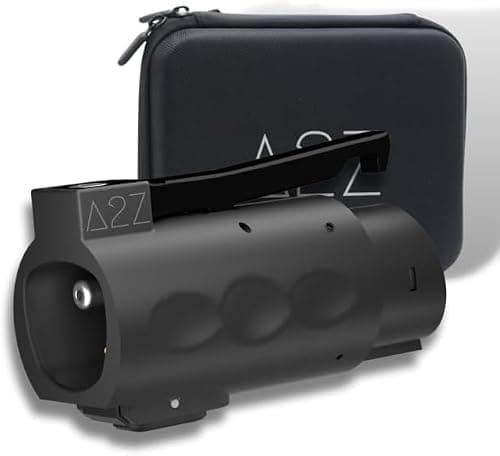 A2Z EV Stellar NACS to J1772 Adapter, 80AThe same direction as the Lectron with a higher rating, an IP67 body and a published temperature range — the one to buy if it lives outdoors. A2Z EV Stellar NACS to J1772 Adapter, 80AThe same direction as the Lectron with a higher rating, an IP67 body and a published temperature range — the one to buy if it lives outdoors. | Outdoor, year-round use | AC charging adapter | |
| 3 | 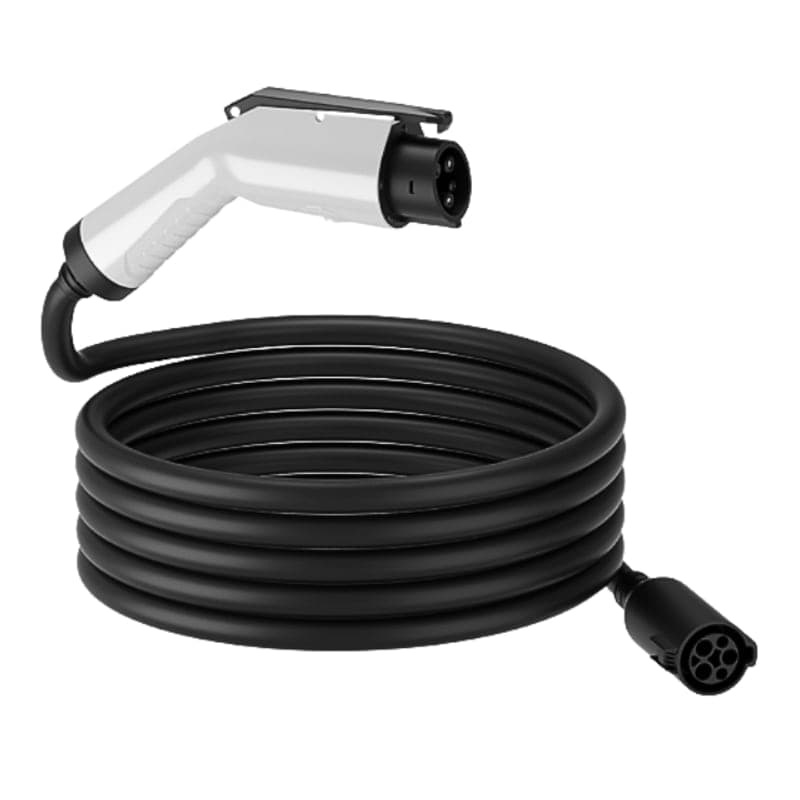 A2Z EV J1772 to J1772 Extension Cord, 16 ftA purpose-built EV extension on the car side of the charger — the correct place to add length — and the only one here whose maker publishes the code caveat that comes with it. A2Z EV J1772 to J1772 Extension Cord, 16 ftA purpose-built EV extension on the car side of the charger — the correct place to add length — and the only one here whose maker publishes the code caveat that comes with it. | A charger that will not reach | J1772 extension cable | Check price#ad |
| 4 | 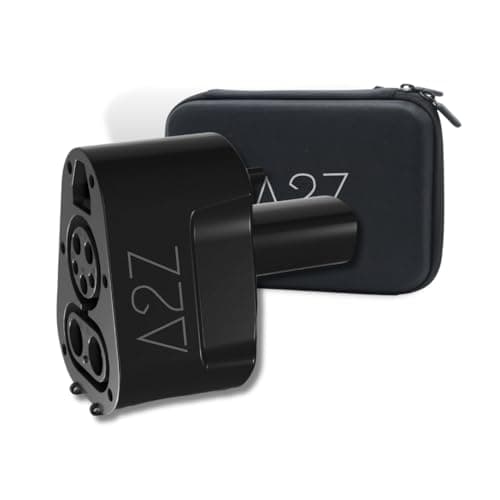 A2Z EV Thunderstorm CCS1 to NACS Adapter (DC)The other direction: it opens the CCS fast-charging network to a Tesla or any newer car with a NACS inlet, with a certification and an interlock pin published. A2Z EV Thunderstorm CCS1 to NACS Adapter (DC)The other direction: it opens the CCS fast-charging network to a Tesla or any newer car with a NACS inlet, with a certification and an interlock pin published. | A NACS car at a CCS station | DC fast-charging adapter | |
| 5 | 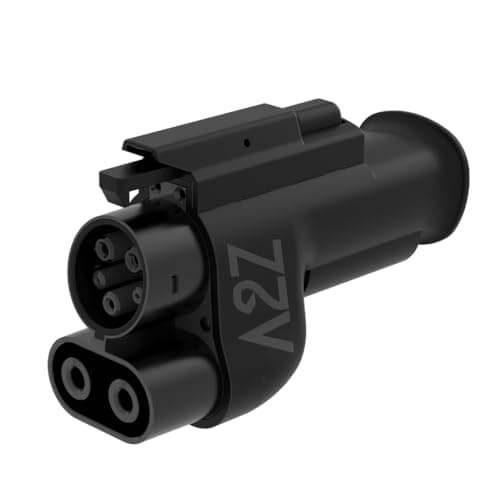 A2Z EV Typhoon Pro NACS to CCS1 Adapter (DC)A2Z's Supercharger-access adapter, with the most detailed thermal and compatibility documentation in its lineup — and a certification that is still in progress. A2Z EV Typhoon Pro NACS to CCS1 Adapter (DC)A2Z's Supercharger-access adapter, with the most detailed thermal and compatibility documentation in its lineup — and a certification that is still in progress. | The widest published car list | DC fast-charging adapter |
#1 · Cables that get knocked
A2Z EV J1772 to NACS Adapter, 80A
Same direction as the Lectron, with an integrated locking pin — the answer if your charging happens somewhere other people walk past.
| Rated current | 80A maximum at 240VACsource |
|---|---|
| Maximum power | 19.2 kWsource |
| Direction | SAE J1772 charger into a NACS vehicle portsource |
| Charging type | AC only (Level 1 and Level 2)source |
| Certification | UL 2252 / CSA-C22.2 certified, certificate number 80259177source |
| Ingress rating | IP54, Type 3R enclosuresource |
| Operating temperature | -22°F to 122°F (-30°C to 50°C)source |
| Retention | Integrated locking pin prevents accidental disconnectionsource |
What those numbers mean
The locking pin is the differentiator and it addresses a real failure: an adapter that separates when someone brushes the cable ends the charging session, and you find out in the morning.
Type 3R is an enclosure classification for outdoor use against falling rain. Together with IP54 it describes an adapter meant to stay connected outside, not one meant to be sheltered.
19.2 kW is the theoretical AC ceiling of the standard, not a speed you will see. No residential circuit a renter can reach produces it.
What it does well
- Integrated locking pin against accidental disconnection
- UL 2252 and CSA certified with the certificate number published
- Type 3R and IP54 rated, with a stated temperature range
What it does not
- More expensive than adapters that do the same electrical job
- The locking pin is one more thing to operate in the cold with gloves on
Skip this one if: You charge in a private, sheltered spot nobody walks past. The retention feature you are paying for solves a problem you do not have.
#ad · how this is funded · price as of September 26, 2026
#2 · Outdoor, year-round use
A2Z EV Stellar NACS to J1772 Adapter, 80A
The same direction as the Lectron with a higher rating, an IP67 body and a published temperature range — the one to buy if it lives outdoors.
| Rated current | 80Asource |
|---|---|
| Rated voltage | 240V ACsource |
| Direction | NACS charger connector into a J1772 vehicle portsource |
| Charging type | AC only — not compatible with DC chargerssource |
| Certification | UL 2252 / CSA-C22.2 certified, certification number 80265273source |
| Ingress rating | IP67; IP54 when matedsource |
| Operating temperature | -30°C to 50°Csource |
What those numbers mean
A published operating temperature range is rarer in this category than it should be, and it is the figure that matters if your car lives in an uncovered lot through a real winter.
IP67 is the unmated rating — the adapter sitting in a puddle. IP54 mated is the number that applies while it is actually plugged in, and it is the more useful of the two.
The 80A rating is far above anything a residential AC circuit delivers — a plug-in charger tops out at 40A. Treat it as headroom, not as speed.
What it does well
- Published -30°C to 50°C operating range
- IP67 sealed body, IP54 while mated
- UL 2252 and CSA certified, with the certificate number published
What it does not
- Costs more than the adequate-for-most 48A alternatives
- The 80A headline is irrelevant on any residential AC circuit
Skip this one if: The adapter will live in a glovebox and get used indoors in a mild climate. You are paying for sealing and a temperature range that will never be tested.
#ad · how this is funded · price as of September 26, 2026
#3 · A charger that will not reach
A2Z EV J1772 to J1772 Extension Cord, 16 ft
A purpose-built EV extension on the car side of the charger — the correct place to add length — and the only one here whose maker publishes the code caveat that comes with it.
| Rating | 48A, AC Level 1 and Level 2source |
|---|---|
| Length | 16 ft / 5 msource |
| Compatibility | J1772 EV charging station into a J1772 / CCS1 vehiclesource |
| Component certification | UL-certified cable (E341631), UL 2251 connectors, UL 62 cabling; CE on the connector, FCC (EMI)source |
| Assembled-unit listing | Not UL Listed as an assembled unit — the manufacturer states an end-product category for EV extension cables is still being finalizedsource |
| Manufacturer's recommended use | Portable, occasional or emergency use; NEC Article 625 generally expects the cable to be integral to the station for permanent installationssource |
| Warranty | 12 months against manufacturing defectssource |
What those numbers mean
Extending on the J1772 side is safer than extending on the wall side, because the EVSE is still the thing controlling current and it still sits between the outlet and the extension.
Read the last three specification rows together, because they are the honest part. The components carry UL certification but the assembled cable is not UL Listed, and the manufacturer says so plainly rather than letting the component certifications imply something they do not. It also tells you NEC Article 625 expects a charging cable to be integral to the station for a permanent installation, and that this cord is for portable or occasional use. No other extension we looked at publishes any of that.
48A is well above the 40A ceiling of plug-in Level 2 charging, so the cable is never the constraint. Used at 24 amps on a shared dryer circuit it has a great deal of margin, which is exactly where you want to be.
What it does well
- Built for EV charging rather than a household cord pressed into the job
- 48A rating leaves real margin at any renter-reachable current
- The manufacturer publishes the UL-listing status and the NEC caveat instead of glossing over them
- Designed and tested in North America, with a stated 12-month warranty
What it does not
- Adds two contact interfaces to a circuit that runs for hours at high current
- Not UL Listed as an assembled unit — a real distinction, even though its components are certified
- 16 ft, so it is a shorter reach than some discontinued alternatives offered
- Not a substitute for a charger with a long enough cable in the first place
Skip this one if: You have not yet bought the charger. Buy a unit with a 23 or 25 ft cable and skip the extension entirely — one continuous cable always beats two joined ones.
#ad · how this is funded · price as of September 26, 2026
#4 · A NACS car at a CCS station
A2Z EV Thunderstorm CCS1 to NACS Adapter (DC)
The other direction: it opens the CCS fast-charging network to a Tesla or any newer car with a NACS inlet, with a certification and an interlock pin published.
| Direction | CCS1 station cable into a NACS vehicle portsource |
|---|---|
| Charging type | DC fast chargingsource |
| Certification | UL2252 / CSA-C22.2 certified — A2Z describes it as the first certified CCS1 to NACS adaptersource |
| Locking | Locks in while charging, with an interlock safety pin that prevents removal until the car, phone or station releases itsource |
| Ingress rating | IP54, hard case includedsource |
| Tesla requirement | CCS Adapter Support must show as enabled under additional vehicle information in the car's settingssource |
What those numbers mean
This is the mirror image of the two adapters above, and the one a Tesla driver actually wants. It takes a CCS1 station cable and presents NACS to the car.
The Tesla requirement is the part that catches people: older cars need CCS Adapter Support enabled, and A2Z tells you exactly where to look for it in the car's settings before you buy.
A2Z publishes a list of currently compatible vehicles that now runs well beyond Tesla — newer Hyundai, Kia, Lucid, Rivian, Nissan and Chevrolet models with a NACS inlet are on it. Check the list against your model year rather than assuming.
What it does well
- UL2252 and CSA-C22.2 certified, with the certification stated plainly
- Interlock safety pin and a lock that holds while charging
- IP54 rated with a hard case
- A published, specific vehicle-compatibility list rather than a vague claim
What it does not
- Wrong direction for a CCS1 car — it will not get you into a Supercharger
- Tesla owners need CCS Adapter Support enabled, which not every older car has
- Costs more than the LENZ adapter in the same direction
Skip this one if: Your car has a CCS1 port. You need the opposite direction — a NACS-to-CCS1 adapter — and this one will not fit your car at all.
#ad · how this is funded · price as of September 26, 2026
#5 · The widest published car list
A2Z EV Typhoon Pro NACS to CCS1 Adapter (DC)
A2Z's Supercharger-access adapter, with the most detailed thermal and compatibility documentation in its lineup — and a certification that is still in progress.
| Direction | NACS (Supercharger) cable into a CCS1 vehicle portsource |
|---|---|
| Rated current | Up to 500A with liquid-cooled cables, 400A with non-liquid-cooled, 600A over-boost for 15 minutessource |
| Rated voltage | 1000V DCsource |
| Certification | UL2252 certification in progress — A2Z states it has passed all tests and the certificate is pending. FCC certified (DL-20230705008C)source |
| Thermal monitoring | Dual over-temperature switches — the first derates the charge, the second halts it until the adapter coolssource |
| Ingress and enclosure | IP54 mated, IP67 enclosed, Type 3R enclosuresource |
| Operating temperature | -30°C to 50°Csource |
| Warranty | 12 months against manufacturing defectssource |
What those numbers mean
Read the certification row before anything else. A2Z says UL2252 certification is in progress and that the product has passed all tests, which is an honest way to describe a certificate that has not been issued yet — and it is a weaker claim than the certified adapters elsewhere on this site.
The thermal design is the most thoroughly documented part. Two independent over-temperature switches, one that reduces current and one that stops the session, is more detail than most of this category publishes at all.
A2Z publishes an unusually long list of compatible cars, covering most CCS1 brands sold in North America. It also states plainly that third-party adapters are not officially authorized on Tesla Superchargers and that you should confirm your brand has network access before buying.
What it does well
- 1000V rating with a documented 500A liquid-cooled ceiling
- Dual over-temperature switches, described in detail
- IP54 mated and IP67 enclosed, with a Type 3R enclosure
- One of the longest published vehicle-compatibility lists in the category
What it does not
- UL2252 certification is stated as in progress rather than issued
- A2Z itself notes third-party adapters are not officially authorized on Superchargers
- 12-month warranty, shorter than the two years some rivals publish
Skip this one if: You want an issued certification today. A NACS-to-CCS1 adapter that already carries UL 2252 is available at a similar price, and on a part carrying hundreds of amps that is the specification worth waiting for.
#ad · how this is funded · price as of September 26, 2026
The AC pair: Atom and Stellar
These two are the everyday purchases and between them they cover every renter whose building has the wrong kind of cable on the wall. The Atom takes a J1772 charger — the commercial standard most apartment buildings installed — and presents a NACS plug for a Tesla or a newer NACS-inlet car. The Stellar does the reverse for a J1772 car meeting a Tesla destination charger.
Both are AC only, both are rated well above anything a building's AC circuit can supply, and both publish a UL 2252 certificate number. The price gap between them is large and it is not a quality gap — it reflects the parts, not the engineering. Best NACS adapters ranks the Atom against other brands in its direction.
The extension is not an adapter
It is in this lineup because people shop for it alongside the adapters, and because it solves a different problem entirely: the charger works and the cable does not reach. It goes on the car side of your own charger, which keeps the charging unit between the outlet and the added length.
If reach is your actual problem, read is an EV extension cord safe? before buying anything, and consider whether a charger with a longer cable is the cheaper fix.
The DC pair, and the certificate difference
This is where the lineup stops being uniform, and it is the most useful thing on the page. The Thunderstorm carries an issued UL2252 and CSA-C22.2 certification. The Typhoon Pro does not yet: A2Z states its UL2252 certification is in progress, that it has passed all tests, and that the certificate is due.
A2Z also states something its competitors leave out: third-party adapters are not officially authorized for use on Tesla Superchargers, and you should confirm your car's brand has network access before buying. That is a caveat about the network rather than the hardware, and it applies whichever brand you choose.
The locking mechanisms, and the adapter that will not come off
A recurring worry with DC adapters is getting one stuck between a station cable and the car, and A2Z's own documentation explains why that happens and how it resolves. Its adapters are designed to lock while charging — that is the point, since an unplanned disconnection mid-session is worse than an inconvenience.
On the Thunderstorm, A2Z describes an interlock safety pin that prevents removal of the charging connector while charging, and says it is released with authorization from the car, the phone app or the station's control panel. On the Typhoon Pro the top CCS1 latch controls the NACS-side locking pin through a set of springs, so while the vehicle's charge port holds the adapter, the station connector cannot be pulled out of it.
The practical reading: end the session properly and unlock the car before pulling anything. An adapter that feels stuck is usually a session that has not been released yet, not a broken part.
What a certificate number is actually for
Two of the picks above quote a certificate number rather than a claim — 80259177 on the Atom, and a UL2252/CSA-C22.2 listing on the Thunderstorm. The reason that matters is simple: a number refers to a specific file held by the body that issued it, and a file can be looked up. The phrase "safety certified" refers to nothing and cannot be checked by anybody.
You do not need to run that check yourself for it to be worth something. A manufacturer willing to print the number has committed to a document existing, which is a different posture from one that prints an adjective. On a part carrying full charging current through a connection nobody is watching for eight hours, that posture is most of what a buyer can actually assess from a listing.
What A2Z sells that is not for a renter
The catalog runs wider than the five picks above, and most of the rest is out of scope for this site rather than bad. Worth knowing so you do not buy the wrong thing:
- Hardwired replacement cables. These replace the cable on an installed wall unit. That is work on somebody else's equipment, which is not a tenant's purchase — hardwired vs plug-in covers why that line matters here.
- CHAdeMO adapters. For an older Leaf-era standard, and priced in four figures. A real product, a vanishing use case.
- GB/T adapters. The Chinese connector standard. Not something a car sold in the United States uses.
- Charging pedestals. Commercial equipment for a site host, not an apartment dweller.
- V2L adapters. These turn the car into a power source rather than charging it. Genuinely interesting and a completely different job from anything on this page.
Buying direct or on Amazon
A2Z sells from its own store as well as on Amazon, and the prices are not always the same in either direction — some items list lower on Amazon, some higher, and a product can be in stock in one place and not the other. The buy buttons above go to Amazon because that is the program this site is part of, and the live price is fetched rather than typed.
If a pick shows "check price" rather than a figure, that means the live lookup found no buyable offer at that moment, and it is worth checking the manufacturer directly before assuming the product is gone. That situation is temporary more often than not — the Stellar spent part of this month unavailable on Amazon and is listed again now.
What we could not evaluate
Any of it in the hand. Contact wear across hundreds of cycles, how the housings survive a winter in a trunk, whether the locking mechanisms stay smooth, and how A2Z handles a warranty claim. There is no test bench behind this site and no loaner hardware, and we are not going to imply otherwise. Everything above is A2Z's published documentation — certificate numbers, ratings, ingress figures, vehicle lists and the requirements the company states itself — read closely and organized by the decision you actually have to make. The method is written down.
Questions people actually ask
Which A2Z adapter do I need?
Read the product name last-word-first: the second name is your car. A NACS-port car using a J1772 charger needs the Atom; a J1772 car using a Tesla cable needs the Stellar. For DC fast charging it is the Thunderstorm for a NACS car and the Typhoon Pro for a CCS1 car.
Are A2Z adapters UL certified?
Most of the lineup is, with a certificate number published rather than just the word certified. The exception in this group is the Typhoon Pro, where A2Z states UL2252 certification is in progress and that the product has passed all tests but the certificate has not yet been issued.
Is the A2Z Stellar or the Atom the right one for a Tesla?
The Atom. It plugs onto a J1772 charger — the kind most apartment buildings and workplaces installed — and presents a NACS plug to the car. The Stellar is the opposite direction, for a J1772 car using a Tesla cable.
Why does my A2Z adapter feel stuck on the charger?
Because it is designed to lock while charging. A2Z describes an interlock pin on the Thunderstorm released with authorization from the car, phone or station, and a latch arrangement on the Typhoon Pro where the vehicle's charge port holds everything together. End and release the session before pulling.
Can an A2Z AC adapter be used at a Supercharger?
No. The Atom and the Stellar are AC only. Supercharging is DC, which is a different class of adapter entirely — the Thunderstorm and Typhoon Pro are the DC products in this lineup.
Is A2Z cheaper on Amazon or direct?
It varies by product and it changes. Some items list below the manufacturer's own price on Amazon and some above, and stock differs between the two. The prices shown here are fetched live from Amazon rather than typed into the page.
Sources
Every figure on this page traces to one of these. If a number here disagrees with the manufacturer, the manufacturer is right and we want to know — tell us.
- A2Z EV — J1772 Charger to NACS Vehicle adapter, UL 2252 / CSA-C22.2 certified (product page)
- A2Z EV — NACS Charger to J1772 Vehicle adapter, UL 2252 certified (product page)
- A2Z EV — J1772 to J1772 Extension Cord, AC, 48A / 16 ft (product page)
- A2Z EV — Thunderstorm CCS1 Charger to NACS Vehicle DC adapter, UL2252/CSA-C22.2 (product page)
- A2Z EV — Typhoon Pro, NACS Charger to CCS1 Vehicle DC adapter (product page and specifications)
- SAE International — J1772 electric vehicle conductive charge coupler standard
- Tesla — North American Charging Standard (NACS) connector specification
Read next
Best Charging Adapter
NACS and J1772 adapters
The adapter section — direction first, brand second. Which adapter your car needs, why AC-only is not a limitation, and what to buy.
Top pick: A2Z EV Stellar NACS to J1772 Adapter, 80A
Best Adapter Brand Match-Up
Lectron vs A2Z charging adapters
Lectron against A2Z in both adapter directions: published certifications, mated ingress ratings and temperature ranges compared.
Top pick: Lectron Tesla (NACS) to J1772 Adapter, 48A
Guide
NACS to J1772 vs J1772 to NACS
The direction question answered up front: an adapter is named for the cable it plugs onto first and the car it presents to second.
Top pick: Lectron Tesla (NACS) to J1772 Adapter, 48A
Best Supercharger Adapter
Supercharger adapters for non-Tesla EVs
NACS-to-CCS1 and CCS1-to-NACS adapters compared on published certification, voltage rating and locking, with the automaker caveat spelled out.
Top pick: LENZ NACS to CCS1 Adapter (Supercharger access)
Best NACS Adapter
Best NACS adapters
Both directions ranked together, because the wrong-direction purchase is the real risk. Certification numbers, IP ratings and temperature ranges compared.
Top pick: A2Z EV Stellar NACS to J1772 Adapter, 80A
Best J1772 Extension
The J1772 extension cable, reviewed
A single-product review of the purpose-built J1772 extension: published ratings, the design detail that matters, and when not to buy it.
Top pick: A2Z EV J1772 to J1772 Extension Cord, 16 ft