The best Level 1 EV chargers
An ordinary socket, no permission and no installation. Ranked on whether each charger is right for the circuit you actually have, not on which one is fastest.

How this page is funded: the buy links below are affiliate links, and Renter Volt earns a commission on qualifying purchases at no cost to you. Nothing here was supplied by a manufacturer, and commission plays no part in the ranking — read the full disclosure. Picks are chosen from published specifications rather than hands-on testing; the method is written down so you can check it. Prices last verified September 17, 2026.
Most Level 1 chargers are sold on speed. For a renter, the number that decides the purchase is the breaker behind the socket. An ordinary 15 amp household circuit supports 12 amps of continuous charging, and a charger drawing 15 amps for twelve hours needs a 20 amp circuit to do it within the rules. So the ranking below starts with a 12 amp J1772 unit that is right on either circuit, puts the 12 amp NACS unit next for Tesla drivers, and keeps the faster 15 amp charger for the reader who has confirmed a 20 amp breaker.
Level 1 is the least glamorous way to charge an electric car and, for a lot of people without a garage, the most useful. It needs no electrician, no permit and no conversation with a landlord about construction. It uses a socket that already exists. And for a typical daily commute it is enough: Level 1 vs Level 2 works through exactly how much driving an overnight session covers.
Check the trunk before you buy anything
Some cars are delivered with a 120V charging cable and some are not, and it varies by manufacturer, model and year. Look in the trunk, under the cargo floor and in the delivery paperwork before ordering one. If you already own a working unit, the case for buying another rests on one of three things: a longer cable than the one you have, a connector that matches your car without an adapter, or a second charger to leave at a second location such as a relative's house or a workplace.
How these were ranked, before any product
The order below is by how many renters each unit is correct for, which is not the same as ordering by power. Every pick was judged on the same five criteria, in this order of importance:
- Current matched to the circuit, not to the socket. A 12 amp unit is right on a 15 amp circuit and on a 20 amp one. A 15 amp unit is right only on a 20 amp circuit. This is the single most important specification on a Level 1 charger and it is almost never the one in the headline.
- A connector that matches the car. J1772 for most non-Tesla cars, NACS for Teslas and the growing list of other NACS cars. Buying the right one removes an adapter from a connection that carries current for hours. Which adapter your car needs sorts out which port you have.
- Cable reach. Sixteen feet is common. Anything longer is worth real money to someone whose socket is on the far side of a carport, because the alternative is an extension cord, and that is a decision with its own rules.
- A safety listing you can look up. ETL and UL marks both mean an independent laboratory tested the unit. A listing that names the standard, such as UL 2594 for electric vehicle supply equipment, is better still. A listing that says only "certified" with nothing after it is not a listing.
- A weather rating on the control box if the socket is outdoors. It matters, but less than people think, because the receptacle the charger plugs into is usually the weaker part.
The one check that matters: 15 amps or 20?
Overnight charging is a continuous load, and the continuous-load rule in the National Electrical Code caps a load that runs for three hours or more at 80% of the circuit's rating. That rule is where every figure in this section comes from.
breaker rating × 0.8 = continuous amps · amps × 120V ÷ 1000 = kW
15A breaker → 12A → 1.44 kW · 20A breaker → 16A → 1.92 kW
A 15 amp charger draws about 1.8 kW. That sits above what a 15 amp circuit supports continuously and comfortably inside what a 20 amp circuit does.
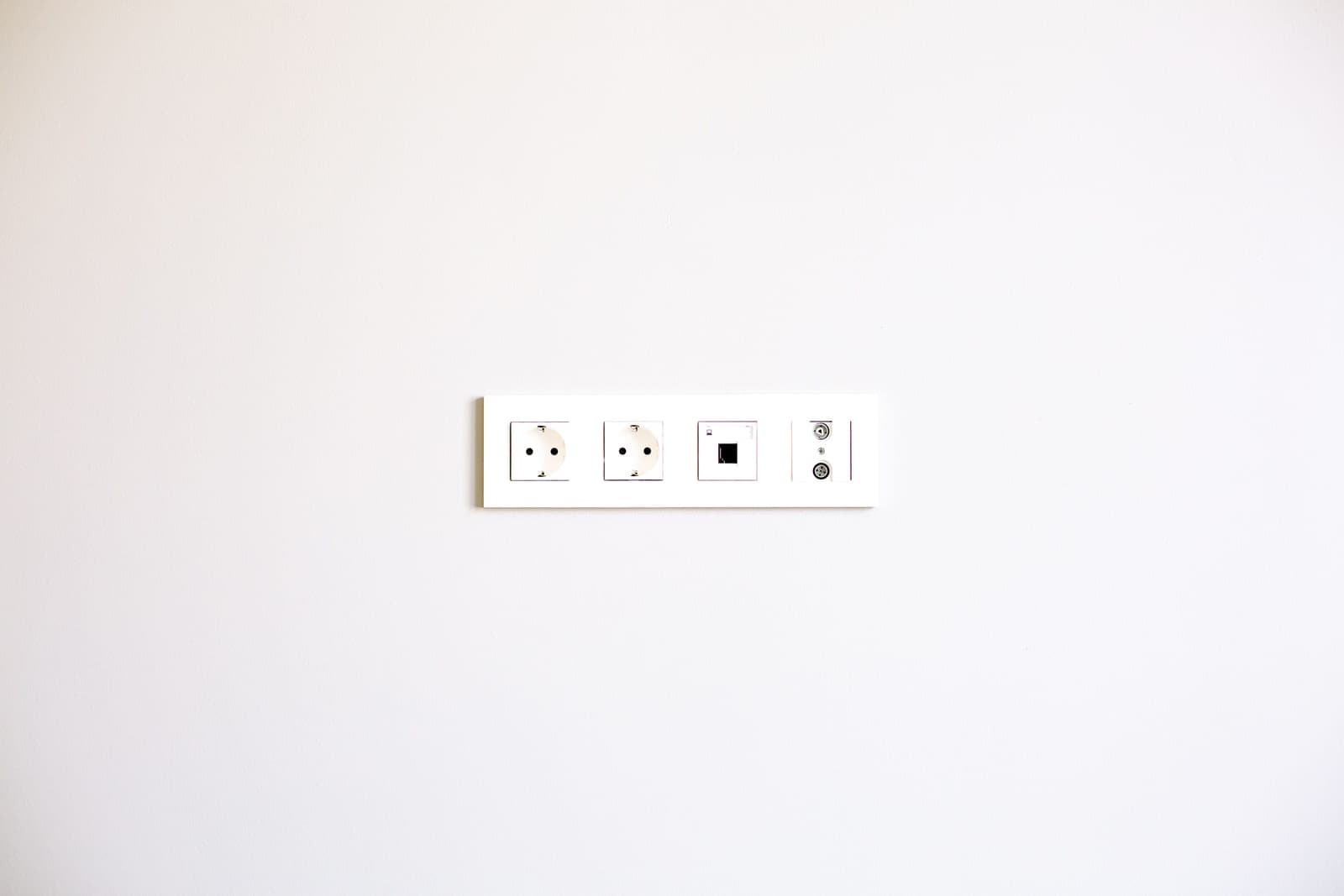
You find out which circuit you have from the breaker, not from the socket. A receptacle with a small horizontal notch on one slot, making a T shape, is a NEMA 5-20 and sits on a 20 amp circuit. An ordinary straight-slot socket is a NEMA 5-15, and while that is often on a 15 amp circuit, the socket itself cannot prove it either way. How to identify your outlet has the photographs.
Quick picks
Ranked, with the reasoning underneath. Tap any row to jump to that write-up; tap the price to check it on Amazon. Prices come from the live layer, never from this page.
| # | Product | Best for | Type | Price |
|---|---|---|---|---|
| 1 | 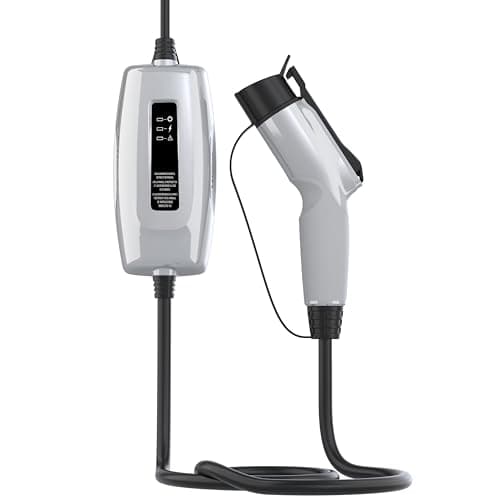 Schumacher Electric SEV1670 Level 1 Portable EV Charger (12A, NEMA 5-15)A 12 amp Level 1 charger sized correctly for an ordinary 15 amp household circuit, with a 20 ft cable that reaches further than most. Schumacher Electric SEV1670 Level 1 Portable EV Charger (12A, NEMA 5-15)A 12 amp Level 1 charger sized correctly for an ordinary 15 amp household circuit, with a 20 ft cable that reaches further than most. | A 15 amp circuit and a longer reach | Level 1 EVSE | |
| 2 | 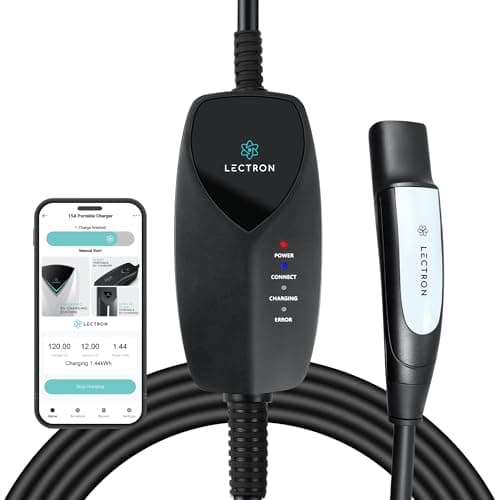 Lectron Portable Level 1 Tesla (NACS) Charger, WiFi (12A, NEMA 5-15)A 12 amp NACS Level 1 charger with app scheduling: the right current for a 15 amp circuit and the right connector for a Tesla, with no adapter in between. Lectron Portable Level 1 Tesla (NACS) Charger, WiFi (12A, NEMA 5-15)A 12 amp NACS Level 1 charger with app scheduling: the right current for a 15 amp circuit and the right connector for a Tesla, with no adapter in between. | A Tesla or NACS car on a household socket | Level 1 smart EVSE | |
| 3 | 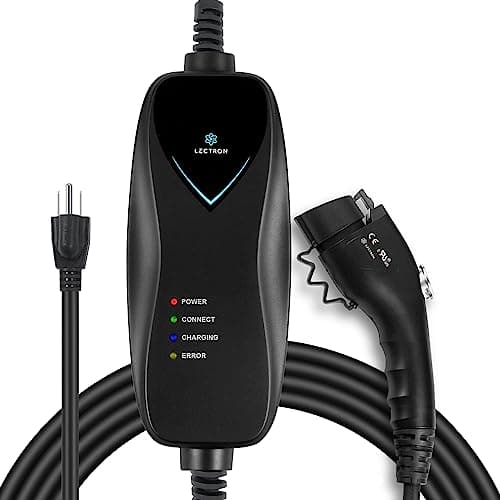 Lectron Portable Level 1 J1772 Charger (15A, NEMA 5-15)The unglamorous answer that covers most commutes: an ordinary 120V socket, overnight, and no conversation with anybody about electrical work. Lectron Portable Level 1 J1772 Charger (15A, NEMA 5-15)The unglamorous answer that covers most commutes: an ordinary 120V socket, overnight, and no conversation with anybody about electrical work. | An ordinary wall socket | Level 1 EVSE |
#1 · A 15 amp circuit and a longer reach
Schumacher Electric SEV1670 Level 1 Portable EV Charger (12A, NEMA 5-15)
A 12 amp Level 1 charger sized correctly for an ordinary 15 amp household circuit, with a 20 ft cable that reaches further than most.
| Charging current | 12A continuous, 120Vsource |
|---|---|
| Output power | 1.44 kWsource |
| Cable length | 20 ftsource |
| Plug / connector | NEMA 5-15 plug, J1772 connectorsource |
| Certification | ETL and Energy Starsource |
| Enclosure | IP66 housingsource |
| Built-in protection | Leakage, undervoltage, overvoltage, overcurrent, over-temperature, ground-fault and relay-fault protectionsource |
What those numbers mean
Twelve amps is not a low number for this category; it is the correct one. A 15 amp circuit supports 12 amps of continuous load, and overnight charging is continuous by any definition, so this unit uses an ordinary household circuit right up to its limit and no further.
The 20 ft cable is four feet longer than the common 16 ft. At a carport or a curbside socket, those four feet are frequently the difference between reaching the charge port and reaching for an extension cord.
Over-temperature protection is on the manufacturer's list, but the published specification does not say where the sensor sits. Treat it as a backstop, and still feel the plug at the wall during the first few long sessions.
What it does well
- Sized for a 15 amp circuit, the most common household circuit there is
- 20 ft cable, longer than the usual 16 ft
- ETL and Energy Star certified, with an IP66 housing
- The manufacturer publishes the full list of built-in protections
What it does not
- J1772 only — a Tesla or other NACS car needs an adapter or a NACS unit
- No app or scheduling, and no current adjustment in the published specification
- 1.44 kW will not recover a long driving day overnight
Skip this one if: Your car has a NACS (Tesla-style) port, or you regularly drive more than about 40 miles a day. The first needs a different connector; the second needs more power than any Level 1 unit can deliver.
#2 · A Tesla or NACS car on a household socket
Lectron Portable Level 1 Tesla (NACS) Charger, WiFi (12A, NEMA 5-15)
A 12 amp NACS Level 1 charger with app scheduling: the right current for a 15 amp circuit and the right connector for a Tesla, with no adapter in between.
| Charging current | 12A, 120Vsource |
|---|---|
| Output power | Up to 1.44 kWsource |
| Cable length | 16 ftsource |
| Plug / connector | NEMA 5-15 plug, NACS (Tesla) connectorsource |
| Certification | UL 2594 / UL 2231 certifiedsource |
| Enclosure | IP67-rated control boxsource |
| App features | Charging schedules, real-time status and a kWh limit per session in the Lectron appsource |
What those numbers mean
The 12 amp rating is what makes this the NACS pick for most renters: it matches the continuous limit of an ordinary 15 amp circuit, where a 15 amp unit would need a 20 amp circuit behind the socket.
A NACS connector means a Tesla, or any other NACS car, plugs in directly. That is one fewer connection carrying current for twelve hours, and one fewer part to leave in a shared parking space.
The app earns its place on a time-of-use electricity rate, where starting the session inside the cheap window is worth money every night. On a flat rate it is mostly a status display.
What it does well
- Sized for a 15 amp household circuit
- Native NACS connector — no adapter needed on a Tesla
- Scheduling and a per-session kWh limit in the app
- UL 2594 / UL 2231 certified, with an IP67 control box
What it does not
- 16 ft cable, and the nearest socket is often further away than that
- The scheduling runs through the app, so it needs a network where you park
- NACS only — a J1772 car would need an adapter
Skip this one if: Your car has a J1772 port, or your electricity costs the same at every hour and there is no Wi-Fi where you park. A plain 12 amp unit does the same electrical job.
#ad · how this is funded · price as of September 17, 2026
#3 · An ordinary wall socket
Lectron Portable Level 1 J1772 Charger (15A, NEMA 5-15)
The unglamorous answer that covers most commutes: an ordinary 120V socket, overnight, and no conversation with anybody about electrical work.
| Input | 120V, 15A maximumsource |
|---|---|
| Output power | 1.8 kWsource |
| Cable length | 16 ftsource |
| Plug / connector | NEMA 5-15 plug, J1772 connectorsource |
| Certification | UL 2594 / UL 2231 certifiedsource |
| Manufacturer charge-rate claim | 45+ miles of range overnightsource |
What those numbers mean
1.8 kW sounds trivial next to 9.6 kW, and for a road trip it is. For a commute it usually is not: the average US driver covers well under 45 miles a day, and this replaces that overnight while the car sits anyway.
The honest ceiling is the circuit behind the socket, not the cable. This unit draws 15 amps for hours, which a 20 amp circuit supports continuously and a 15 amp circuit does not — so check the breaker before the first overnight session, and on a 15 amp circuit choose a 12 amp unit instead.
This is the only category of EV charging that is genuinely invisible to a landlord. It draws less than a hair dryer and plugs into a receptacle that already exists.
What it does well
- Works with a socket that already exists, everywhere, with no permission needed
- UL 2594 and UL 2231 certified rather than a generic cordset
- Cheapest possible entry into home charging, by a wide margin
What it does not
- 1.8 kW will not recover a long driving day overnight
- 16 ft cable, and the nearest 120V socket is often not the nearest thing to the car
- Its 15 amp draw needs a 20 amp circuit behind the socket; an ordinary 15 amp circuit supports 12 amps continuously
Skip this one if: You regularly drive more than about 45 miles a day. Level 1 will fall a little further behind every night and you will spend the difference at public chargers.
#ad · how this is funded · price as of September 17, 2026
What the extra speed is actually worth
Over a twelve-hour night, a 12 amp charger at 1.44 kW delivers about 17.3 kWh and a 15 amp charger at 1.8 kW delivers about 21.6 kWh — a difference of roughly 4.3 kWh. Multiply that by your car's miles per kWh to see what it means for you. The Level 1 vs Level 2 table puts a twelve-hour night at 12 amps at 40 to 50 miles; the 15 amp unit lands above that and below the 55 to 70 miles a 20 amp circuit supports at a full 16 amps.
That difference is genuinely useful if your commute sits right at the edge of what 12 amps recovers, and you have a confirmed 20 amp circuit to spend it on. It is not worth running a 15 amp circuit past its continuous rating to get. If 12 amps is not quite enough and you only have a 15 amp circuit, the honest answer is a second charging location or occasional public charging, not a bigger Level 1 unit.
A longer cable beats an extension cord
The most common Level 1 problem is not speed at all. It is that the only socket is twenty-odd feet from where the car parks, and the charger's cable is sixteen. The instinct is to buy an extension cord, and that is the point at which a safe setup most often becomes an unsafe one: a household cord that is too thin, coiled, joined to a second cord, or rated indoor-only.
Buying a charger with a longer cable solves the same problem with no extra connection in the circuit, which is why cable length is the third criterion above and why the 20 ft cable on the top pick counts for more than its four extra feet suggest. If a cord is unavoidable, is an EV extension cord safe? sets out exactly when it is acceptable, and extension cords for Level 1 charging covers the gauge and length that make it so.
Tesla and other NACS cars
If your car has a NACS port, a NACS Level 1 charger plugs straight in. The alternative is a J1772 charger plus a J1772-to-NACS adapter, which works, but adds a second mechanical connection to a circuit that will carry current all night and a small, expensive part that is easy to lose from a shared parking space.
The adapter route still makes sense for one household: one with both a J1772 car and a NACS car sharing a charger. In that case a J1772 unit plus one adapter covers both cars, and NACS to J1772 vs J1772 to NACS explains which direction to buy.
Warning signs on any Level 1 setup
- A warm plug or receptacle after an hour of charging. Slightly warm can be normal; hot to the touch is not. Outlet hot or plug melted? covers what to do, in order.
- A loose fit. A plug that droops or falls out of the receptacle has worn contacts, and worn contacts heat up under a sustained load.
- Discoloration on the plug blades or around the receptacle face. Stop using that socket.
- A breaker that trips part-way through the night, usually because something else shares the circuit — a refrigerator, a freezer, a space heater. Why the breaker keeps tripping works through the diagnosis.
The false economies
- A 16 amp figure on a 120V listing. Sixteen amps continuous needs a 20 amp circuit and a NEMA 5-20 receptacle. Check which plug the 16 amp figure is attached to; on many dual-voltage units it applies only to a 240V plug, which is a different outlet altogether.
- The cheapest unit with no named listing. The price gap between an uncertified cordset and a listed one is small next to what the cordset is doing: carrying current, unattended, for twelve hours at a time.
- A household extension cord to reach the car. Covered above. A longer charger cable is almost always the better purchase.
- Paying for an app on a flat electricity rate. Scheduling saves money only when electricity costs less at some hours than others. On a flat rate, the app is a status display.
When Level 1 is the wrong answer
If you regularly drive more than a twelve-hour Level 1 session recovers, every night leaves the battery a little lower than the last, and you will end up making up the difference at public chargers. At that point the question is whether a 240V outlet is within reach: is a Level 2 charger worth it if you rent? works through that decision. If a 240V outlet might turn up later, a dual Level 1 and Level 2 charger is the purchase that covers both without buying twice.
What we did not evaluate
Anything that needs a unit in hand: how warm each plug head runs after ten hours, how the cable handles below freezing, how the connectors wear over hundreds of cycles and how reliable the app is. There is no test bench behind this site and we do not imply one. The ranking is built from each manufacturer's published specifications, cited on every product, together with the circuit arithmetic above. The method sets out what that can and cannot tell you.
Questions people actually ask
What is the best Level 1 EV charger?
For most renters, a 12 amp unit with a J1772 connector and the longest cable you can get, because 12 amps is correct on an ordinary 15 amp circuit and on a 20 amp one. For a Tesla or other NACS car, a 12 amp NACS unit. A 15 amp charger is faster, but only right on a confirmed 20 amp circuit.
Is a 15 amp Level 1 charger safe on a regular outlet?
Only if the outlet is on a 20 amp circuit. Overnight charging is a continuous load, and the continuous-load rule caps it at 80% of the circuit rating: 12 amps on a 15 amp circuit, 16 amps on a 20 amp one. A charger drawing 15 amps for hours belongs on the 20 amp circuit.
How do I tell whether my outlet is on a 15 or 20 amp circuit?
Read the number on the breaker handle that feeds it. A socket with a T-shaped slot is a NEMA 5-20 on a 20 amp circuit; an ordinary straight-slot socket cannot tell you on its own. If you cannot get to the breaker, treat it as 15 amps and buy a 12 amp charger.
Do I need to buy a Level 1 charger if my car came with one?
Usually not. The reasons to buy another are a longer cable than yours, a connector that matches your car without an adapter, or a second charger to keep at another location. Check the trunk and the delivery paperwork before you order.
Can I use an extension cord with a Level 1 charger?
Sometimes, with a heavy-gauge, outdoor-rated cord of the right length, fully uncoiled and never joined to a second cord. A charger with a longer cable is almost always the better answer, because it solves the reach problem without adding a connection to the circuit.
What is the best Level 1 charger for a Tesla?
A 12 amp Level 1 charger with a native NACS connector, so the car plugs in directly with no adapter in the charging path. A J1772 charger plus an adapter only makes more sense when the same charger also serves a J1772 car.
How many miles does a Level 1 charger add overnight?
At 12 amps, a twelve-hour night delivers about 17 kWh, which covers roughly 40 to 50 miles for a typical car. At 15 amps on a 20 amp circuit it is about 21.6 kWh. Multiply the kWh by your car's miles per kWh for your own figure.
Sources
Every figure on this page traces to one of these. If a number here disagrees with the manufacturer, the manufacturer is right and we want to know — tell us.
- Schumacher Electric — SEV1670 Level 1 Portable EV Charger, 120V / 12A (product page and specifications)
- Lectron — Portable Level 1 Tesla (NACS) EV Charger, WiFi, 120V / 12A / NEMA 5-15 (product page)
- Lectron — Portable Level 1 J1772 EV Charger, 120V / 15A / NEMA 5-15 (product page)
- Lectron — published specification table for the Level 1 and Level 2 charger range
- NFPA — NFPA 70, National Electrical Code (free public access)
- U.S. DOE Alternative Fuels Data Center — Electric vehicle charging levels and speeds
Read next
Best Portable Charger
Best portable EV chargers
The portable charger section: plug-in Level 1 and Level 2 units ranked by the outlet you can actually reach, with every spec cited.
Top pick: Grizzl-E Mini Connect Portable Charger
Guide
Level 1 vs Level 2, for someone without a garage
The charging-level comparison rewritten for renters, with a renter-viability column and an honest case for Level 1.
Top pick: Lectron Portable Level 1 J1772 Charger (15A, NEMA 5-15)
Best No-Install Setup
The best EV chargers that need no installation
Ranked no-install charging setups, from an ordinary wall socket to a shared dryer circuit — every one of them plugs in and leaves with you.
Top pick: Grizzl-E Mini Connect Portable Charger

Best Level 1 Extension
Extension cords for Level 1 charging
The 120V extension question: lower current, easier numbers, same rule about which side of the charger to extend on.
Top pick: A2Z EV J1772 to J1772 Extension Cord, 16 ft
Guide
Identify your outlet in about a minute
A visual identification method for the NEMA outlets that matter, plus the two lookalike pairs that cause the wrong purchase.
Top pick: Grizzl-E Mini Connect Portable Charger

Guide
Dual Level 1 and Level 2 chargers: worth it?
When a dual-voltage charger earns its price premium over a single-voltage unit, and the three readers it is genuinely built for.
Top pick: Grizzl-E Mini Connect Portable Charger