The best home charger for a Nissan LEAF
The LEAF now has a Tesla port and a J1772 port. Only one of them takes a home charger, and buying for the wrong one is the costliest mistake on this page.
How this page is funded: the buy links below are affiliate links, and Renter Volt earns a commission on qualifying purchases at no cost to you. Nothing here was supplied by a manufacturer, and commission plays no part in the ranking — read the full disclosure. Picks are chosen from published specifications rather than hands-on testing; the method is written down so you can check it. Prices last verified October 27, 2026.
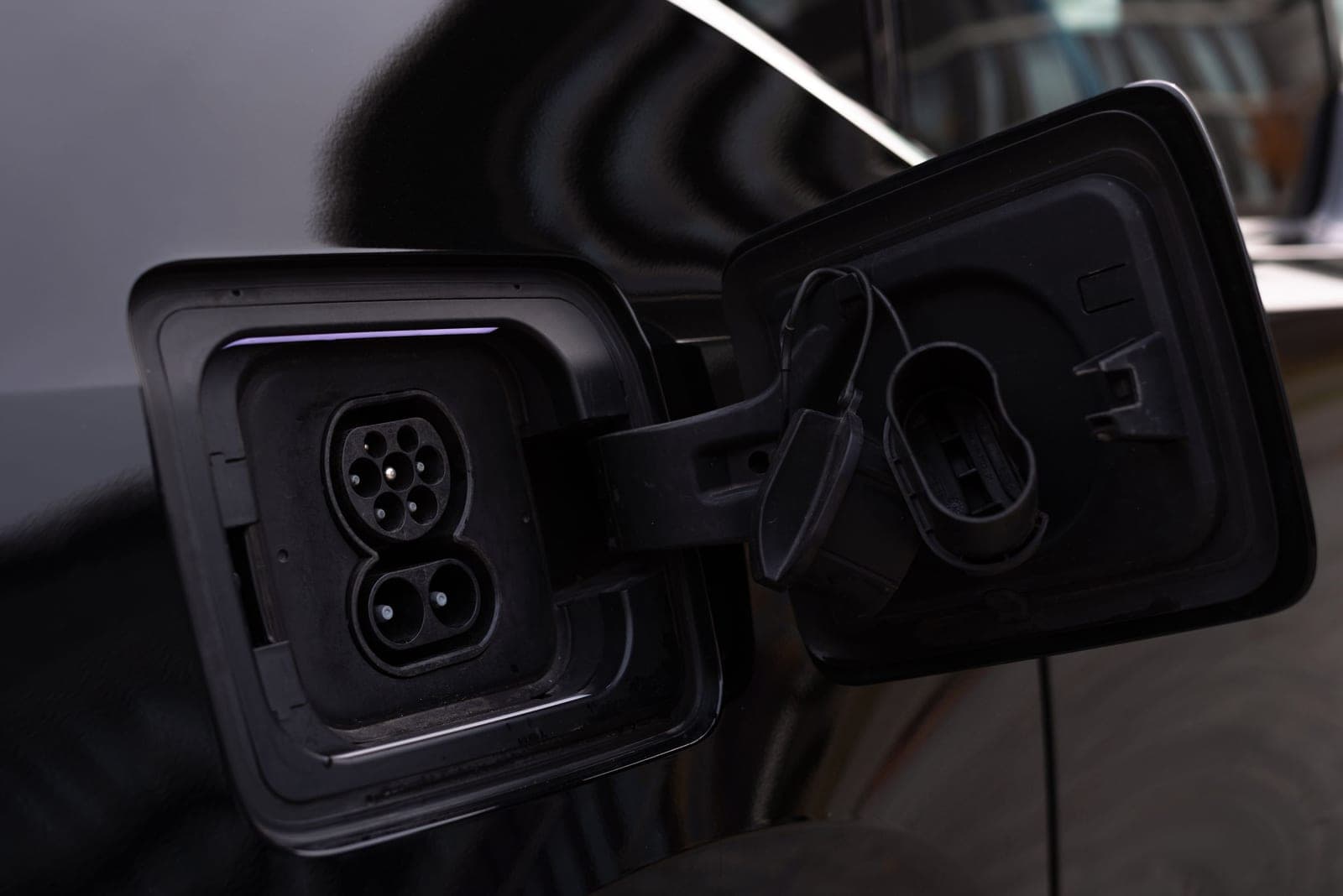
The 2026 LEAF has two charge ports, and they are not the same standard. Nissan puts a J1772 port on the driver's-side fender, which it describes as the one that "allows for plugging in at home and many Level 2 public chargers", and a NACS port on the passenger-side fender, which "unlocks the faster speeds of over 20,000 Tesla Superchargers".
Every other car covered on this site is one shape or the other. The LEAF is both, and that is why this page starts with the connector rather than with a product. If you take one thing away: the home charger you buy for a LEAF is a J1772 charger. The Tesla-shaped port on the other fender is the fast-charging port, and Nissan's own wording puts home charging on the J1772 side.
The number that decides how much to spend: 7.2 kW
Nissan lists a 7.2 kW onboard charger across all three grades — S+, SV+ and PLATINUM+ — alongside a 75 kWh liquid-cooled lithium-ion pack. The onboard charger is the AC-to-DC converter inside the car, and it is a hard ceiling. No external charger can push past it, whatever the box is rated for.
kW × 1000 ÷ 240V = amps · amps × 240V ÷ 1000 = kW
The car's ceiling: 7.2 kW → 30A at 240V · A 40A charger on a NEMA 14-50: 9.6 kW available, car accepts 7.2 kW · A 30A dryer circuit (NEMA 14-30) at its 24A continuous limit: 5.8 kW · Level 1 at 15A: 1.8 kW · Level 1 at 12A: 1.44 kW
The 30A figure is the whole commercial point of this page. A 40A unit gives a LEAF nothing a 30A unit would not, because the car stops asking at 30. The amps are arithmetic from Nissan's published 7.2 kW; Nissan does not publish the car's AC amperage directly.
So the honest ranking for a LEAF is not "buy the most amps you can afford". It is the opposite of how this category is usually sold. A 48A charger and a 30A charger fill a LEAF at exactly the same speed, and the premium you pay for the 48A unit buys headroom for a car you do not own.
There is still one good reason to buy a 40A unit, and it is not speed: it is the next car. If you expect to replace the LEAF inside the charger's life with something that can take 40 or 48 amps, the headroom is real then. Just be clear that you are buying it for a future car rather than this one. Working out the amp rating you need does this arithmetic for whatever you actually drive.
Which limit bites first — the car or the outlet
A LEAF charging at home runs into three ceilings and only the lowest one matters: the circuit behind the socket, the charger's rating, and the car's 7.2 kW. For most renters the first is the real constraint, and it is the one nobody checks before buying.
| What you plug into | Continuous limit | Rate the LEAF gets | What is limiting you |
|---|---|---|---|
| 120V household socket, 12A unit | 12A | 1.44 kW | The socket and the cord |
| 120V household socket, 15A unit | 15A | 1.8 kW | The socket and the cord |
| NEMA 14-30 dryer outlet | 24A | 5.8 kW | The 30A circuit, not the car |
| NEMA 14-50 range or RV outlet | 40A | 7.2 kW | The car's onboard charger |
Read the bottom two rows together. On a dryer circuit the circuit is the limit and a bigger charger changes nothing — the 30 amp breaker caps you at 24 amps continuously, below the car's own ceiling. On a genuine NEMA 14-50 the car becomes the limit at 30 amps, and the remaining 10 amps the outlet could supply go unused. Either way, the expensive charger is being throttled by something other than itself.
This is why how to identify your outlet comes before any purchase, and why the 14-30 dryer-outlet page exists at all. Guess the receptacle and you can easily pay double for a charger that delivers less than the one you did not buy.
What a 75 kWh pack does to Level 1
This is the part that has genuinely changed, and anyone carrying advice over from an older LEAF should read it. The car now has a 75 kWh pack. Level 1 charging — an ordinary wall socket — has not got any faster, so the share of the battery an overnight session replaces has fallen sharply.
rate in kW × hours plugged in = kWh added · kWh added ÷ 75 kWh = share of the pack
12A Level 1: 1.44 kW × 10 h = 14.4 kWh → about 19% of the pack · 15A Level 1: 1.8 kW × 10 h = 18 kWh → about 24% · Dryer circuit at 24A: 5.8 kW × 10 h = 58 kWh → about 77% · NEMA 14-50, car-limited: 7.2 kW × 10 h = 72 kWh → about 96%
Arithmetic from Nissan's published 75 kWh and 7.2 kW, not a Nissan charge-time figure — Nissan's own 2026 spec table lists the 240V time as TBD. Real sessions land lower: 75 kWh is the pack's stated capacity rather than its usable capacity, and AC charging loses some energy as heat.
A fifth of the pack a night is not nothing. If you drive 30 or 40 miles a day, Level 1 covers it and you can stop reading here with the cheapest unit on the page. If you drive a long commute, or you park somewhere you cannot leave the car plugged for ten hours, the sums stop working and Level 2 is doing real work rather than buying convenience.
The honest test costs nothing: charge on Level 1 for a week and look at where the state of charge sits each morning. If it never drops below about half, a Level 2 charger is a luxury. Is a Level 2 charger worth it if you rent? works through that trade honestly, and Level 1 against Level 2 covers the mechanics.
When the charger should be adjustable instead of big
There is one case where paying more is the right call for a LEAF, and it is not about amps either. If the outlet you can reach is a dryer circuit, or you are not certain what the breaker behind it is rated for, a charger with selectable amperage lets you set the draw to match the circuit rather than hoping the circuit can take the charger.
That matters because overnight charging is a continuous load, and the continuous-load rule caps you at 80% of the circuit rating. A fixed 40A unit on an unknown circuit is a guess. A unit you can dial to 24A is a decision. The ChargePoint pick below is the one in this set with a usable range, and it is the reason it earns its price here rather than for anything to do with speed.
If your building has Tesla connectors on the wall
This is common in apartment complexes and the LEAF's second port makes it more confusing rather than less. If the hardware on the wall is a Tesla connector doing AC charging, you do not need a charger at all — the building's unit is doing the work, and you are changing the shape on the end for a fraction of what any charger costs.
The part you want is a NACS-to-J1772 adapter, which goes onto the building's Tesla connector and presents J1772 to the car's home-charging port. Check the direction before ordering: the opposite part exists, looks broadly similar and will not fit. Which adapter does your car need has the shapes side by side, and the apartment-complex playbook covers getting access to the hardware in the first place.
Do not buy that adapter expecting it to open Superchargers. The car's NACS port handles fast charging on its own and needs no adapter for it; the adapter in this set is for AC charging off a Tesla connector, which is a different job.
Reach decides more purchases than amperage does
The LEAF's home-charging port is on the driver's-side fender — at the front of the car, not the back. In a carport or an uncovered bay that changes which way you park and whether the cable reaches at all. A cord that gets to the rear bumper and not to the front wing is a cord that does not reach.
Measure it with the car parked where it will actually sit, then buy for that distance. If the shortfall is a few feet, an extension is far cheaper than a second charger — and whether an EV extension cord is safe sets out the conditions that make that reasonable rather than a shortcut.
What to buy, in order
- You can reach a NEMA 14-50 and want the car's full AC rate. Any solid 40A J1772 unit does it; the car takes 30A of it. Buy on cable length and build rather than on the amp number.
- You can only reach a dryer outlet, or you are not sure of the breaker. Take the adjustable unit and set it to match the circuit. This is the one case where the pricier charger is the correct answer.
- You only have an ordinary wall socket. A Level 1 unit, and check after a week whether you need anything more. On a 75 kWh pack this covers a short commute and not much beyond it — the Level 1 roundup has the full set.
- Your building already has Tesla connectors doing AC charging. Buy the NACS-to-J1772 adapter instead of a charger. It is the cheapest fix on this page by a wide margin.
- The cable does not reach the driver's-side front wing. A J1772 extension, not a second charger.
How these were chosen
- A J1772 connector, or an adapter that presents one. This is the first filter and it removes a lot of otherwise good hardware. The LEAF's home-charging port is J1772; a NACS charger does not fit it.
- It has to be a plug. Nothing hardwired, ever, for a tenant — no electrician, no permit, no permanent alteration to a building somebody else owns. Hardwired against plug-in sets out why that line is absolute here.
- Current matched to the lower of the car and the circuit, which on a LEAF means 30A is the ceiling worth paying for and 24A is the ceiling on a dryer circuit. Nothing is ranked up for exceeding a limit the car or the breaker already sets.
- Adjustability counts more than peak amps on this car, because the useful range sits below where fixed 40A units are set.
- A published safety listing you can look up, cited on every pick rather than asserted.
- Reach, because with a charge port on the driver's-side front wing it decides more outcomes than amperage does.
Quick picks
Ranked, with the reasoning underneath. Tap any row to jump to that write-up; tap the price to check it on Amazon. Prices come from the live layer, never from this page.
| # | Product | Best for | Type | Price |
|---|---|---|---|---|
| 1 | 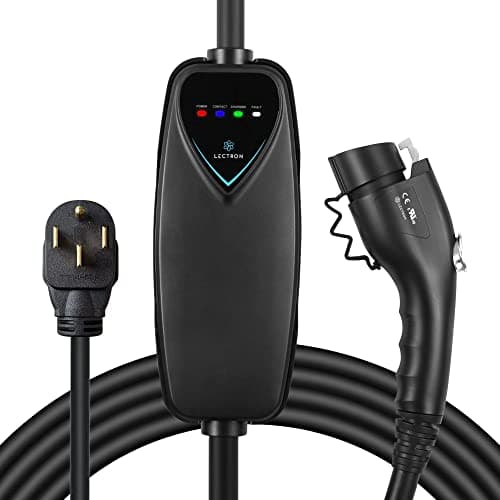 Lectron Portable Level 2 J1772 Charger (40A, NEMA 14-50)The plainest answer to a NEMA 14-50 outlet you can reach: 40 amps, a plug on the end, and nothing screwed to a wall you do not own. | A reachable 14-50 outlet | Plug-in Level 2 EVSE | |
| 2 | 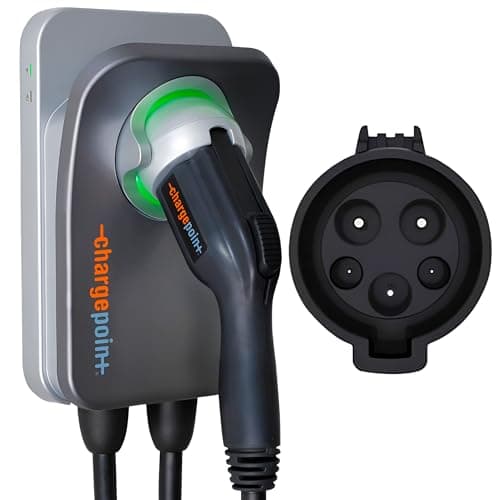 ChargePoint Home Flex Level 2 EV Charger (40A, NEMA 14-50 plug)A plug-in 40 amp smart charger whose app runs both this unit and ChargePoint's public network, which is the one thing here the cheaper units cannot match. | One app for home and public | Plug-in smart EVSE | |
| 3 | 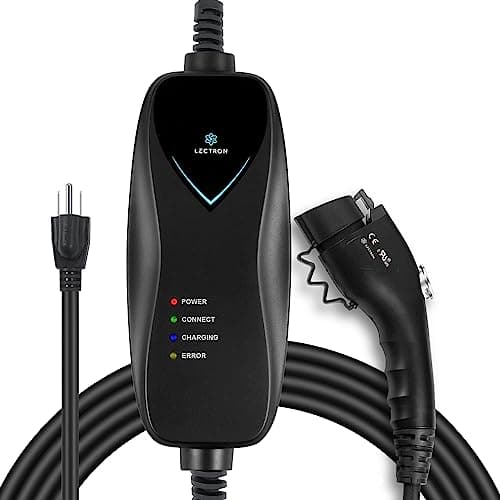 Lectron Portable Level 1 J1772 Charger (15A, NEMA 5-15)The unglamorous answer that covers most commutes: an ordinary 120V socket, overnight, and no conversation with anybody about electrical work. | An ordinary wall socket | Level 1 EVSE | |
| 4 | 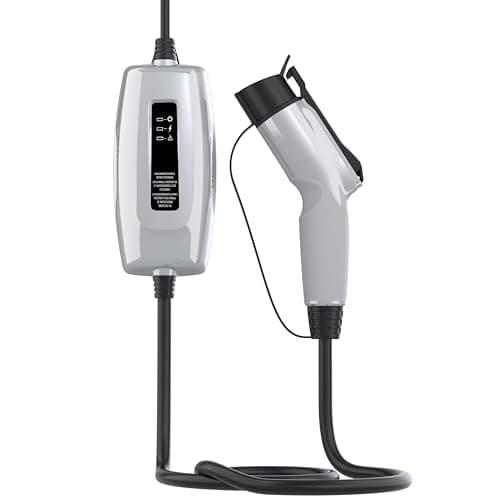 Schumacher Electric SEV1670 Level 1 Portable EV Charger (12A, NEMA 5-15)A 12 amp Level 1 charger sized correctly for an ordinary 15 amp household circuit, with a 20 ft cable that reaches further than most. | A 15 amp circuit and a longer reach | Level 1 EVSE | |
| 5 | 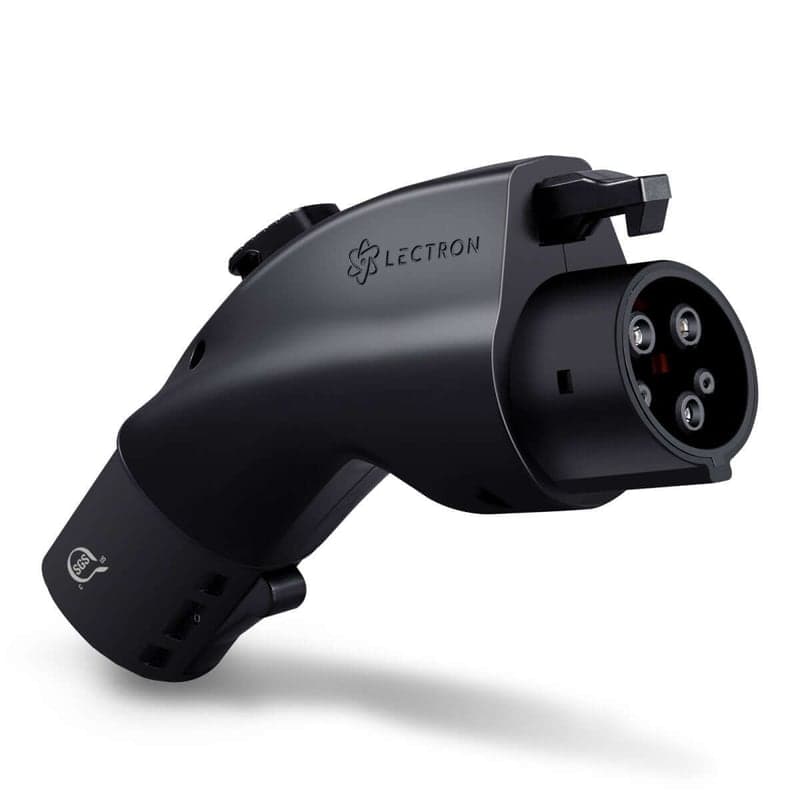 Lectron Tesla (NACS) to J1772 Adapter, 48AThe adapter a J1772 car needs to use a Tesla wall, destination or mobile connector — which is the direction many apartment buildings have already installed. | A J1772 car at a Tesla cable | AC charging adapter | Check price#ad |
| 6 | 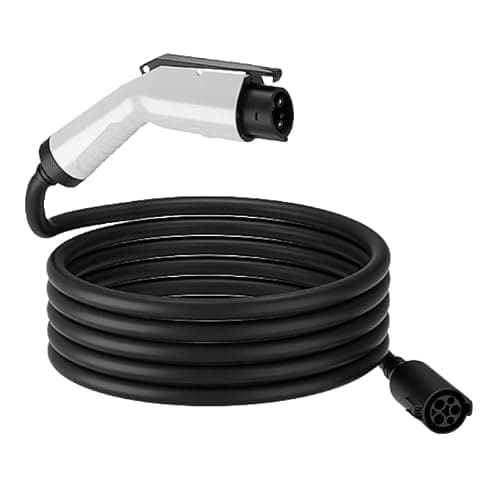 A2Z EV J1772 to J1772 Extension Cord, 16 ftA purpose-built EV extension on the car side of the charger — the correct place to add length — and the only one here whose maker publishes the code caveat that comes with it. | A charger that will not reach | J1772 extension cable |
#1 · A reachable 14-50 outlet
Lectron Portable Level 2 J1772 Charger (40A, NEMA 14-50)
The plainest answer to a NEMA 14-50 outlet you can reach: 40 amps, a plug on the end, and nothing screwed to a wall you do not own.
| Input | 240V, 40A maximumsource |
|---|---|
| Output power | Up to 9.6 kWsource |
| Cable length | 16 ftsource |
| Plug / connector | NEMA 14-50 plug, J1772 connectorsource |
| Certification | UL 2594 / UL 2231 certifiedsource |
| Manufacturer charge-rate claim | Roughly 30 miles of range per hour of chargingsource |
What those numbers mean
9.6 kW is the ceiling this unit can deliver, not what your car will take. A vehicle with a 7.2 kW onboard charger draws 7.2 kW from it and no more, and that is a car limitation no charger fixes.
The 16 ft cable is the number to check before anything else. Measure from the outlet to where your charge port sits when the car is parked as it will actually be parked, not as you would like to park it. Sixteen feet disappears faster than people expect once it has to route around a wall.
A 40 amp unit needs a 50 amp circuit behind the outlet to run at 40 amps continuously. If the outlet is on a smaller breaker, the answer is a lower-amperage charger, not this one turned down.
What it does well
- Plugs in and unplugs — it leaves with you at the end of the lease
- UL 2594 and UL 2231 certified, the two standards that matter for EVSE
- 40 amps covers the fastest charging any renter-reachable outlet realistically supports
What it does not
- 16 ft of cable is short for a parking space that is not directly beside the outlet
- No amperage adjustment, so it is the wrong unit for a 30 amp circuit
Skip this one if: Your only 240V outlet is a 30 amp dryer receptacle. This unit expects a 50 amp circuit behind a NEMA 14-50, and derating it is not an option it offers.
#ad · how this is funded · price as of October 27, 2026
#2 · One app for home and public
ChargePoint Home Flex Level 2 EV Charger (40A, NEMA 14-50 plug)
A plug-in 40 amp smart charger whose app runs both this unit and ChargePoint's public network, which is the one thing here the cheaper units cannot match.
| Amperage | 16 to 50A flexible amperage across the range; the plug-in version delivers up to 40Asource |
|---|---|
| Circuit required (plug-in) | A circuit rated 40A or 50A. ChargePoint states the hardwired version is required for all other circuit ratingssource |
| Cable length | 23 ftsource |
| Plug / connector | NEMA 14-50 plug (a 6-50 version is also sold), J1772 or NACS connectorsource |
| Certification | UL Listed and ENERGY STAR certifiedsource |
| Warranty | 3 yearssource |
| Outdoor installation | ChargePoint requires hardwiring the station or using a weatherproof receptacle for outdoor installationsource |
What those numbers mean
The 50 amp headline belongs to the hardwired version. On a plug it delivers up to 40 amps, which is the ceiling a 50 amp circuit permits continuously and the same ceiling every plug-in charger shares.
The circuit requirement is stricter than it first looks. ChargePoint states the plug-in version needs a circuit rated 40 or 50 amps and that the hardwired version is required for anything else, so a smaller circuit is not something you can simply dial down to.
The app is the real differentiator. It handles this charger and ChargePoint's public stations from one place, which is worth more to somebody who charges partly away from home than to somebody with a driveway and a fixed routine.
What it does well
- One app for this charger and ChargePoint's public network
- Amperage is selected in the app to match the breaker feeding the outlet
- UL Listed and ENERGY STAR certified, with a three-year warranty
- Sold with a J1772 or a NACS connector, and a NACS cable conversion kit exists for units already owned
What it does not
- The plug-in version needs a circuit rated 40 or 50 amps; ChargePoint requires hardwiring for anything smaller
- 23 ft of cable, shorter than some rivals at this price
- Outdoors, ChargePoint asks for hardwiring or a weatherproof receptacle rather than a bare plug
- It sits at the top of the plug-in price bracket
Skip this one if: Your 240V outlet is on a circuit smaller than 40 amps, or you never use public charging and only want an overnight timer. In both cases you would be paying for the part of this charger you cannot use.
#3 · An ordinary wall socket
Lectron Portable Level 1 J1772 Charger (15A, NEMA 5-15)
The unglamorous answer that covers most commutes: an ordinary 120V socket, overnight, and no conversation with anybody about electrical work.
| Input | 120V, 15A maximumsource |
|---|---|
| Output power | 1.8 kWsource |
| Cable length | 16 ftsource |
| Plug / connector | NEMA 5-15 plug, J1772 connectorsource |
| Certification | UL 2594 / UL 2231 certified, and separately described as ETL-certified; no certificate number publishedsource |
| Ingress rating | IP65 weather-resistant, stated in the specification textsource |
| Manufacturer charge-rate claim | 45+ miles of range overnight; 3-5 miles of range per hoursource |
What those numbers mean
1.8 kW sounds trivial next to 9.6 kW, and for a road trip it is. For a commute it usually is not: the average US driver covers well under 45 miles a day, and this replaces that overnight while the car sits anyway.
The honest ceiling is the circuit behind the socket, not the cable. This unit draws 15 amps for hours, which a 20 amp circuit supports continuously and a 15 amp circuit does not — so check the breaker before the first overnight session, and on a 15 amp circuit choose a 12 amp unit instead.
This is the only category of EV charging that is genuinely invisible to a landlord. It draws less than a hair dryer and plugs into a receptacle that already exists.
What it does well
- Works with a socket that already exists, everywhere, with no permission needed
- UL 2594 and UL 2231 certified rather than a generic cordset
- Cheapest possible entry into home charging, by a wide margin
What it does not
- 1.8 kW will not recover a long driving day overnight
- 16 ft cable, and the nearest 120V socket is often not the nearest thing to the car
- Its 15 amp draw needs a 20 amp circuit behind the socket; an ordinary 15 amp circuit supports 12 amps continuously
Skip this one if: You regularly drive more than about 45 miles a day. Level 1 will fall a little further behind every night and you will spend the difference at public chargers.
#4 · A 15 amp circuit and a longer reach
Schumacher Electric SEV1670 Level 1 Portable EV Charger (12A, NEMA 5-15)
A 12 amp Level 1 charger sized correctly for an ordinary 15 amp household circuit, with a 20 ft cable that reaches further than most.
| Charging current | 12A continuous, 120Vsource |
|---|---|
| Output power | 1.44 kWsource |
| Cable length | 20 ftsource |
| Plug / connector | NEMA 5-15 plug, J1772 connectorsource |
| Certification | ETL and Energy Starsource |
| Enclosure | IP66 housingsource |
| Built-in protection | Leakage, undervoltage, overvoltage, overcurrent, over-temperature, ground-fault and relay-fault protectionsource |
What those numbers mean
Twelve amps is not a low number for this category; it is the correct one. A 15 amp circuit supports 12 amps of continuous load, and overnight charging is continuous by any definition, so this unit uses an ordinary household circuit right up to its limit and no further.
The 20 ft cable is four feet longer than the common 16 ft. At a carport or a curbside socket, those four feet are frequently the difference between reaching the charge port and reaching for an extension cord.
Over-temperature protection is on the manufacturer's list, but the published specification does not say where the sensor sits. Treat it as a backstop, and still feel the plug at the wall during the first few long sessions.
What it does well
- Sized for a 15 amp circuit, the most common household circuit there is
- 20 ft cable, longer than the usual 16 ft
- ETL and Energy Star certified, with an IP66 housing
- The manufacturer publishes the full list of built-in protections
What it does not
- J1772 only — a Tesla or other NACS car needs an adapter or a NACS unit
- No app or scheduling, and no current adjustment in the published specification
- 1.44 kW will not recover a long driving day overnight
Skip this one if: Your car has a NACS (Tesla-style) port, or you regularly drive more than about 40 miles a day. The first needs a different connector; the second needs more power than any Level 1 unit can deliver.
#5 · A J1772 car at a Tesla cable
Lectron Tesla (NACS) to J1772 Adapter, 48A
The adapter a J1772 car needs to use a Tesla wall, destination or mobile connector — which is the direction many apartment buildings have already installed.
| Rating | Up to 48A / 240V (11.5 kW)source |
|---|---|
| Direction | Tesla (NACS) charging source into a J1772 vehicle portsource |
| Compatibility | Tesla High Powered Wall Connectors, all generations of Destination Charger, and Mobile Connectorssource |
| Charging type | AC Level 1 and Level 2 only — not compatible with Superchargerssource |
| Certification | SGS certified to UL 2251source |
What those numbers mean
Get the direction right before the brand. This adapter goes on a Tesla-shaped plug so a J1772 car can take it. If you drive a Tesla and the building's charger is J1772, you need the opposite adapter and this one will not physically fit.
The 48 amp rating is the adapter's ceiling. It does not raise anything: the slowest link in the chain — station, adapter, cable, car — sets the speed.
AC only, and that is a property of the adapter rather than a limitation to work around. Superchargers are DC and use an entirely different UL standard.
What it does well
- Rated to 48A, above what any Tesla AC source will deliver, so the adapter is never the bottleneck
- Certified to UL 2251, the standard written for charging couplers
- Turns a building's existing Tesla destination chargers into infrastructure your J1772 car can use
What it does not
- AC only, so it does nothing at a Supercharger
- Small enough to walk off from a shared parking structure
Skip this one if: You drive a Tesla. This is the wrong direction — you want a J1772-to-NACS adapter instead, and buying this one is the most common mistake in the category.
#ad · how this is funded · price as of October 27, 2026
#6 · A charger that will not reach
A2Z EV J1772 to J1772 Extension Cord, 16 ft
A purpose-built EV extension on the car side of the charger — the correct place to add length — and the only one here whose maker publishes the code caveat that comes with it.
| Rating | 48A, AC Level 1 and Level 2source |
|---|---|
| Length | 16 ft / 5 msource |
| Compatibility | J1772 EV charging station into a J1772 / CCS1 vehiclesource |
| Component certification | UL-certified cable (E341631), UL 2251 connectors, UL 62 cabling; CE on the connector, FCC (EMI)source |
| Assembled-unit listing | Not UL Listed as an assembled unit — the manufacturer states an end-product category for EV extension cables is still being finalizedsource |
| Manufacturer's recommended use | Portable, occasional or emergency use; NEC Article 625 generally expects the cable to be integral to the station for permanent installationssource |
| Warranty | 12 months against manufacturing defectssource |
What those numbers mean
Extending on the J1772 side is safer than extending on the wall side, because the EVSE is still the thing controlling current and it still sits between the outlet and the extension.
Read the last three specification rows together, because they are the honest part. The components carry UL certification but the assembled cable is not UL Listed, and the manufacturer says so plainly rather than letting the component certifications imply something they do not. It also tells you NEC Article 625 expects a charging cable to be integral to the station for a permanent installation, and that this cord is for portable or occasional use. No other extension we looked at publishes any of that.
48A is well above the 40A ceiling of plug-in Level 2 charging, so the cable is never the constraint. Used at 24 amps on a shared dryer circuit it has a great deal of margin, which is exactly where you want to be.
What it does well
- Built for EV charging rather than a household cord pressed into the job
- 48A rating leaves real margin at any renter-reachable current
- The manufacturer publishes the UL-listing status and the NEC caveat instead of glossing over them
- Designed and tested in North America, with a stated 12-month warranty
What it does not
- Adds two contact interfaces to a circuit that runs for hours at high current
- Not UL Listed as an assembled unit — a real distinction, even though its components are certified
- 16 ft, so it is a shorter reach than some discontinued alternatives offered
- Not a substitute for a charger with a long enough cable in the first place
Skip this one if: You have not yet bought the charger. Buy a unit with a 23 or 25 ft cable and skip the extension entirely — one continuous cable always beats two joined ones.
#ad · how this is funded · price as of October 27, 2026
If you drive an older LEAF
Everything above is written to the 2026 car as Nissan specifies it, because that is what Nissan currently publishes. Earlier LEAFs had smaller packs and, in some trims, a lower onboard charger rating — which pushes the arithmetic further in the same direction, not against it. A lower ceiling makes a high-amp charger even less useful, and a smaller pack makes Level 1 cover more of it.
What this page will not do is state figures for model years Nissan does not publish on the pages cited below. Check your own car's onboard charger rating in its manual, then run it through the amp-rating page, and open the charge door and compare the shape against the adapter guide rather than assuming it matches the 2026 car.
Where these figures come from
The car's battery capacity, onboard charger rating, both port types and their locations, the 150 kW DC peak and the 35-minute 10-80% figure are all Nissan's own published specifications, cited below. Nothing here comes from a test of ours — Renter Volt has not handled this car or this hardware, and the method is written down including what it cannot tell you. Nissan's 2026 spec table lists the 240V home charge time as TBD, so every home charging time on this page is arithmetic from Nissan's kW and kWh figures and is labeled as such. The charger and adapter specifications come from each manufacturer's documentation, cited on every pick.
Questions people actually ask
Does a Nissan LEAF use J1772 or NACS for home charging?
J1772. Nissan puts the J1772 port on the driver's-side fender and describes it as the one for plugging in at home and at many Level 2 public chargers. The NACS port on the passenger-side fender is the fast-charge port for Tesla Superchargers. Buy the J1772 version of any home charger.
How many amps can a Nissan LEAF charge at?
Nissan publishes a 7.2 kW onboard charger for the 2026 LEAF, which works out to 30 amps at 240V. That is a ceiling set by the car, so a 40A or 48A charger fills a LEAF no faster than a 30A one.
Is a 40 amp charger worth it for a Nissan LEAF?
Not for speed. The car stops asking at about 30 amps, so the extra capacity goes unused. It is only worth paying for if you expect your next car to use it, or if the particular 40A unit you want is better on cable length or build than the alternatives.
How long does a Nissan LEAF take to charge at home?
Nissan's 2026 spec table lists the 240V time as TBD, so no official figure exists. As arithmetic from its published 75 kWh pack and 7.2 kW onboard charger, a full charge at the car's maximum AC rate is about 10.5 hours, and about 13 hours on a 30 amp dryer circuit limited to 24 amps. Real sessions take longer because of charging losses and because usable capacity is below the stated 75 kWh.
Can I charge a Nissan LEAF from a normal wall outlet?
Yes, and for a short commute it is enough. A 15A Level 1 unit delivers about 1.8 kW, so a ten-hour overnight session puts back roughly 18 kWh — about a quarter of the 75 kWh pack. Try it for a week before spending on Level 2.
Do I need an adapter to use my apartment's Tesla chargers with a LEAF?
If the connector on the wall is a Tesla one doing AC charging, yes: a NACS-to-J1772 adapter, which presents J1772 to the car's home-charging port. You do not need an adapter for Supercharging, because the LEAF has its own NACS fast-charge port.
Does the LEAF's Tesla port mean I should buy a NACS home charger?
No, and this is the most expensive mistake available to a LEAF owner. Home and Level 2 charging go through the J1772 port on the other side of the car. A NACS portable charger's connector does not fit that port.
Will a dryer outlet charge a LEAF properly?
It will charge it, at about 5.8 kW. A 30 amp circuit allows 24 amps continuously, which is below the car's own 7.2 kW ceiling, so the circuit is what limits you there and a bigger charger will not help. An adjustable charger set to match the circuit is the right tool.
Sources
Every figure on this page traces to one of these. If a number here disagrees with the manufacturer, the manufacturer is right and we want to know — tell us.
- Nissan — 2026 LEAF press kit and specifications (75 kWh battery, 7.2 kW onboard charger, J1772 AC port and NACS fast-charge port, 150 kW DC peak, 10-80% in 35 minutes)
- Nissan — All-new 2026 Nissan LEAF: dual charge ports, J1772 on the driver's-side fender for home and Level 2, NACS on the passenger side for Tesla Superchargers
- Lectron — Portable Level 2 J1772 EV Charger, 240V / 40A / NEMA 14-50 (product page)
- ChargePoint — Home Flex home charger: configurations, amperage and certifications
- ChargePoint — Home Flex installation and amperage selection FAQ (circuit ratings, cable length, outdoor installation)
- Lectron — Portable Level 1 J1772 EV Charger, 120V / 15A / NEMA 5-15 (product page)
- Schumacher Electric — SEV1670 Level 1 Portable EV Charger, 120V / 12A (product page and specifications)
- Lectron — Tesla (NACS) to J1772 EV Adapter, 240V / 48A (product page)
- A2Z EV — J1772 to J1772 Extension Cord, AC, 48A / 16 ft (product page)
- SAE International — J1772 electric vehicle conductive charge coupler standard
- Tesla — North American Charging Standard (NACS) connector specification
- NFPA — NFPA 70, National Electrical Code (free public access)
- U.S. DOE Alternative Fuels Data Center — Electric vehicle charging levels and speeds
Read next
Best Portable Charger
Best portable EV chargers
The portable charger section: plug-in Level 1 and Level 2 units ranked by the outlet you can actually reach, with every spec cited.
Top pick: Grizzl-E Mini Connect Portable Charger
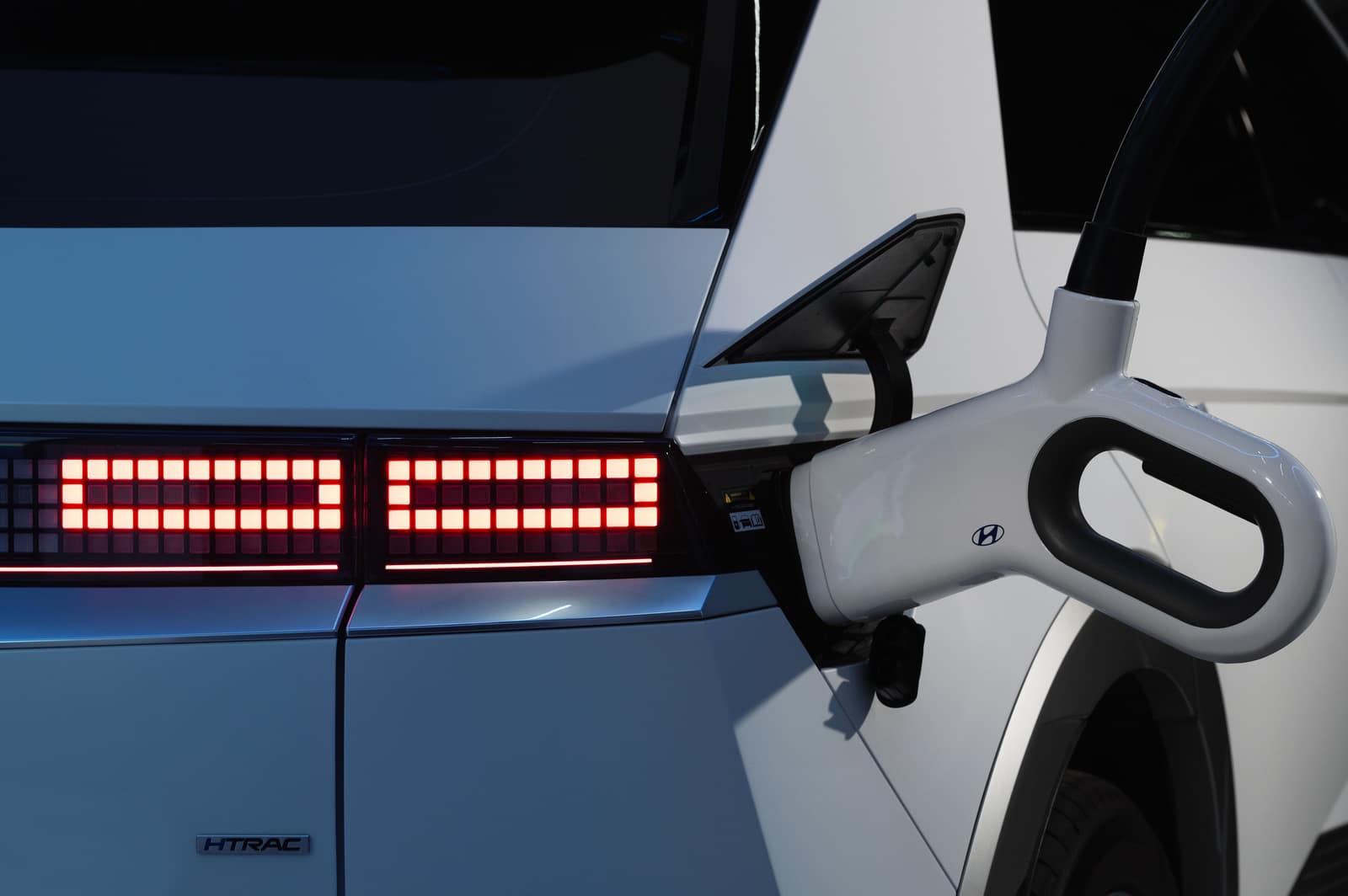
Best Ioniq 5 Setup
The best home charger for a Hyundai Ioniq 5
Ioniq 5 home charging without a garage: what the car actually accepts, which connector your model year has, and the gear that matches.
Top pick: Lectron Portable Level 2 Tesla (NACS) Charger (40A, NEMA 14-50)
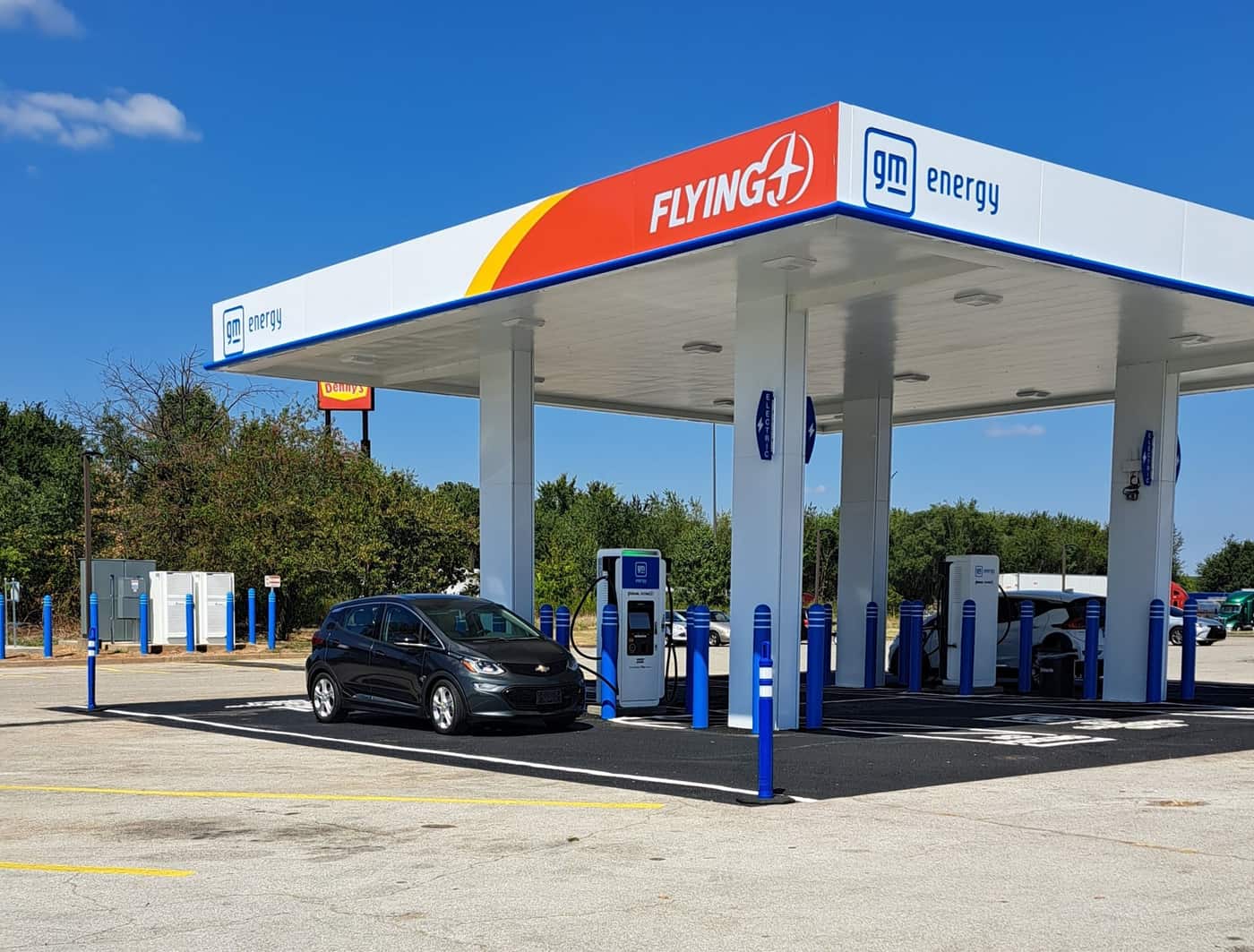
Best Bolt Setup
The best home charger for a Chevy Bolt
Bolt home charging for renters: why the included cord may be all you need, and the adapter that actually unlocks your building's chargers.
Top pick: A2Z EV J1772 to NACS Adapter, 80A
Guide
Working out the amp rating you need
A step-by-step method for sizing charger amperage to a real circuit, including how to find the breaker and what to do when you cannot.
Top pick: Grizzl-E Mini Connect Portable Charger

Best Level 1 Charger
The best Level 1 EV chargers
Level 1 chargers ranked for renters: 12 amps against 15 and the breaker that decides it, cable reach, connector and a safety listing you can check.
Top pick: Schumacher Electric SEV1670 Level 1 Portable EV Charger (12A, NEMA 5-15)

Guide
Is a Level 2 charger worth it if you rent?
A decision framework for Level 2 rather than a sales pitch: the two numbers that decide it, and the cases where Level 1 genuinely wins.
Top pick: Lectron Portable Level 1 J1772 Charger (15A, NEMA 5-15)