The best home charger for a Ford Mustang Mach-E
Ford gives you a charger. If you rent, it is probably the wrong one — and the cord you can use leaves a quarter of your outlet unused.
How this page is funded: the buy links below are affiliate links, and Renter Volt earns a commission on qualifying purchases at no cost to you. Nothing here was supplied by a manufacturer, and commission plays no part in the ranking — read the full disclosure. Picks are chosen from published specifications rather than hands-on testing; the method is written down so you can check it. Prices last verified October 27, 2026.
Ford's offer is "a charger and standard installation are on us when you purchase or lease a new Ford EV". That is a genuinely good deal, and for a renter it frequently buys nothing at all. The charger with the installation is the Ford Connected Charge Station, and Ford's own comparison table lists it as 48A, hardwired.
Hardwired is the one thing this site will never tell a tenant to do. It is an electrician, a 60 amp circuit and a permanent alteration to a building somebody else owns, and it stays on the wall when the lease ends. So if you rent, the free charger is usually a voucher you cannot spend.
What you can actually use, and what it is capped at
The other half of Ford's lineup is the Mobile Power Cord, and that one is a plug. Ford publishes it as 12A charging on a 120V outlet and 30A charging on a 240V NEMA 14-50 outlet. It goes in the trunk, it comes out at the end of the lease, and it needs nobody's permission.
The number to notice is the 30. A NEMA 14-50 sits on a 50 amp breaker and supports 40 amps continuously. Ford's cord asks for 30. That gap is the entire commercial question on this page, and it is worth doing the arithmetic rather than taking anyone's word for it.
amps × 240V ÷ 1000 = kW
NEMA 14-50 at its 40A continuous ceiling → 9.6 kW · Ford Mobile Power Cord at 30A → 7.2 kW · the same cord on a 30A dryer circuit → 24A → 5.8 kW
On a true NEMA 14-50 the Ford cord leaves about a quarter of the outlet's capacity on the table. On a dryer circuit it leaves none, because the circuit is the limit there, not the cord.
That last line matters more than the headline. If the outlet you can reach is a dryer circuit rather than a range or RV receptacle, buying a 40 amp charger changes nothing — the breaker caps you at 24 amps whatever the cord is rated for. Working out the amp rating you need turns your breaker into a charger spec, and how to identify your outlet is the step before that.
Ford's own numbers for the gap
Ford publishes both sides, which is unusually candid and saves anyone guessing. For the 2025 Mustang Mach-E it gives the plug-in route as an estimated 11.7 hours from 0% to 100%, averaging 22 miles per charging hour, and the wired-in route as an estimated 7.8 hours, averaging 33.3 miles per charging hour.
| Route | 0-100% | Average miles per charging hour | Can a renter use it? |
|---|---|---|---|
| 120V household socket | Not published | 3 miles | Yes |
| 240V plug-in (Mobile Power Cord, 30A) | 11.7 hours | 22 miles | Yes |
| 240V wired-in (Connected Charge Station, 48A) | 7.8 hours | 33.3 miles | No - hardwired |
Read the last column before the middle one. The fast row is the row you cannot have, and the honest comparison for a tenant is between the first two. Ford also states plainly that charging speed depends on "the charge station's amperage, your vehicle's onboard charger, and the size of wire and breaker in your installation" — which is the same three-way constraint every page on this site keeps running into.
So is a 40A charger worth buying?
Sometimes, and the condition is specific rather than general. Going from Ford's 30 amps to a 40 amp unit is a third more current, so it closes roughly a third of the distance between the two Ford rows above — not all of it, because the rest of that gap is the 48 amps you cannot reach on any plug.
- Worth it when you can reach a genuine NEMA 14-50 on a 50 amp breaker, you park for a limited window rather than all night, and the extra hour or so a night actually changes whether you leave full.
- Not worth it when the outlet is a 30 amp dryer circuit. The circuit caps you below what Ford's cord already does, so the upgrade buys nothing — the dryer outlet pages cover what that circuit can and cannot do.
- Not worth it when the car sits for ten or twelve hours anyway. If the overnight window already covers the day's driving, a faster charger finishes sooner and then waits. Is a Level 2 charger worth it if you rent? works through that honestly.
- Worth it for a reason that is not speed when the Ford cord's length does not reach, or when you would rather keep the bundled cord in the car as a travel spare and leave a second unit permanently where you park.
Reach is usually the bigger problem than amperage
In a carport or an uncovered lot the distance between the receptacle and the car's charge port is the thing that decides whether any of this works, and the Mach-E's port is on the driver's-side front wing rather than at the back. A cord that reaches the bumper and not the port is a cord that does not reach.
Measure it before you buy anything, with the car parked where it will actually be parked. If the shortfall is a few feet, an extension is a far cheaper answer than a second charger — and whether an EV extension cord is safe sets out the conditions under which that is a reasonable thing to do rather than a shortcut.
If your building has Tesla connectors on the wall
This is increasingly common in apartment complexes and it catches Mach-E owners out, because the hardware on the wall is NACS and the car is not. You do not need a charger for this case at all — the building's unit is doing the work and you are changing the shape on the end, which costs a fraction of what any charger does.
Check the direction carefully before ordering: you want a NACS-to-J1772 adapter, which goes onto the building's Tesla-shaped plug so your car can take it. The direction rule is the page to read first, because buying the correct part backwards is the most common mistake in this whole category.
How these were ranked
- It has to be a plug. Nothing hardwired, whatever Ford includes with the car. That rules out the Connected Charge Station for a tenant and it is not a close call.
- Current matched to a circuit you can actually reach, which means 40A on a genuine NEMA 14-50 and 24A on a dryer circuit. Nothing is ranked up for exceeding what the outlet can feed.
- Does it beat the cord you already own? Ford's Mobile Power Cord sets the bar here, not zero. A pick has to do something the bundled cord does not — more current, more reach, or a connector the cord cannot present.
- A published safety listing you can look up, cited on every pick rather than asserted.
- Reach, because on this car with this parking it decides more outcomes than amperage does.
Quick picks
Ranked, with the reasoning underneath. Tap any row to jump to that write-up; tap the price to check it on Amazon. Prices come from the live layer, never from this page.
| # | Product | Best for | Type | Price |
|---|---|---|---|---|
| 1 | 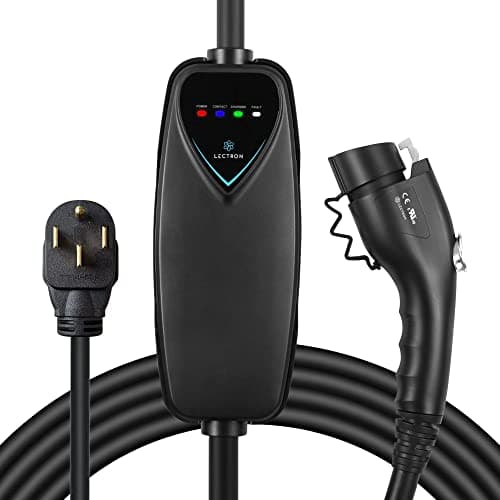 Lectron Portable Level 2 J1772 Charger (40A, NEMA 14-50)The plainest answer to a NEMA 14-50 outlet you can reach: 40 amps, a plug on the end, and nothing screwed to a wall you do not own. | A reachable 14-50 outlet | Plug-in Level 2 EVSE | |
| 2 | 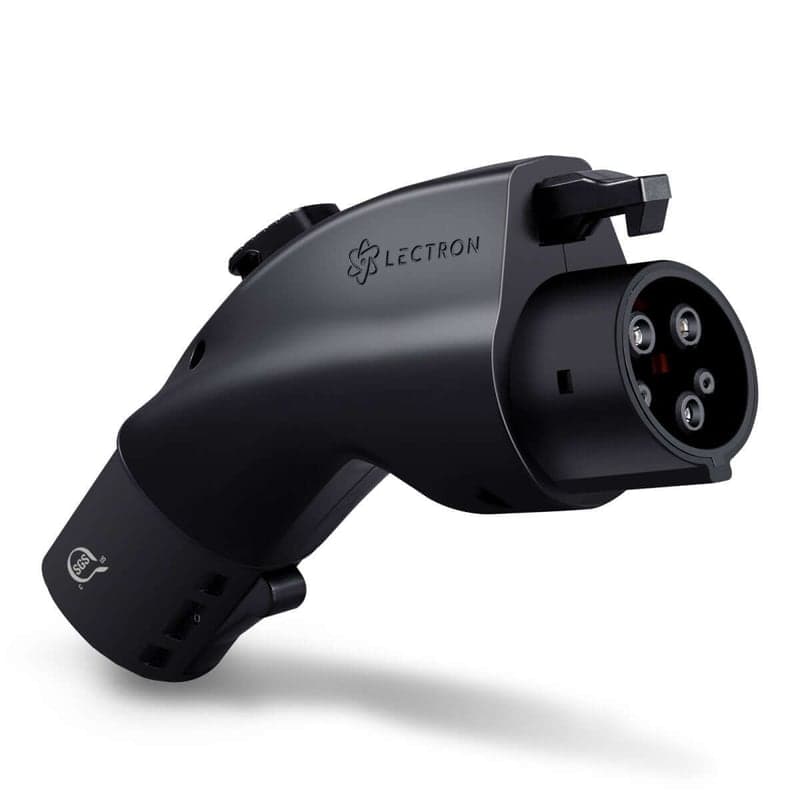 Lectron Tesla (NACS) to J1772 Adapter, 48AThe adapter a J1772 car needs to use a Tesla wall, destination or mobile connector — which is the direction many apartment buildings have already installed. | A J1772 car at a Tesla cable | AC charging adapter | Check price#ad |
| 3 | 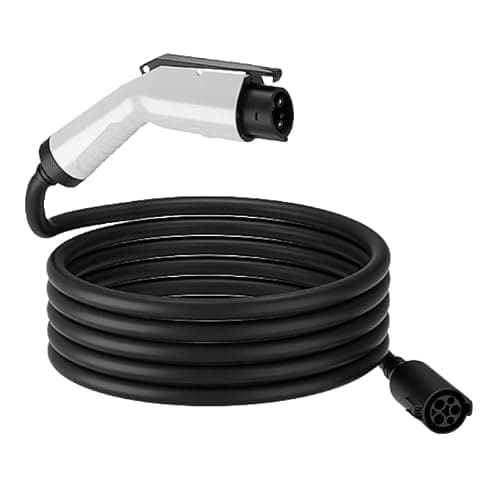 A2Z EV J1772 to J1772 Extension Cord, 16 ftA purpose-built EV extension on the car side of the charger — the correct place to add length — and the only one here whose maker publishes the code caveat that comes with it. | A charger that will not reach | J1772 extension cable | |
| 4 | 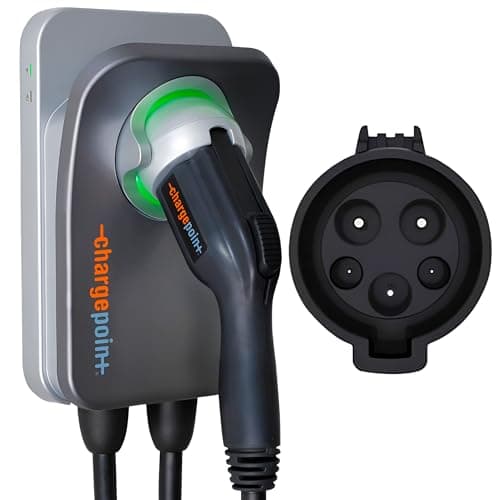 ChargePoint Home Flex Level 2 EV Charger (40A, NEMA 14-50 plug)A plug-in 40 amp smart charger whose app runs both this unit and ChargePoint's public network, which is the one thing here the cheaper units cannot match. | One app for home and public | Plug-in smart EVSE | |
| 5 | 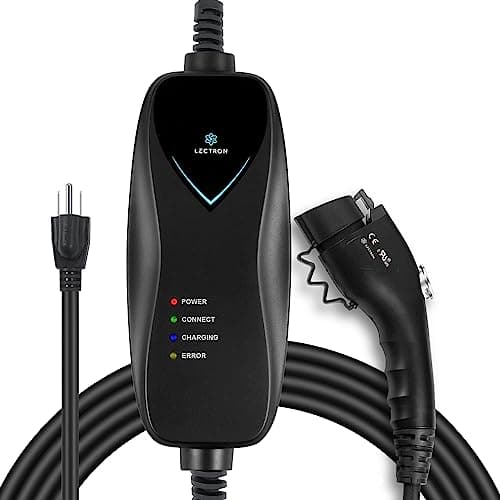 Lectron Portable Level 1 J1772 Charger (15A, NEMA 5-15)The unglamorous answer that covers most commutes: an ordinary 120V socket, overnight, and no conversation with anybody about electrical work. | An ordinary wall socket | Level 1 EVSE |
#1 · A reachable 14-50 outlet
Lectron Portable Level 2 J1772 Charger (40A, NEMA 14-50)
The plainest answer to a NEMA 14-50 outlet you can reach: 40 amps, a plug on the end, and nothing screwed to a wall you do not own.
| Input | 240V, 40A maximumsource |
|---|---|
| Output power | Up to 9.6 kWsource |
| Cable length | 16 ftsource |
| Plug / connector | NEMA 14-50 plug, J1772 connectorsource |
| Certification | UL 2594 / UL 2231 certifiedsource |
| Manufacturer charge-rate claim | Roughly 30 miles of range per hour of chargingsource |
What those numbers mean
9.6 kW is the ceiling this unit can deliver, not what your car will take. A vehicle with a 7.2 kW onboard charger draws 7.2 kW from it and no more, and that is a car limitation no charger fixes.
The 16 ft cable is the number to check before anything else. Measure from the outlet to where your charge port sits when the car is parked as it will actually be parked, not as you would like to park it. Sixteen feet disappears faster than people expect once it has to route around a wall.
A 40 amp unit needs a 50 amp circuit behind the outlet to run at 40 amps continuously. If the outlet is on a smaller breaker, the answer is a lower-amperage charger, not this one turned down.
What it does well
- Plugs in and unplugs — it leaves with you at the end of the lease
- UL 2594 and UL 2231 certified, the two standards that matter for EVSE
- 40 amps covers the fastest charging any renter-reachable outlet realistically supports
What it does not
- 16 ft of cable is short for a parking space that is not directly beside the outlet
- No amperage adjustment, so it is the wrong unit for a 30 amp circuit
Skip this one if: Your only 240V outlet is a 30 amp dryer receptacle. This unit expects a 50 amp circuit behind a NEMA 14-50, and derating it is not an option it offers.
#ad · how this is funded · price as of October 27, 2026
#2 · A J1772 car at a Tesla cable
Lectron Tesla (NACS) to J1772 Adapter, 48A
The adapter a J1772 car needs to use a Tesla wall, destination or mobile connector — which is the direction many apartment buildings have already installed.
| Rating | Up to 48A / 240V (11.5 kW)source |
|---|---|
| Direction | Tesla (NACS) charging source into a J1772 vehicle portsource |
| Compatibility | Tesla High Powered Wall Connectors, all generations of Destination Charger, and Mobile Connectorssource |
| Charging type | AC Level 1 and Level 2 only — not compatible with Superchargerssource |
| Certification | SGS certified to UL 2251source |
What those numbers mean
Get the direction right before the brand. This adapter goes on a Tesla-shaped plug so a J1772 car can take it. If you drive a Tesla and the building's charger is J1772, you need the opposite adapter and this one will not physically fit.
The 48 amp rating is the adapter's ceiling. It does not raise anything: the slowest link in the chain — station, adapter, cable, car — sets the speed.
AC only, and that is a property of the adapter rather than a limitation to work around. Superchargers are DC and use an entirely different UL standard.
What it does well
- Rated to 48A, above what any Tesla AC source will deliver, so the adapter is never the bottleneck
- Certified to UL 2251, the standard written for charging couplers
- Turns a building's existing Tesla destination chargers into infrastructure your J1772 car can use
What it does not
- AC only, so it does nothing at a Supercharger
- Small enough to walk off from a shared parking structure
Skip this one if: You drive a Tesla. This is the wrong direction — you want a J1772-to-NACS adapter instead, and buying this one is the most common mistake in the category.
#ad · how this is funded · price as of October 27, 2026
#3 · A charger that will not reach
A2Z EV J1772 to J1772 Extension Cord, 16 ft
A purpose-built EV extension on the car side of the charger — the correct place to add length — and the only one here whose maker publishes the code caveat that comes with it.
| Rating | 48A, AC Level 1 and Level 2source |
|---|---|
| Length | 16 ft / 5 msource |
| Compatibility | J1772 EV charging station into a J1772 / CCS1 vehiclesource |
| Component certification | UL-certified cable (E341631), UL 2251 connectors, UL 62 cabling; CE on the connector, FCC (EMI)source |
| Assembled-unit listing | Not UL Listed as an assembled unit — the manufacturer states an end-product category for EV extension cables is still being finalizedsource |
| Manufacturer's recommended use | Portable, occasional or emergency use; NEC Article 625 generally expects the cable to be integral to the station for permanent installationssource |
| Warranty | 12 months against manufacturing defectssource |
What those numbers mean
Extending on the J1772 side is safer than extending on the wall side, because the EVSE is still the thing controlling current and it still sits between the outlet and the extension.
Read the last three specification rows together, because they are the honest part. The components carry UL certification but the assembled cable is not UL Listed, and the manufacturer says so plainly rather than letting the component certifications imply something they do not. It also tells you NEC Article 625 expects a charging cable to be integral to the station for a permanent installation, and that this cord is for portable or occasional use. No other extension we looked at publishes any of that.
48A is well above the 40A ceiling of plug-in Level 2 charging, so the cable is never the constraint. Used at 24 amps on a shared dryer circuit it has a great deal of margin, which is exactly where you want to be.
What it does well
- Built for EV charging rather than a household cord pressed into the job
- 48A rating leaves real margin at any renter-reachable current
- The manufacturer publishes the UL-listing status and the NEC caveat instead of glossing over them
- Designed and tested in North America, with a stated 12-month warranty
What it does not
- Adds two contact interfaces to a circuit that runs for hours at high current
- Not UL Listed as an assembled unit — a real distinction, even though its components are certified
- 16 ft, so it is a shorter reach than some discontinued alternatives offered
- Not a substitute for a charger with a long enough cable in the first place
Skip this one if: You have not yet bought the charger. Buy a unit with a 23 or 25 ft cable and skip the extension entirely — one continuous cable always beats two joined ones.
#ad · how this is funded · price as of October 27, 2026
#4 · One app for home and public
ChargePoint Home Flex Level 2 EV Charger (40A, NEMA 14-50 plug)
A plug-in 40 amp smart charger whose app runs both this unit and ChargePoint's public network, which is the one thing here the cheaper units cannot match.
| Amperage | 16 to 50A flexible amperage across the range; the plug-in version delivers up to 40Asource |
|---|---|
| Circuit required (plug-in) | A circuit rated 40A or 50A. ChargePoint states the hardwired version is required for all other circuit ratingssource |
| Cable length | 23 ftsource |
| Plug / connector | NEMA 14-50 plug (a 6-50 version is also sold), J1772 or NACS connectorsource |
| Certification | UL Listed and ENERGY STAR certifiedsource |
| Warranty | 3 yearssource |
| Outdoor installation | ChargePoint requires hardwiring the station or using a weatherproof receptacle for outdoor installationsource |
What those numbers mean
The 50 amp headline belongs to the hardwired version. On a plug it delivers up to 40 amps, which is the ceiling a 50 amp circuit permits continuously and the same ceiling every plug-in charger shares.
The circuit requirement is stricter than it first looks. ChargePoint states the plug-in version needs a circuit rated 40 or 50 amps and that the hardwired version is required for anything else, so a smaller circuit is not something you can simply dial down to.
The app is the real differentiator. It handles this charger and ChargePoint's public stations from one place, which is worth more to somebody who charges partly away from home than to somebody with a driveway and a fixed routine.
What it does well
- One app for this charger and ChargePoint's public network
- Amperage is selected in the app to match the breaker feeding the outlet
- UL Listed and ENERGY STAR certified, with a three-year warranty
- Sold with a J1772 or a NACS connector, and a NACS cable conversion kit exists for units already owned
What it does not
- The plug-in version needs a circuit rated 40 or 50 amps; ChargePoint requires hardwiring for anything smaller
- 23 ft of cable, shorter than some rivals at this price
- Outdoors, ChargePoint asks for hardwiring or a weatherproof receptacle rather than a bare plug
- It sits at the top of the plug-in price bracket
Skip this one if: Your 240V outlet is on a circuit smaller than 40 amps, or you never use public charging and only want an overnight timer. In both cases you would be paying for the part of this charger you cannot use.
#5 · An ordinary wall socket
Lectron Portable Level 1 J1772 Charger (15A, NEMA 5-15)
The unglamorous answer that covers most commutes: an ordinary 120V socket, overnight, and no conversation with anybody about electrical work.
| Input | 120V, 15A maximumsource |
|---|---|
| Output power | 1.8 kWsource |
| Cable length | 16 ftsource |
| Plug / connector | NEMA 5-15 plug, J1772 connectorsource |
| Certification | UL 2594 / UL 2231 certified, and separately described as ETL-certified; no certificate number publishedsource |
| Ingress rating | IP65 weather-resistant, stated in the specification textsource |
| Manufacturer charge-rate claim | 45+ miles of range overnight; 3-5 miles of range per hoursource |
What those numbers mean
1.8 kW sounds trivial next to 9.6 kW, and for a road trip it is. For a commute it usually is not: the average US driver covers well under 45 miles a day, and this replaces that overnight while the car sits anyway.
The honest ceiling is the circuit behind the socket, not the cable. This unit draws 15 amps for hours, which a 20 amp circuit supports continuously and a 15 amp circuit does not — so check the breaker before the first overnight session, and on a 15 amp circuit choose a 12 amp unit instead.
This is the only category of EV charging that is genuinely invisible to a landlord. It draws less than a hair dryer and plugs into a receptacle that already exists.
What it does well
- Works with a socket that already exists, everywhere, with no permission needed
- UL 2594 and UL 2231 certified rather than a generic cordset
- Cheapest possible entry into home charging, by a wide margin
What it does not
- 1.8 kW will not recover a long driving day overnight
- 16 ft cable, and the nearest 120V socket is often not the nearest thing to the car
- Its 15 amp draw needs a 20 amp circuit behind the socket; an ordinary 15 amp circuit supports 12 amps continuously
Skip this one if: You regularly drive more than about 45 miles a day. Level 1 will fall a little further behind every night and you will spend the difference at public chargers.
Level 1, and when it is genuinely enough
Ford's own guidance is that Level 1 is "best for anyone that drives less than 20 miles per day", and its comparison table puts the Mach-E at about 3 miles per charging hour on a 120V socket. Twelve hours parked is therefore something like 36 miles back, which covers a lot of commutes and covers no road trips at all.
That is a real threshold rather than a marketing one, and it is worth testing against your own week before spending anything. The cord Ford supplies already does 120V at 12A, so for most Mach-E owners the Level 1 experiment costs nothing but a week of paying attention. Level 1 vs Level 2 for someone without a garage has the arithmetic.
The Level 1 pick below exists for the case where the bundled cord cannot live where you park — a second one that stays at the parking space, or a replacement if yours has walked off.
What we could not evaluate
The car, and the cord Ford ships with it. Every figure above about the Mach-E and about Ford's own hardware comes from Ford's published material rather than from a test of ours, and the charger and adapter specifications come from each manufacturer's documentation, cited on every pick. Ford does not publish the car's onboard charger rating or its charge port connector type on the pages above, so neither is claimed here — open the charge door and look, and which adapter does your car need has the shapes side by side. The method is written down, including what it cannot tell you.
Questions people actually ask
Does the Ford Mustang Mach-E come with a charger?
Ford offers a charger and standard installation with a new Ford EV, and separately sells the Mobile Power Cord and the Connected Charge Station. The catch for a renter is that the Connected Charge Station is hardwired, so the installation half of that offer is not something a tenant can accept.
How many amps is the Ford Mobile Power Cord?
Ford publishes it as 12A on a 120V outlet and 30A on a 240V NEMA 14-50 outlet. That is below the 40 amps a NEMA 14-50 supports continuously, which is why a 40A plug-in charger is a real upgrade on that specific outlet.
How long does a Mustang Mach-E take to charge at home?
Ford gives an estimated 11.7 hours from 0% to 100% for the 2025 car on the plug-in route, averaging 22 miles per charging hour, and 7.8 hours on the hardwired 48A route. A renter is realistically looking at the first figure or a little better.
Is it worth buying a 40 amp charger for a Mach-E?
Only if you can reach a real NEMA 14-50 on a 50 amp breaker. On a 30 amp dryer circuit the breaker caps you at 24 amps, below what Ford's own cord already delivers, so the upgrade buys nothing at all.
Can I charge a Mustang Mach-E from a normal wall outlet?
Yes. Ford's table puts the Mach-E at about 3 miles per charging hour at 120V and says Level 1 suits anyone driving under 20 miles a day. The bundled cord already does it, so it costs nothing to test for a week before spending.
Do I need an adapter to use my apartment's Tesla chargers?
If the connector on the wall is NACS and your Mach-E has the J1772 inlet, yes - a NACS-to-J1772 adapter. Check the direction before ordering, because the opposite part looks similar and will not fit.
Can I use the free Ford charger if I rent?
Usually not. Ford lists the Connected Charge Station as hardwired, which means an electrician, a dedicated circuit and a permanent change to a building you do not own. The Mobile Power Cord is the part of Ford's lineup a tenant can actually put into service.
Sources
Every figure on this page traces to one of these. If a number here disagrees with the manufacturer, the manufacturer is right and we want to know — tell us.
- Ford — What Ford home charger do I need? (Mobile Power Cord 12A/30A, Connected Charge Station 48A hardwired, miles per charging hour by vehicle)
- Ford — Mustang Mach-E charging guide (plug-in vs wired-in 240V charge times for the 2025 car)
- Ford — Mustang Mach-E: Ford Power Promise, complimentary home charger and standard installation
- Lectron — Portable Level 2 J1772 EV Charger, 240V / 40A / NEMA 14-50 (product page)
- Lectron — Tesla (NACS) to J1772 EV Adapter, 240V / 48A (product page)
- A2Z EV — J1772 to J1772 Extension Cord, AC, 48A / 16 ft (product page)
- ChargePoint — Home Flex home charger: configurations, amperage and certifications
- Lectron — Portable Level 1 J1772 EV Charger, 120V / 15A / NEMA 5-15 (product page)
- NFPA — NFPA 70, National Electrical Code (free public access)
- U.S. DOE Alternative Fuels Data Center — Electric vehicle charging levels and speeds
Read next
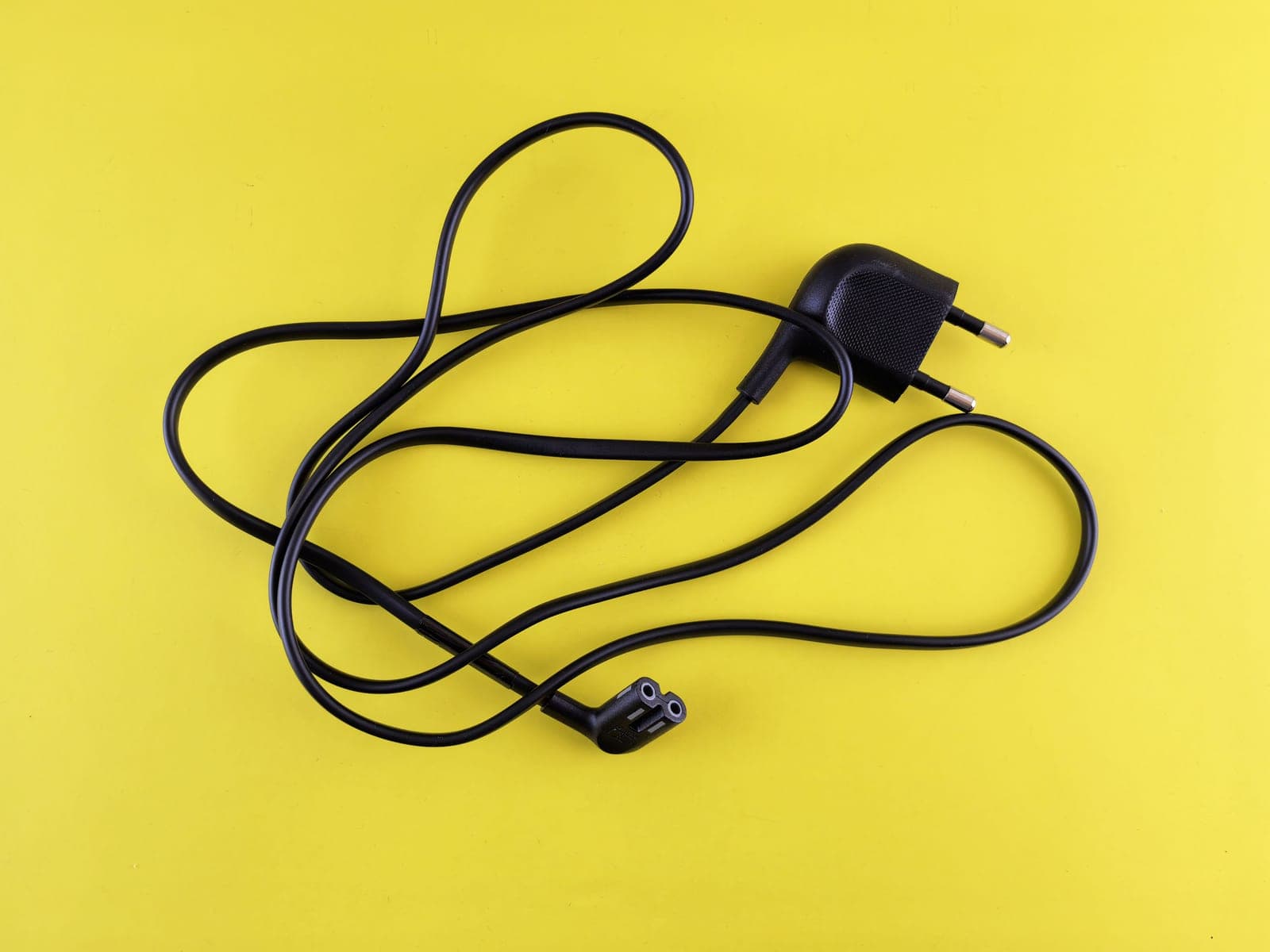
Best Portable Charger
Best portable EV chargers
The portable charger section: plug-in Level 1 and Level 2 units ranked by the outlet you can actually reach, with every spec cited.
Top pick: Grizzl-E Mini Connect Portable Charger
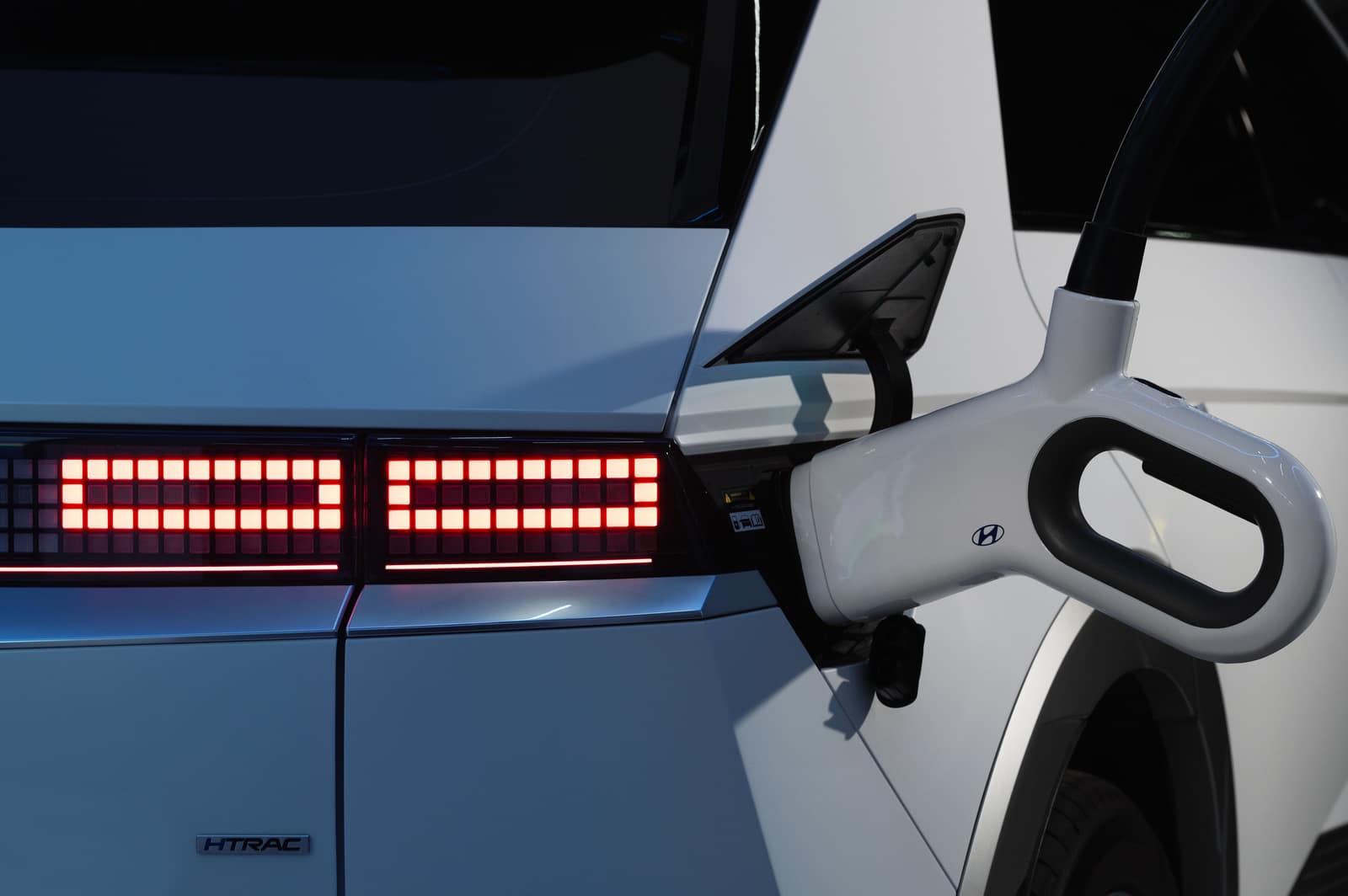
Best Ioniq 5 Setup
The best home charger for a Hyundai Ioniq 5
Ioniq 5 home charging without a garage: what the car actually accepts, which connector your model year has, and the gear that matches.
Top pick: Lectron Portable Level 2 Tesla (NACS) Charger (40A, NEMA 14-50)
Best EV6 Setup
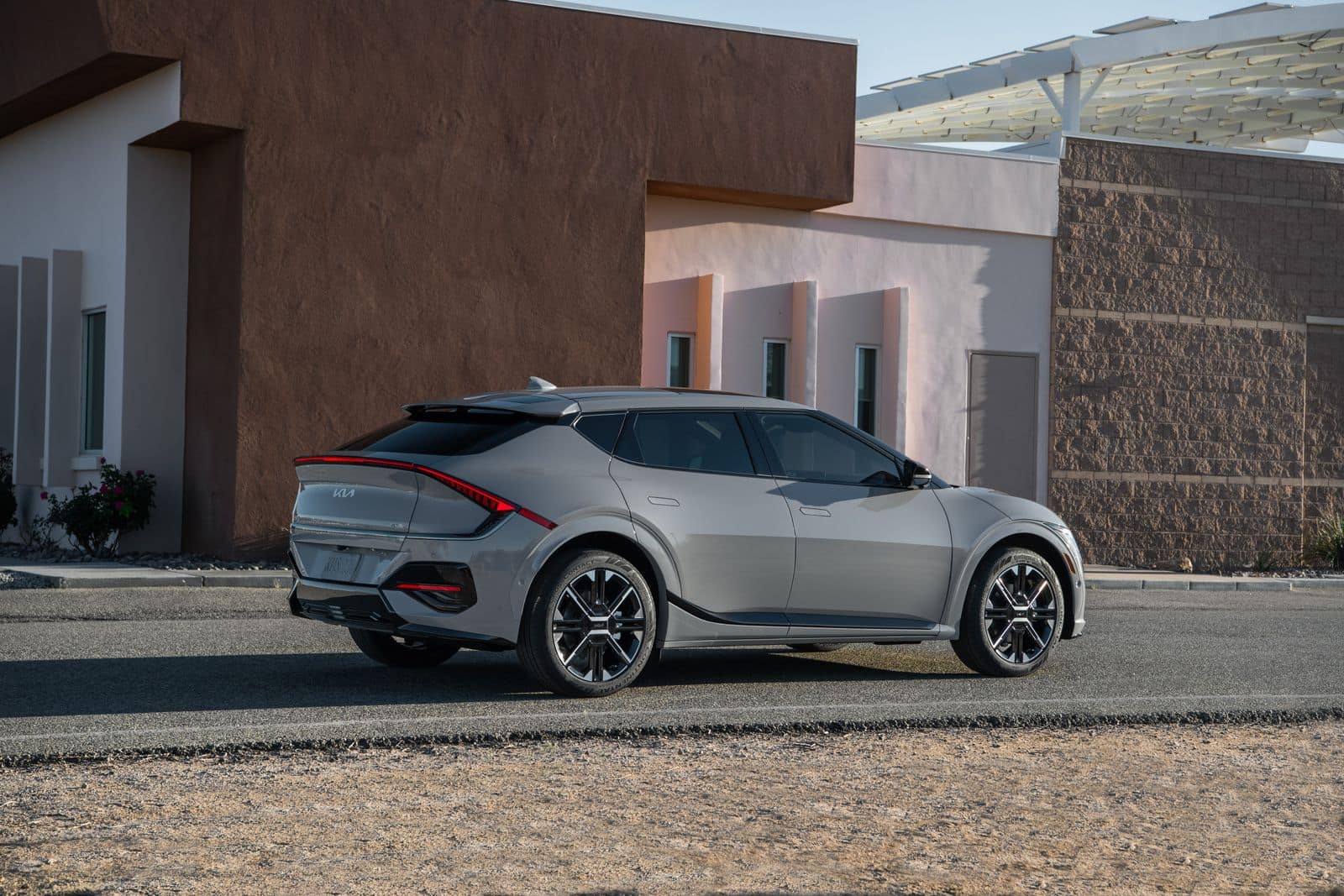
The best home charger for a Kia EV6
EV6 home charging without a garage: the Level 1 number Kia publishes, what the 2026 NACS port changed, and the gear that matches your outlet.
Top pick: Lectron Portable Level 2 Tesla (NACS) Charger (40A, NEMA 14-50)
Best Plug-In Level 2
Hardwired vs plug-in EV charger
What hardwiring actually buys you, what it costs you, and why a renter's answer to this question is decided before the comparison starts.
Top pick: Grizzl-E Mini Connect Portable Charger
Guide
Working out the amp rating you need
A step-by-step method for sizing charger amperage to a real circuit, including how to find the breaker and what to do when you cannot.
Top pick: Grizzl-E Mini Connect Portable Charger

Guide
Which adapter does your car need?
A vehicle-first method for choosing an adapter, and an honest account of why dated compatibility lists are the only trustworthy kind.
Top pick: Lectron Tesla (NACS) to J1772 Adapter, 48A