Hardwired vs plug-in EV charger
The comparison every buying guide runs, answered for somebody who does not own the wall.
How this page is funded: the buy links below are affiliate links, and Renter Volt earns a commission on qualifying purchases at no cost to you. Nothing here was supplied by a manufacturer, and commission plays no part in the ranking — read the full disclosure. Picks are chosen from published specifications rather than hands-on testing; the method is written down so you can check it. Prices last verified October 27, 2026.
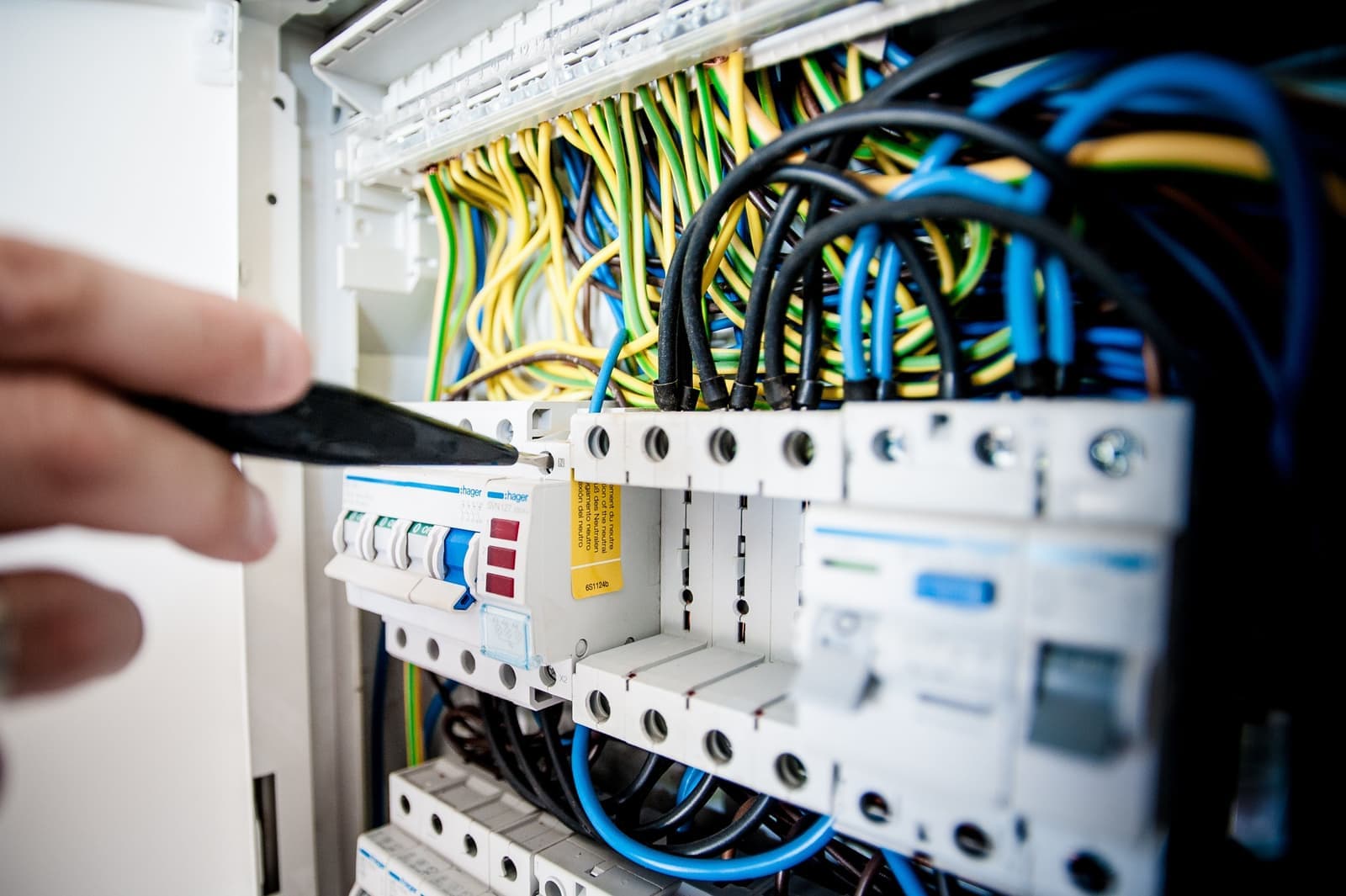
If you rent, this comparison is already decided: buy the plug-in. Hardwiring is an electrical alteration to somebody else's building, it needs a licensed electrician and usually a permit, and the unit stays on the wall when your lease ends. That is not a close call — it is a different product for a different person.
It is still worth understanding what hardwiring buys, because the specification sheets are written as though everybody is choosing freely, and the headline numbers do not mean what they appear to mean once a plug is involved.
The comparison, honestly
| Hardwired | Plug-in (NEMA 14-50) | |
|---|---|---|
| Maximum continuous current | Up to 48A on a 60A circuit | 40A — the ceiling a 50A circuit allows |
| Maximum power | About 11.5 kW | About 9.6 kW |
| Needs an electrician | Yes, essentially always | No — it is an appliance |
| Needs a permit | Usually | No |
| Landlord approval | Required, it alters the building | Not required to use an existing outlet |
| Comes with you when you move | No | Yes |
| Works outdoors | Yes, with a rated enclosure | Yes, with a rated enclosure |
| Wet-location rules | Simpler — no plug and receptacle exposed | Needs a sound, ideally covered receptacle |
Read the first two rows together with the third. The extra 1.9 kW that hardwiring buys is real, and it is bought with an electrician, a permit and a permanent alteration. For a homeowner staying put, that can be worth it. For a renter it is the whole cost of the project against roughly twenty percent more speed on a charge that finishes overnight either way.
The 48-amp number, and why it disappears on a plug
Several chargers are marketed at 48 amps. That figure is almost always the hardwired configuration. Put the same unit on a NEMA 14-50 plug and it becomes a 40 amp charger, because a 50 amp circuit permits 40 amps of continuous load under the National Electrical Code's 80% rule, and overnight charging is continuous by any definition.
50A circuit × 0.8 = 40A continuous; 240V × 40A ÷ 1000 = 9.6 kW
9.6 kW over a 12-hour night is about 115 kWh — far more than any car needs.
Which is the practical answer to the whole comparison: both configurations finish before morning. How long charging takes works the timing through.
What hardwiring is genuinely better at
- Speed, by about 20%, if your car can accept more than 9.6 kW. Many cannot, which erases the advantage entirely — check your vehicle's onboard charger rating before paying for it.
- Wet locations. No plug and receptacle sitting exposed to weather is genuinely simpler outdoors, and some jurisdictions prefer it.
- Tidiness. No cord to the wall, nothing to be unplugged by someone else.
- Circuits above 50 amps. A 60A circuit is hardwired-only territory, and it is the only way to reach 48A continuous.
Ford is the clearest live example of why this matters to a tenant. It offers a charger and standard installation with a new EV, but the unit that comes with the installation is its 48A Connected Charge Station, which Ford lists as hardwired — so the free charger is frequently a voucher a renter cannot spend. The Mustang Mach-E charger page works through what that owner can actually use instead.
What plug-in is genuinely better at
- It is yours. It unplugs, goes in the car, and gets installed at the next place in about four seconds.
- No electrician, no permit, no permission — provided a suitable outlet already exists. That is the entire premise of this site.
- It is testable. If the receptacle turns out to be poor, you find out with a warm plug rather than after the wall is closed up.
- It travels. A relative's dryer outlet, an RV pad, a friend's driveway — a plug-in unit works at all of them.
- It is replaceable. A failed plug-in unit is swapped in minutes; a failed hardwired one is another electrician visit.
Quick picks
Ranked, with the reasoning underneath. Tap any row to jump to that write-up; tap the price to check it on Amazon. Prices come from the live layer, never from this page.
| # | Product | Best for | Type | Price |
|---|---|---|---|---|
| 1 | 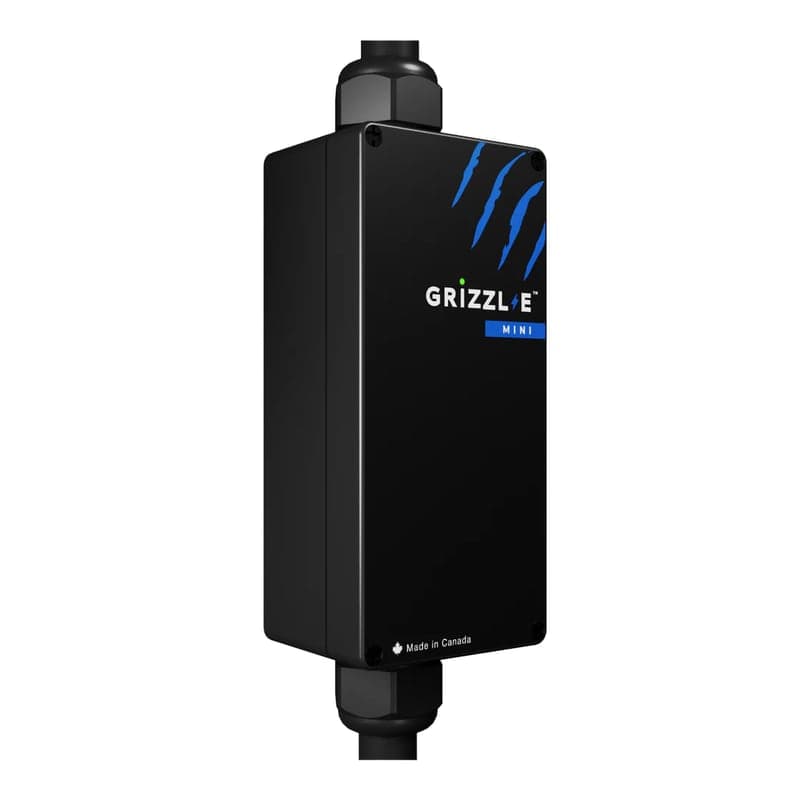 Grizzl-E Mini Connect Portable ChargerAdjustable from 7 to 40 amps and shipped with four plug adapters, which is the closest thing to a unit that fits whatever outlet you turn out to have. Grizzl-E Mini Connect Portable ChargerAdjustable from 7 to 40 amps and shipped with four plug adapters, which is the closest thing to a unit that fits whatever outlet you turn out to have. | Not knowing your outlet yet | Adjustable Level 1 and 2 EVSE | Check price#ad |
| 2 | 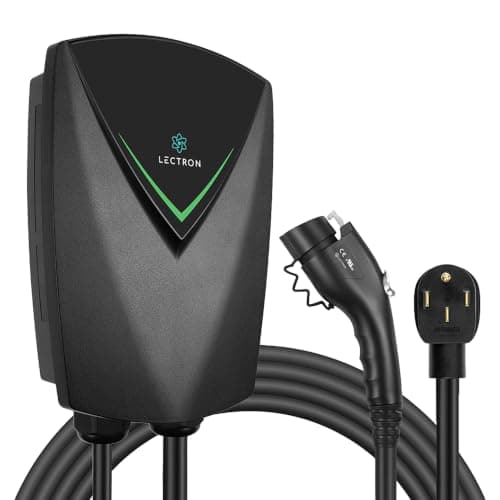 Lectron NEXUS Level 2 Charger (NEMA 14-50 plug)A 23 ft cable on a plug-in 40 amp unit, which is the specification that decides whether a parking space two bays from the outlet works at all. Lectron NEXUS Level 2 Charger (NEMA 14-50 plug)A 23 ft cable on a plug-in 40 amp unit, which is the specification that decides whether a parking space two bays from the outlet works at all. | Long cable reach | Plug-in Level 2 EVSE | |
| 3 | 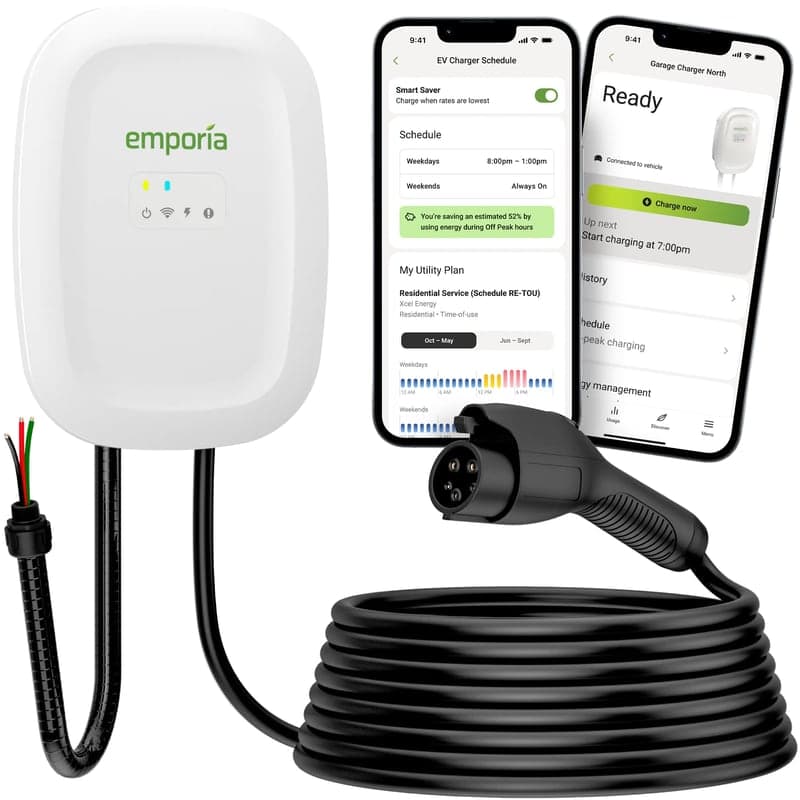 Emporia Classic Level 2 EV Charger (NEMA 14-50 plug)A plug-in smart charger whose scheduling genuinely pays for itself if your utility bills you differently overnight. Emporia Classic Level 2 EV Charger (NEMA 14-50 plug)A plug-in smart charger whose scheduling genuinely pays for itself if your utility bills you differently overnight. | Charging on a schedule | Plug-in smart EVSE | Check price#ad |
#1 · Not knowing your outlet yet
Grizzl-E Mini Connect Portable Charger
Adjustable from 7 to 40 amps and shipped with four plug adapters, which is the closest thing to a unit that fits whatever outlet you turn out to have.
| Adjustable current | 7A to 40A (9.6 kW maximum)source |
|---|---|
| Voltage | Automatically detects 120V (Level 1) or 240V (Level 2)source |
| Cable length | 25 ft (7.6 m)source |
| Plug and adapters | NEMA 14-50 plug plus four included electrical adapterssource |
| Connector | J1772 or Tesla (NACS) versionssource |
| Enclosure | UL Type 4 / IP67 ratedsource |
| Certification | UL tested and certified, Energy Star certifiedsource |
What those numbers mean
The adjustable current is the feature that matters to a renter, and it is not a convenience. A 30 amp dryer circuit legally supports 24 amps of continuous EV load; a unit that can be set to 24 amps can use that circuit, and a fixed 40 amp unit cannot.
25 ft of cable is nine feet more than the common 16 ft, and nine feet is frequently the difference between reaching the car and not.
IP67 and a UL Type 4 enclosure describe the unit's own weather tolerance. They say nothing about the outlet it plugs into, which is usually the part that is not weather-rated.
What it does well
- 7-40A adjustment means one unit fits a 15, 20, 30 or 50 amp circuit
- 25 ft cable is among the longest on a portable unit
- Four plug adapters included, so an outlet change does not mean a new charger
- Available with either a J1772 or a NACS connector
What it does not
- Costs meaningfully more than a fixed-amperage unit that does one job
- The bundled adapters make it easy to plug into a circuit you have not actually checked
Skip this one if: You know exactly which outlet you have, it is not changing, and you would rather put the money into a longer cable than into adjustability you will set once and never touch.
#ad · how this is funded · price as of October 27, 2026
#2 · Long cable reach
Lectron NEXUS Level 2 Charger (NEMA 14-50 plug)
A 23 ft cable on a plug-in 40 amp unit, which is the specification that decides whether a parking space two bays from the outlet works at all.
| Input | 240V, 40A maximumsource |
|---|---|
| Output power | 9.6 kWsource |
| Cable length | 23 ftsource |
| Plug / connector | NEMA 14-50 plug, J1772 / CCS connectorsource |
| Enclosure | IP66-rated automotive-grade housingsource |
| Certification | UL 2594 / UL 2231 / UL 2251 / UL 817 certifiedsource |
| Manufacturer charge-rate claim | Up to 38 miles of range per hoursource |
What those numbers mean
23 ft against the 16 ft of the cheaper Lectron unit is the whole argument for this one. Cable length is the specification renters underestimate most and the one an extension cable is the worst way to fix.
IP66 means the housing tolerates jets of water. Read that as permission to leave the unit outdoors, not as permission to leave the outlet it plugs into exposed.
The manufacturer's 38 miles per hour figure assumes a car that can accept the full 9.6 kW. Halve your car's onboard charger rating and you halve that number.
What it does well
- 23 ft cable, seven feet more than the common 16 ft portable
- IP66 housing rated for sustained outdoor exposure
- Four UL listings including UL 2251 for the coupler
What it does not
- Physically larger and heavier to move between parking spots than a bare portable
- Fixed 40 amps, so it cannot step down onto a 30 amp dryer circuit
Skip this one if: Your outlet is within a few feet of the charge port. You would be paying for reach you do not need and carrying the extra bulk for nothing.
#ad · how this is funded · price as of October 27, 2026
#3 · Charging on a schedule
Emporia Classic Level 2 EV Charger (NEMA 14-50 plug)
A plug-in smart charger whose scheduling genuinely pays for itself if your utility bills you differently overnight.
| Maximum output | 9.6 kW (40A) with a NEMA 14-50 outlet; 11.5 kW (48A) hardwiredsource |
|---|---|
| Connector | J1772 or NACS (Tesla) modelssource |
| Enclosure | Type 4 enclosure, watertight, indoor or outdoorsource |
| Certification | UL certified and GFCI protectedsource |
| Scheduling | Off-peak scheduling and real-time charge-rate monitoring in the Emporia appsource |
What those numbers mean
Note the honest asymmetry in the first row: the 48 amp headline number is the hardwired figure. On a NEMA 14-50 plug — the only version a renter should be looking at — it is a 40 amp charger. That is not a downgrade, it is what the plug is rated for.
The scheduling is the actual reason to pay more here. If you are on a time-of-use rate, charging on a timer is worth real money over the length of a lease.
It is a wall-mount form factor with a plug on it. You can hang it on a hook or leave it in the trunk; nothing about it requires a bracket screwed into the landlord's drywall.
What it does well
- Scheduling and energy monitoring that are useful rather than decorative
- Type 4 watertight enclosure rated for outdoor use
- Sold with either a J1772 or a NACS connector
- The plug-in version needs no electrician and comes off the wall when you move
What it does not
- The advertised 48 amps is hardwired-only; the plug-in version is 40 amps
- Scheduling needs Wi-Fi, which is not a given in a detached carport or a parking structure
Skip this one if: Your electricity costs the same at every hour and there is no Wi-Fi where you park. You would be paying for a feature set you cannot reach or use.
#ad · how this is funded · price as of October 27, 2026
The GFCI wrinkle worth knowing about
Modern code generally requires ground-fault protection on a 240V receptacle in many locations. EV charging equipment has its own ground-fault detection built in, and the two occasionally interact and produce nuisance trips. It is annoying rather than dangerous, and it is more common with plug-in installations for the obvious reason that hardwired units have no receptacle to protect.
If it happens repeatedly, it is worth reporting to the building rather than assuming your charger is faulty — see why the breaker keeps tripping, which works through the diagnosis in order.
If you own the place and are genuinely choosing
Then the question is simpler than the internet makes it: does your car accept more than 9.6 kW, and do you regularly need to recover more than about 300 miles overnight? If both answers are yes, hardwire it. If either is no — and for most drivers both are no — the plug-in version of the same charger does the identical job, costs less to put in, and can be taken to the next house.
The one case where we would push harder toward hardwiring is a permanently exposed outdoor location with no sheltered receptacle position. There, removing the plug-and-socket interface from the weather is a real durability argument rather than a speed one.
What we did not evaluate
Installation cost, because it is entirely local — the electrician's rate, the panel's spare capacity, and the distance from panel to parking all dominate it, and any national figure we published would be wrong for nearly everyone. We also have not installed either configuration; the comparison above is drawn from published manufacturer specifications and the code rules that govern both. The method is written down.
Questions people actually ask
Is a hardwired EV charger better than a plug-in one?
Only if you own the building and your car can accept more than 9.6 kW. Hardwiring allows up to 48A continuous against a plug-in ceiling of 40A, but it needs an electrician, usually a permit, and it stays on the wall when you leave.
Can a renter hardwire an EV charger?
Realistically no. Hardwiring alters the building's electrical system, needs a licensed electrician and normally the owner's permission, and the unit does not come with you. A plug-in charger on an existing outlet is an appliance and needs none of that.
Why does my 48 amp charger only deliver 40 amps?
Because it is plugged in rather than hardwired. A NEMA 14-50 sits on a 50 amp circuit, and the continuous-load rule caps that at 40 amps. The 48A figure describes the hardwired configuration of the same unit.
Is plug-in charging less safe than hardwired?
Not inherently — both are governed by the same standards and the equipment carries the same listings. Plug-in adds a receptacle and plug to the circuit, which is one more connection to keep sound. That is a maintenance point rather than a safety verdict.
Does hardwiring charge my car faster?
Up to about 20% faster, and only if the car's onboard charger can accept more than 9.6 kW. Many cannot, in which case hardwiring changes nothing at all about your charging speed.
Sources
Every figure on this page traces to one of these. If a number here disagrees with the manufacturer, the manufacturer is right and we want to know — tell us.
- Emporia Energy — Classic Level 2 EV Charger specifications
- NFPA — NFPA 70, National Electrical Code (free public access)
- Grizzl-E Mini Connect — published specifications (EVolt Home, authorized dealer listing)
- Lectron — published specification table for the Level 1 and Level 2 charger range
- U.S. DOE Alternative Fuels Data Center — Electric vehicle charging levels and speeds
Read next

Best Portable Charger
Best portable EV chargers
The portable charger section: plug-in Level 1 and Level 2 units ranked by the outlet you can actually reach, with every spec cited.
Top pick: Grizzl-E Mini Connect Portable Charger
Guide
24A vs 32A vs 40A: which amperage do you need?
24, 32 or 40 amps — what each needs from the circuit, what each returns overnight, and why the difference matters less than it looks.
Top pick: Grizzl-E Mini Connect Portable Charger

Best Level 2 Portable
Best portable Level 2 EV chargers
The Level 2 roundup — plug-in 240V chargers compared on amperage range, cable length and published certification.
Top pick: Grizzl-E Mini Connect Portable Charger
Best Smart Charger
Emporia Classic EV Charger, reviewed
The Emporia Classic examined for somebody who does not own the building: variant traps, the real plug-in amperage, and whether the Pro is worth it.
Top pick: Emporia Classic Level 2 EV Charger (NEMA 14-50 plug)

Guide
NEMA 14-50: the best outlet you can find
What a NEMA 14-50 gives you, where they turn up in rentals, and the checks worth doing before an eight-hour session.
Top pick: Lectron Portable Level 2 J1772 Charger (40A, NEMA 14-50)

Best Value Smart Charger
ChargePoint Home Flex vs Emporia Classic
The premium smart-charger head-to-head, read for renters: 23 ft against 25 ft of cable, the circuit each plug version accepts, and the two apps.
Top pick: Emporia Classic Level 2 EV Charger (NEMA 14-50 plug)