EV charging in a condo or HOA building
A condo is not an apartment. The parking may be yours, the wiring is not, and the person who decides is a committee.
How this page is funded: the buy links below are affiliate links, and Renter Volt earns a commission on qualifying purchases at no cost to you. Nothing here was supplied by a manufacturer, and commission plays no part in the ranking — read the full disclosure. Picks are chosen from published specifications rather than hands-on testing; the method is written down so you can check it. Prices last verified October 27, 2026.
The distinction that decides everything in a condo is whether your parking space is deeded to you, assigned to you, or a common element. Those three words change who has to agree, how long it takes, and whether you are asking a favor or exercising a property right. Almost every frustrating condo charging story starts with somebody not knowing which of the three they have.
| Arrangement | What it means | Who decides |
|---|---|---|
| Deeded space | The space is part of your unit's title | You, for the space — but the board still governs the wiring route to it |
| Limited common element | Assigned exclusively to you but owned collectively | The board, though your exclusive use is a strong argument |
| General common element | Unassigned, first-come parking | The board, and any installation becomes a building amenity question |
Find out which you have before you do anything else. It is in the declaration or the plat, and the management company can tell you in a sentence.
What a condo owner can usually do without a vote
- Use an existing outlet in or adjacent to your own space, if there is one and it is on your meter.
- Charge at 120V from a receptacle inside your own unit's storage area or garage bay, where those exist.
- Share your own in-unit laundry circuit with an automatic splitter, because nothing about that touches common wiring.
- Set your charger to a lower amperage so it fits an existing circuit rather than requiring a new one.
All four are appliance decisions rather than construction, and they are the reason an adjustable charger is worth more in a condo than almost anywhere else — it lets you fit the circuit you have rather than requesting the circuit you want.
Quick picks
Ranked, with the reasoning underneath. Tap any row to jump to that write-up; tap the price to check it on Amazon. Prices come from the live layer, never from this page.
| # | Product | Best for | Type | Price |
|---|---|---|---|---|
| 1 | 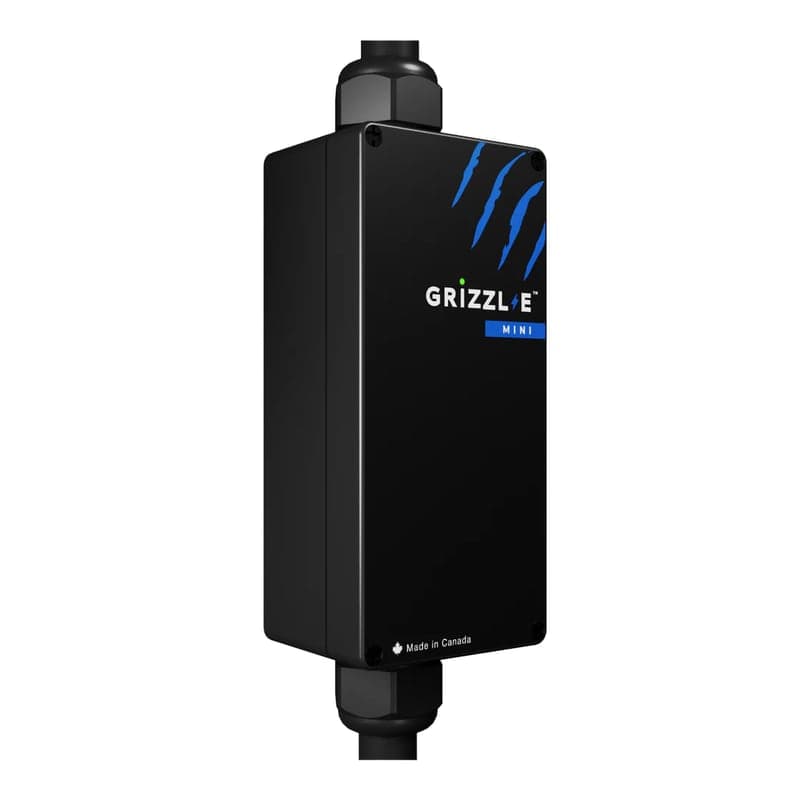 Grizzl-E Mini Connect Portable ChargerAdjustable from 7 to 40 amps and shipped with four plug adapters, which is the closest thing to a unit that fits whatever outlet you turn out to have. Grizzl-E Mini Connect Portable ChargerAdjustable from 7 to 40 amps and shipped with four plug adapters, which is the closest thing to a unit that fits whatever outlet you turn out to have. | Not knowing your outlet yet | Adjustable Level 1 and 2 EVSE | Check price#ad |
| 2 | 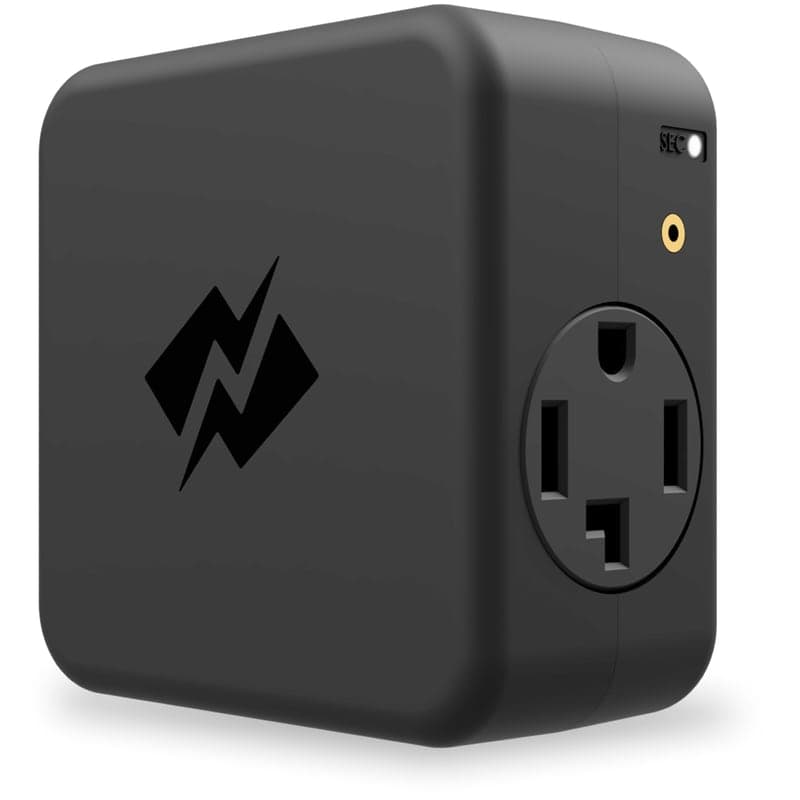 NeoCharge Smart Splitter (NEMA 14-30)The four-prong equivalent: it shares a modern dryer circuit, prioritizes the dryer, and switches to the car when the laundry finishes. NeoCharge Smart Splitter (NEMA 14-30)The four-prong equivalent: it shares a modern dryer circuit, prioritizes the dryer, and switches to the car when the laundry finishes. | A modern 4-prong dryer outlet | Automatic 240V splitter | Check price#ad |
#1 · Not knowing your outlet yet
Grizzl-E Mini Connect Portable Charger
Adjustable from 7 to 40 amps and shipped with four plug adapters, which is the closest thing to a unit that fits whatever outlet you turn out to have.
| Adjustable current | 7A to 40A (9.6 kW maximum)source |
|---|---|
| Voltage | Automatically detects 120V (Level 1) or 240V (Level 2)source |
| Cable length | 25 ft (7.6 m)source |
| Plug and adapters | NEMA 14-50 plug plus four included electrical adapterssource |
| Connector | J1772 or Tesla (NACS) versionssource |
| Enclosure | UL Type 4 / IP67 ratedsource |
| Certification | UL tested and certified, Energy Star certifiedsource |
What those numbers mean
The adjustable current is the feature that matters to a renter, and it is not a convenience. A 30 amp dryer circuit legally supports 24 amps of continuous EV load; a unit that can be set to 24 amps can use that circuit, and a fixed 40 amp unit cannot.
25 ft of cable is nine feet more than the common 16 ft, and nine feet is frequently the difference between reaching the car and not.
IP67 and a UL Type 4 enclosure describe the unit's own weather tolerance. They say nothing about the outlet it plugs into, which is usually the part that is not weather-rated.
What it does well
- 7-40A adjustment means one unit fits a 15, 20, 30 or 50 amp circuit
- 25 ft cable is among the longest on a portable unit
- Four plug adapters included, so an outlet change does not mean a new charger
- Available with either a J1772 or a NACS connector
What it does not
- Costs meaningfully more than a fixed-amperage unit that does one job
- The bundled adapters make it easy to plug into a circuit you have not actually checked
Skip this one if: You know exactly which outlet you have, it is not changing, and you would rather put the money into a longer cable than into adjustability you will set once and never touch.
#ad · how this is funded · price as of October 27, 2026
#2 · A modern 4-prong dryer outlet
NeoCharge Smart Splitter (NEMA 14-30)
The four-prong equivalent: it shares a modern dryer circuit, prioritizes the dryer, and switches to the car when the laundry finishes.
| Outlet type | Plugs into an existing four-prong 220/240V NEMA 14-30 dryer outletsource |
|---|---|
| EV current limit | The EV or charger must be set to 24 amps or less when sharing with a dryersource |
| Switching | Auto-switching prioritizes the dryer and switches to EV charging when it finishessource |
| Certification | UL safety certified and NEC compliantsource |
| Installation | No electrician needed — plug and playsource |
What those numbers mean
NEMA 14-30 is the four-prong dryer outlet standard in homes built after the mid-1990s, so which splitter you need is really a question about the age of the building.
The 24 amp ceiling is the same arithmetic as the three-prong version, for the same reason: 30 amp circuit, 80% continuous rule.
Dryer priority is the right default for a shared household. A dryer cycle is an hour; a charging session has all night to finish.
What it does well
- Works with the grounded four-prong outlet, which is the safer configuration to begin with
- UL safety certified
- Auto-switching, so nobody has to remember to unplug anything
What it does not
- Same 24A ceiling as any 30 amp circuit sharing arrangement
- Wrong device for a three-prong NEMA 10-30 outlet
Skip this one if: Your building predates the four-prong standard and the laundry outlet has three prongs. That is a NEMA 10-30 and needs the three-prong splitter instead.
#ad · how this is funded · price as of October 27, 2026
What needs the board, and how to make it easy for them
Anything that runs new conductors through a common element needs approval, and that is genuinely reasonable: it is their building envelope, their fire compartmentation and their insurance. Boards mostly do not refuse charging on principle. They refuse open-ended proposals, precedent they cannot control, and costs that land on everybody.
- Come with a written proposal, not a request at a meeting. One page: what, where, who pays, who maintains, who removes it and when.
- Answer the metering question first. A submeter or a separately metered circuit removes the loudest objection, which is that other owners subsidize your fuel.
- Offer to bear the cost and the liability, including restoration if you sell.
- Propose a policy, not an exception. Boards fear the second and third resident far more than the first. A simple rule that anyone may do the same on the same terms is easier to approve than a personal favor.
- Include the electrical load answer. The board's real fear is that ten owners do this and the building's service cannot carry it. Load management is the answer, and knowing that in advance is what makes you credible.
The load question is the one that actually sinks proposals
A building has a finite electrical service. Ten condo owners at 40 amps each is 400 amps of new continuous load, and in an older building that number is genuinely alarming. The answer is not to pretend otherwise; it is that residential EV charging does not need to be fast. Ten owners at 16 amps overnight is a fraction of the load and charges every one of them fully by morning, because a car parked for twelve hours does not need 40 amps.
Right-to-charge law in condos
A number of US states have statutes that limit a condo association's ability to prohibit an owner from installing charging at their own expense in a space they own or exclusively use. The details vary a great deal by state — some cover condos and not rentals, some the reverse — and they change. Renter rights and right to charge covers what these laws generally do and, more usefully, what they do not do. Check your own state's current text through the Department of Energy's laws and incentives database rather than trusting a summary, including ours.
Questions people actually ask
Can my HOA stop me from installing an EV charger?
It depends on your state and on whether the space is deeded, exclusively assigned, or common. Several states restrict an association's ability to prohibit charging in an owner's own space at the owner's expense. Anything running through common elements generally still needs approval.
What is the easiest condo charging setup that needs no approval?
Using an outlet that already exists on your own meter, in your own space or storage area — a 120V receptacle with a Level 1 charger, or a shared in-unit laundry circuit with an automatic splitter. Neither is construction.
Why does my board care about amperage?
Because a building has a finite service capacity and it is thinking about the tenth owner, not the first. Proposing lower-amperage overnight charging rather than the fastest circuit available is usually what turns a no into a yes.
Who pays for the electricity in a condo charging setup?
Whoever the proposal says pays. The cleanest arrangements are a separately metered circuit or a submeter you buy, because they remove the objection that other owners are subsidizing your driving.
Sources
Every figure on this page traces to one of these. If a number here disagrees with the manufacturer, the manufacturer is right and we want to know — tell us.
Read next

Start here
You don't have a garage. Here's what actually works.
The pillar guide: what charging looks like when there is no garage, no driveway and no landlord willing to run a new circuit.
Top pick: Lectron Portable Level 1 J1772 Charger (15A, NEMA 5-15)

Guide
What renters are actually entitled to ask for
An honest read of right-to-charge law for tenants — what it covers, what it does not, and where the real leverage is.

Guide
The letter to send your landlord
A ready-to-send request letter for building managers, plus the reasoning behind every line in it and the three variants that fit different asks.
Best Dryer Splitter
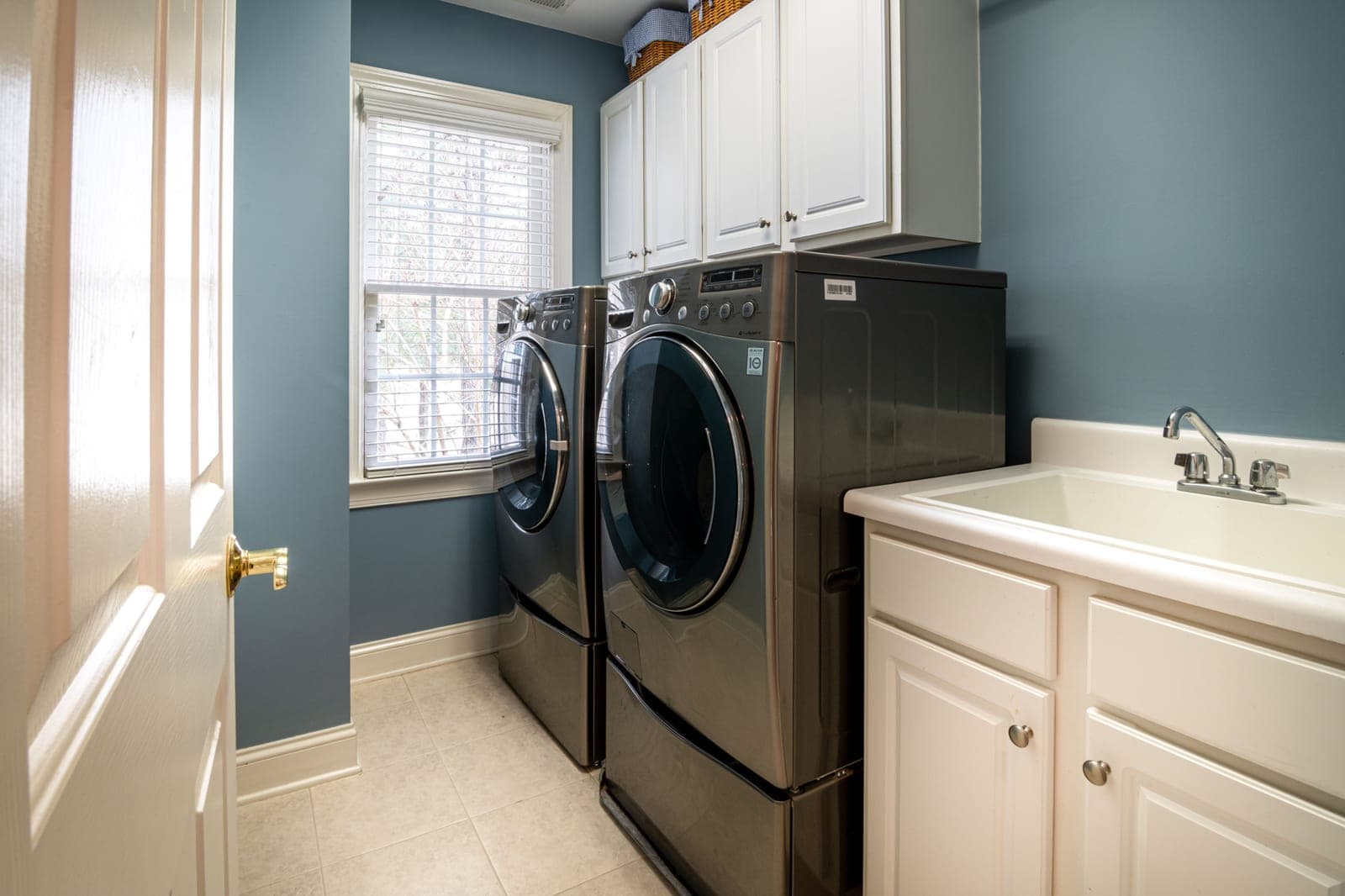
The dryer outlet splitter, reviewed
An independent look at automatic 240V splitters: certifications, the built-in breaker, and how they differ from a passive Y-adapter.
Top pick: Splitvolt Splitter Switch (NEMA 10-30, 240V, 24A)
Guide
Working out the amp rating you need
A step-by-step method for sizing charger amperage to a real circuit, including how to find the breaker and what to do when you cannot.
Top pick: Grizzl-E Mini Connect Portable Charger

Guide
Is a Level 2 charger worth it if you rent?
A decision framework for Level 2 rather than a sales pitch: the two numbers that decide it, and the cases where Level 1 genuinely wins.
Top pick: Lectron Portable Level 1 J1772 Charger (15A, NEMA 5-15)